Bank of England Rate Hike November 2026: Rate Rises to 4%
The Bank of England's rate hike in November 2026 elevates the rate to 4%, influencing policy stance and market impact with data-driven analysis.
 By Rebecca Stern
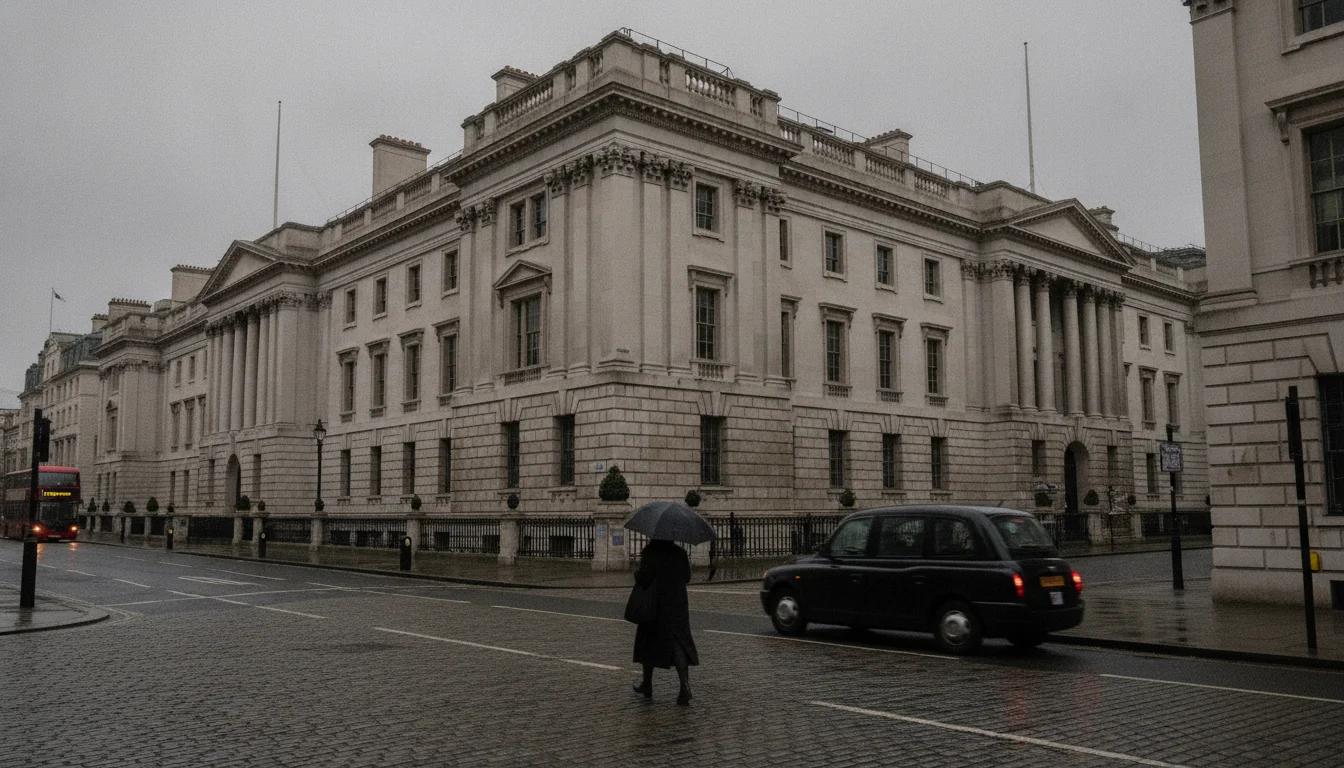
The Bank of England delivered the first rate increase in more than three years as part of its November 2026 policy review, a move that has immediate implications for consumers, lenders, and the UK financial markets. In a decision published on November 5, 2026, the Monetary Policy Committee (MPC) voted to raise Bank Rate by 25 basis points to 4.00%, ending a prolonged hold at 3.75% since late 2025. The decision, announced at the close of the MPC meeting that concluded on November 4, 2026, marks a significant data-driven inflection point for UK monetary policy amid a stubborn inflation backdrop and elevated energy prices. This Bank of England rate hike November 2026 comes as policymakers weigh the path of inflation, the robustness of domestic demand, and the persistence of energy-price shocks in a world where global tensions continue to influence commodity markets. For readers seeking a precise, primary-source record, the central bank lays out the voting breakdown and the narrative behind the move in its official materials. The central fact: Bank Rate rose to 4.00% at the November 2026 meeting, according to the Bank of England’s November 2026 Monetary Policy Summary. (bankofengland.co.uk)
Wall Street Economicists continues to provide data-driven context on the Bank of England rate hike November 2026, placing the move in a framework of ongoing technology and market-trend analysis. The bank’s communications emphasize that monetary policy is not on a preset path, and that future adjustments will reflect evolving evidence on energy-price pass-through, inflation dynamics, and the strength of domestic demand. The Bank’s own materials—anchored by the November 2026 Monetary Policy Report—underscore both the near-term inflation trajectory and the potential for further policy action if second-round effects or energy-price pressures intensify. For readers who want to verify the primary sources, see the Bank Rate decision page and the November 2026 Monetary Policy Report. Bank Rate increased to 4% – November 2026 Monetary Policy Summary and Minutes. (bankofengland.co.uk)
What Happened
Voting breakdown and the Bank Rate level
The MPC’s November meeting, which ended on 4 November 2026, produced a clear but nuanced vote: eight members supported a 25-basis-point rise to Bank Rate, while one member favored a larger 50-basis-point increase to 4.25%. The Bank Rate now stands at 4.00% as of the official release dated 5 November 2026. This decision is documented in the Bank’s official materials and summarized in the November 2026 Monetary Policy Summary. The voting composition and the exact level are also reflected in the attached MPC voting history. For those tracking primary sources, the Bank Rate decision page confirms the level and provides links to the full minutes and the accompanying Monetary Policy Report. Eight members voted for a 25bp increase; Catherine L. Mann preferred a 50bp increase to 4.25%. The central bank’s own language makes clear that policy is not on a preset trajectory, and that the Committee will react to energy-price transmission and broader inflation signals as they unfold. Bank Rate increased to 4% – November 2026 Monetary Policy Summary and Minutes. (bankofengland.co.uk)
Energy prices, inflation, and the policy rationale
The MPC’s discussions and the summary materials emphasize an energy-price shock as the dominant near-term impulse to inflation. The November 2026 materials note that global energy prices have risen to levels not seen since earlier in the energy-price surge, and that UK CPI inflation spiked to around 3.5% in September 2026, with expectations for a higher near-term path before returning toward target as energy-price effects unwind. The Monetary Policy Report accompanying the November 2026 release reiterates the central scenario in which energy-price dynamics guide the inflation path, and it highlights the possibility of second-round effects if wage-price dynamics strengthen. For comprehensive context, readers can consult the Monetary Policy Report’s main findings and the central projection, including the two alternative scenarios. See the Bank’s Monetary Policy Report – November 2026 for deeper analysis and scenario planning. Monetary Policy Report – November 2026. (bankofengland.co.uk)
The political and macro backdrop
The Bank’s narrative repeatedly stresses that policy must be data-driven in the face of a volatile energy environment shaped by geopolitical factors. The minutes indicate multiple viewpoints within the MPC, with a broad agreement that higher energy prices have amplified near-term inflation risks. The minutes also show the committee’s emphasis on monitoring second-round effects as the inflation path evolves. The November 2026 Monetary Policy Summary and Minutes provide the explicit rationale for tightening in this month and underscore that future decisions will be data-dependent. For the full policy context and the internal debate, the minutes and the accompanying Monetary Policy Report are the primary sources. Monetary Policy Summary, November 2026 (PDF). (bankofengland.co.uk)
The role of technology and productivity signals
A notable element of the November materials is the explicit reference to technology-driven productivity developments and how AI-related dynamics are shaping the economy’s supply and demand response. The MPC’s discussions acknowledge that a portion of recent demand growth has been supported by productivity gains and by more resilient activity in a higher energy-price environment, including the potential offsetting effects of AI-driven efficiency. This is reinforced in the accompanying Monetary Policy Report’s topical sections, which examine the productivity and innovation channels within the UK economy. To explore these themes in depth, consult the November 2026 Monetary Policy Report. Monetary Policy Report – November 2026. (bankofengland.co.uk)
Quote (excerpt from the minutes): “Eight members (Bailey, Breeden, Dhingra, Greene, Lombardelli, Pill, Ramsden and Taylor) voted in favour of the proposition to increase Bank Rate by 0.25 percentage points, to 4%.” This excerpt illustrates the broad backing for a modest tightening in the current environment. (bankofengland.co.uk)
The market response and near-term implications
Financial markets immediately price in the new policy path, with traders adjusting expectations for the trajectory of UK rates in the wake of the 4.00% Bank Rate. The November 2026 materials and the press coverage surrounding the decision note that the Bank’s stance is not a signal of an automatic hiking cycle; rather, it is a data-driven response to higher energy costs and the inflation trajectory. The policy communication stresses that if energy-price pressures persist or second-round effects intensify, additional tightening could follow; if conditions soften, policy could move differently. Market participants and analysts will be watching energy-price developments, wage dynamics, and the strength of domestic demand in the coming quarters as the MPC evaluates the appropriate policy stance. For a rigorous, primary-source overview of the decision, refer to the Bank’s official materials. Bank Rate increased to 4% – November 2026 Monetary Policy Summary and Minutes. (bankofengland.co.uk)
What this means for households and businesses
The immediate consequence of the rate rise to 4.00% is higher borrowing costs for new and outstanding credit products. While Pass-through of policy rate changes to retail rates is not uniform, the MPC minutes note that two-year mortgage rates had risen materially in the months preceding November, reflecting the broader tightening in financial conditions. Households with variable-rate debt and those approaching renewals are likely to feel the impact most directly in their monthly payments. For lenders, the higher policy rate reinforces the need to manage credit risk and balance sheet repercussions as consumer spending patterns adapt to tighter financing conditions. The November Monetary Policy Report’s central projection and scenarios provide a framing for the expected path of inflation and the policy stance over the 12–24 month horizon. See the official Bank Rate decision materials for the underlying data and projections. Monetary Policy Report – November 2026. (bankofengland.co.uk)
A note on the timing and context of the event
The Bank’s decision in early November 2026 is the culmination of a carefully watched process, with the Bank Rate move taking effect after the MPC meeting ending on 4 November 2026 and the release published on 5 November 2026. The Bank’s own documentation confirms both the timing and the policy outcome. The release and the accompanying materials are the definitive primary sources for the exact dates, the vote breakdown, and the central bank’s narrative. Bank Rate increased to 4% – November 2026 Monetary Policy Summary and Minutes | Monetary Policy Report – November 2026. (bankofengland.co.uk)
Why It Matters
Immediate macroeconomic implications
The Bank Rate adjustment to 4.00% arrives amid an inflation trajectory that remains above target in the near term, with energy costs playing a central role in the inflation mix. The November 2026 Monetary Policy Summary and Minutes stress that the energy-shock impulse is still shaping expectations, and the MPC remains alert to potential second-round effects if wage dynamics strengthen. The Monetary Policy Report’s central projection indicates inflation easing over the medium term, but the path is sensitive to oil and gas price moves, exchange-rate dynamics, and domestic demand resilience. For readers seeking the formal baseline and the alternative scenarios, the November 2026 Monetary Policy Report provides the full set of central and adverse/weaker-demand projections. Monetary Policy Summary – November 2026 | Monetary Policy Report – November 2026. (bankofengland.co.uk)
Sectoral impacts: financial markets, housing, and corporate borrowing
- Financial markets: The rate rise aligns BoE policy with a broad tightening stance among major central banks, reflecting persistent inflation risk embedded in energy prices. Market participants will monitor the Bank’s forward guidance and the projection paths for Bank Rate beyond November 2026. The Bank’s communications emphasize that policy is data-driven and scenario-based, which can influence yield curves and the pricing of risk premia in UK assets. For a primary-source framing, consult the Bank Rate decision materials. Bank Rate increased to 4% – November 2026 Monetary Policy Summary and Minutes. (bankofengland.co.uk)
- Housing: Mortgage rates and refinancing costs are set to respond to the higher policy rate, with the MPC noting that earlier energy-price-driven pass-through had already boosted near-term debt servicing costs for many households. An observed rise in two-year mortgage rates since September 2026 aligns with tighter financial conditions described in the MPC materials. The November 2026 report provides more detail on price pass-through and the distributional effects across spending and saving. Monetary Policy Report – November 2026. (bankofengland.co.uk)
- Business investment and productivity: The November materials flag that productivity dynamics and AI-driven efficiency gains can influence the economy’s capacity and the inflation path. The MPC’s Box discussions in the November 2026 report highlight the potential role of technology shocks in shaping demand, supply, and price-setting behavior. This connects to broader market trends where technology and productivity gains interact with macro policy in ways that can affect investment decisions and the cost of capital. For the full treatment, see the Monetary Policy Report. Monetary Policy Report – November 2026. (bankofengland.co.uk)
Global context and policy coordination
The BoE’s November 2026 communications come in a global context of central-bank tightening in response to persistent inflation and energy-price volatility. The Bank’s narrative emphasizes energy-price transmission risks and the importance of maintaining price stability to support sustainable growth. The fact that BoE is not on a preset path underscores the need for continuous data monitoring, a theme echoed across major central banks as they balance inflation control with growth support. Readers can cross-reference the Bank’s November 2026 materials with coverage of peers’ actions to gain a sense of relative policy posture and market expectations. Primary sources: Bank Rate decision pages and the Monetary Policy Report. Bank Rate increased to 4% – November 2026 Monetary Policy Summary and Minutes | Monetary Policy Report – November 2026. (bankofengland.co.uk)
What market observers are saying
Analysts note that the November 2026 move is a balancing act: the MPC voted eight-to-one in favor of a modest tightening, signaling a willingness to respond to the energy-price shock, but also signaling that further moves are possible if inflation remains persistent. The November 2026 materials are clear that policy will adjust to evolving evidence, rather than adhering to a fixed plan. This approach aligns with a broader trend among major central banks toward conditional guidance in response to energy-price volatility and the risk of second-round effects. For a primary-source view on the decision and the accompanying projections, consult the Bank’s official materials. Monetary Policy Summary – November 2026 | Monetary Policy Report – November 2026. (bankofengland.co.uk)
What's Next
Next policy meetings and milestones
The Bank’s own calendars show the next key dates as the MPC continues to gather economic data, with the December 2026 MPC meeting and the subsequent release of the December 2026 Monetary Policy Summary and Minutes as pivotal moments. The Bank also provides an official schedule of MPC dates for 2026–2027, which confirms the cadence and the expected reporting cycle. As always, the policy path will respond to evolving inflation signals, energy-price dynamics, and the domestic demand outlook. For the official schedule and what’s upcoming, see the Bank’s MPC calendar and upcoming dates pages. Upcoming MPC dates (bankofengland.co.uk)
The risk of further tightening versus easing
With inflation projected to ease toward target only over the medium term, market participants will be listening for fresh data on services inflation, wage growth, and energy-cost pass-through in upcoming releases. The November 2026 Monetary Policy Report outlines central projections and the two alternative scenarios that could shape the policy path if energy prices rise further or if domestic demand softens. Investors will weigh these projections against the actual data flow in late 2026 and early 2027 to determine whether additional tightening, or a pause, is warranted. For the official projections and the scenario narratives, consult the November 2026 Monetary Policy Report. Monetary Policy Report – November 2026. (bankofengland.co.uk)
The business and consumer outlook
The November 2026 update emphasizes a nuanced path for households and businesses: higher borrowing costs will continue to weigh on discretionary spending and housing markets, while productivity gains and digital technologies could provide some offsetting support to growth and investment. The central bank’s stance remains data-driven, with a willingness to tighten further if inflation persists beyond the baseline or if energy-price shocks drive stronger second-round effects. Stakeholders should monitor the Bank’s future communications and the projections in the November 2026 report for the clearest signal of the next potential move. Monetary Policy Report – November 2026. (bankofengland.co.uk)
Closing
The Bank Rate move to 4.00% in the Bank of England rate hike November 2026 marks a critical junction for UK monetary policy as energy-price dynamics and inflation remain central to the outlook. Wall Street Economicists will continue to track the data, the policy signals, and the broader macro environment, translating complex policy communications into actionable takeaways for readers across markets. For ongoing updates, readers should follow the Bank of England’s official releases and the accompanying Monetary Policy Report, which lay out the central projection and the possible paths ahead in a structured, data-driven framework. Bank Rate increased to 4% – November 2026 Monetary Policy Summary and Minutes | Monetary Policy Report – November 2026. (bankofengland.co.uk)