Warsh Sworn in as Federal Reserve Chair
Kevin Warsh officially became Fed Chair on May 22, 2026, following his nomination by President Trump and Senate confirmation, amid ongoing discussions…
 By Rebecca Stern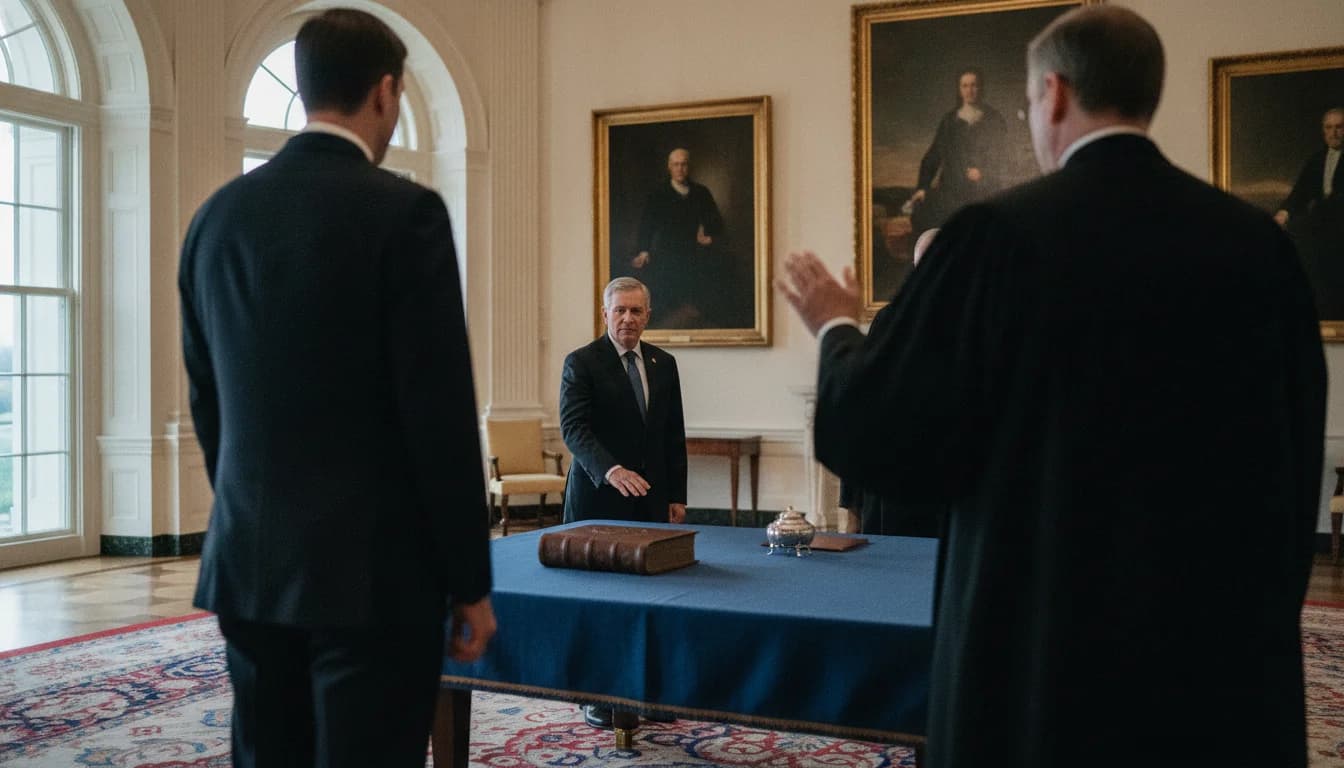
Warsh Sworn in as Fed Chair
On May 22, 2026, Kevin Warsh took the oath of office as chairman and a member of the Board of Governors of the Federal Reserve System, and the Federal Open Market Committee unanimously selected Warsh as its chairman, according to the Federal Reserve Board. This pivotal moment marks a formal transition in the leadership of the central bank as the United States faces a complex inflation and growth backdrop. The ceremony and ruling leadership shift were confirmed by the Federal Reserve Board press release, which outlines the sequence from nomination to oath and chairmanship. (federalreserve.gov)
The sequence leading to Warsh’s chairmanship began with President Donald J. Trump’s nomination on March 4, 2026, followed by a Senate confirmation process that culminated in Warsh’s sworn-in status as chairman on May 22, 2026. The board’s decision to appoint Warsh as chairman was announced concurrently with the oath, underscoring a unified stance on the central bank’s policy direction. The terms outlined in the release specify the chairmanship ending date and the tenure as a governor, providing a clear frame for market participants and policy analysts evaluating the horizon for monetary policy. This timeline is central to understanding the near-term trajectory for interest-rate expectations and macroeconomic guidance. (federalreserve.gov)
In the broader context of Jackson Hole and the policy conversation of 2026, Warsh has been at the center of a high-stakes policy debate about inflation, growth, and the proper calibration of the federal funds rate amid evolving technology-sector dynamics. The central question for markets has been how the new chair will balance a hawkish inflation-fighting stance with financial-stability considerations and the cost of capital for technology investments that depend on predictable funding environments. The initial signals from Warsh at Jackson Hole and in subsequent public remarks are essential for framing the policy outlook and the market’s pricing of risk across tech equities, private-market funding, and credit markets. (apnews.com)
Section 1: What Happened
Nomination Timeline and Senate Confirmation
The formal nomination and confirmation sequence that led to Warsh’s chairmanship was disclosed by the Federal Reserve’s official press materials. The nomination occurred on March 4, 2026, with Senate confirmation following later in May. The board’s press release confirms that Warsh was confirmed to serve as a governor on May 12 and designated as chairman on May 13, with his term as chairman set to conclude on May 21, 2030, and his term as a governor ending on January 31, 2040. These dates establish a defined tenure and set expectations for the policy agenda and leadership style the central bank would pursue in the near term. The same release notes the Federal Open Market Committee’s unanimous selection of Warsh as chairman. This sequence provides a clear, documented timeline for readers tracking the leadership transition and the policy posture associated with Warsh’s tenure. (federalreserve.gov)
Oath of Office and Official Role
The May 22, 2026 oath formalized Warsh’s dual role as chairman and a member of the Board of Governors of the Federal Reserve System, with the Fed’s leadership structure now anchored by Warsh’s chairmanship. The Atlanta Fed’s contemporaneous reporting corroborates this milestone, underscoring the ceremonial and formal aspects of the leadership transition in a moment of rising market scrutiny over inflation and growth prospects. The board’s designation of Warsh as chairman aligns with the traditional responsibilities of steering monetary policy discussions, setting policy communications, and guiding the Fed’s supervisory and macroeconomic initiatives. The official press materials also outline the duration and succession details that are relevant for observers mapping the policy cycle through 2030 and beyond. (atlantafed.org)
Early Policy Signals and Market Reactions
In the wake of Warsh’s appointment, early public signals from the chair have emphasized a data-driven, inflation-focused approach. The Jackson Hole speeches and related public remarks highlighted a willingness to consider rate adjustments as inflation remains a central risk to the macroeconomic outlook. While the precise timing of future rate actions remains a topic of debate among economists and market participants, Warsh’s public comments have provided a framework for how the Fed intends to balance price stability with the need to support sustainable growth. Market participants have closely watched the implications for technology investment, startup financing, and broader market risk premia as these policy signals filter through interest-rate expectations and credit conditions. (apnews.com)
Section 2: Why It Matters
Tech, Innovation, and Capital Markets Under Warsh
The institutional leadership of the Federal Reserve has a direct bearing on the cost and availability of capital for technology firms, AI deployments, and digital infrastructure projects. Warsh’s leadership, characterized by a data-centric and inflation-focused stance, is likely to influence the cadence of monetary tightening or stabilization in ways that affect technology investment cycles. The Jackson Hole remarks highlighted the central role that inflation dynamics play in shaping business investment decisions, including capital expenditures for AI infrastructure, data-center capacity, and software platforms that rely on favorable financing conditions. As investors weigh the cost of capital against potential revenue growth from technology-driven productivity gains, Warsh’s policy stance will feed into discount rate assumptions, sector rotation, and venture funding tempo. The market’s reaction to Warsh’s signals — including shifts in the two-year government yield outlook and broader risk premia across growth equities — underscores the sensitivity of tech-driven economies to monetary policy innovation and leadership. (apnews.com)
Inflation, Rate Trajectory, and Implications for Technology Firms
The Jackson Hole discussion underscored a central tension: inflation remains a risk even as some inflation measures show improvement. Warsh’s framing that inflation remains above target and may require policy adjustments points to a potential hawkish tilt in the near term. Such a stance tends to raise volatility in short-term yields and can influence the financing environment for technology firms, especially those relying on venture debt, project finance for data centers, or equipment purchases financed over multi-year horizons. The Associated Press coverage of Warsh’s Jackson Hole address pointed to a market environment where investors were evaluating the odds of near-term rate moves and how these moves could affect investment pacing in AI and related tech infrastructure. The takeaway for readers tracking technology and market trends is that policy risk remains a meaningful driver of capital costs and strategic tech deployment decisions. (apnews.com)
Financial Conditions, Yield Dynamics, and Tech Valuation
The immediate market response to Warsh’s leadership reflected ongoing recalibration of expectations for the Fed’s policy path. AP’s Jackson Hole reporting noted that bond yields and market pricing were sensitive to Warsh’s remarks, illustrating how leadership can influence the cost of funding for both public and private sector actors, including technology companies and AI developers. The coupling of higher yields with a continued focus on inflation control can affect how tech firms model long-term profitability, whether through debt-financed capital expenditure or equity funding. For readers, this means maintaining vigilance on yield curves, funding environments for AI and cloud infrastructures, and the broader macro backdrop that shapes enterprise investment strategies. (apnews.com)
The Case for a Data-Driven Approach in Tech Market Strategy
Warsh’s public messaging emphasizes data-driven policymaking and a disciplined inflation-targeting framework. In technology markets, where investment decisions hinge on long horizons and complex risk profiles, such leadership can translate into more predictable monetary signals, even if the policy path involves higher near-term rates. Analysts have argued that a disciplined, rules-based approach to inflation and growth can reduce policy surprises and help technology companies align their product development and capital spending with more transparent expectations for the macro environment. This dynamic can be particularly consequential in sectors like AI, semiconductors, and cloud computing, where capital intensity and time-to-market pressures are high. The observed market responses and expert commentary suggest that Warsh’s tenure could contribute to a more measured, data-informed policy framework that balances inflation containment with the strategic needs of technology-driven growth. (apnews.com)
Global and Regulatory Context for Warsh’s Chairmanship
The appointment of Warsh as Fed chair sits within a broader global macro policy landscape. While the United States is a global financial hub, monetary policy coordination and regulatory considerations extend to trade, capital flows, and cross-border technology investment. Headlines and expert analysis from various outlets during the confirmation period highlighted the potential for Warsh to influence not only domestic policy but also the Fed’s posture in international economic forums and financial stability efforts. Readers should consider how Warsh’s approach to inflation, labor markets, and financial regulation could interact with technology policy, cyber risk management, and cross-border data flows — areas increasingly central to technology and market strategy. (apnews.com)
Section 3: What’s Next
Upcoming Policy Communications and Meetings
As Warsh settles into the chair, the policy calendar will shape the information flow that technology firms and market participants rely upon. The Fed’s standard pattern includes semiannual and annual policy communications, with briefings and speeches that translate into actionable guidance for markets. Market watchers will monitor the central bank’s statements, dot plots, and press conferences for hints about the trajectory of the federal funds rate, the pace of any future hikes, and the degree of caution or urgency in the Fed’s inflation framework. The calendar will include upcoming meetings where Inflation data, labor market signals, and financial conditions will be weighed, and where Warsh’s leadership style — through public remarks, the FOMC’s internal deliberations, and the board’s regulatory posture — will be on full display. The pace at which the Fed communicates policy expectations can meaningfully influence technology investment plans, particularly for capital-intensive projects and long-duration partnerships. (federalreserve.gov)
Watch for Market Watchers’ Focus Areas
In the months ahead, market participants are likely to focus on several key themes shaped by Warsh’s chairmanship: the path of short-term rates and the potential for further hikes, the Fed’s inflation-tracking metrics, and the central bank’s stance on financial stability and supervision as it relates to the rapid evolution of AI and related technologies. Observers should pay attention to how Warsh’s leadership aligns with or diverges from prior communications, and how the Fed’s actions influence the valuations and financing strategies of technology companies, data-center developers, and AI infrastructure providers. Analysts may also track cross-asset dynamics, including yields, equity risk premia, and credit spreads, to gauge investor expectations about the cost of capital for tech markets. The evolving policy environment could also trigger shifts in risk management practices for large tech platforms and enterprise software providers. (apnews.com)
What’s Next for Technology Policy and Innovation
The Fed’s policy stance often interacts with broader innovation ecosystems. If Warsh maintains a vigilant inflation-fighting posture with a transparent policy framework, technology firms might benefit from greater clarity and fewer unexpected policy shifts, even as rates remain elevated or rise in the near term. Conversely, a more aggressive rate path could compress funding windows and compel entities in the tech sector to adapt financing strategies, re-evaluate capex commitments, and accelerate efficiency initiatives. In both scenarios, the need for robust financial planning, risk assessment, and scenario analysis becomes acute for AI developers, cloud service providers, and hardware manufacturers that depend on capital markets for growth.
Closing
As Warsh assumes a leadership role at the Federal Reserve, the intersection of monetary policy and technology markets becomes a focal point for data-driven analysis. The early weeks of Warsh’s chairmanship have underscored the central bank’s commitment to inflation control and the readiness to adjust policy as needed to sustain economic stability. For readers of Wall Street Economists, the path forward will be defined not just by macroeconomic indicators but by how policy signals synchronize with the pace of technological innovation and the capital markets that finance it. Staying informed about policy updates, market reactions, and technology sector developments will be essential to understanding the evolving landscape shaped by Warsh’s leadership.
The Fed’s leadership transition comes at a moment when technology and markets are deeply intertwined, with AI investments and digital transformation driving productivity and economic growth. Readers should monitor upcoming policy statements, speeches, and data releases to gauge how Warsh’s chairmanship translates into real-world policy actions and market outcomes. As always, a disciplined, evidence-based approach will be crucial for interpreting the next phase of monetary policy and its impact on technology-driven industries. (federalreserve.gov)