Power Bank Rental Economics: What ChargeSPOT's Numbers Show
ChargeSPOT and Energy Monster both went private in 2026. Their filings show why power bank rental earned 6.7x more per station in Japan than China.
 By Catherine Brewer
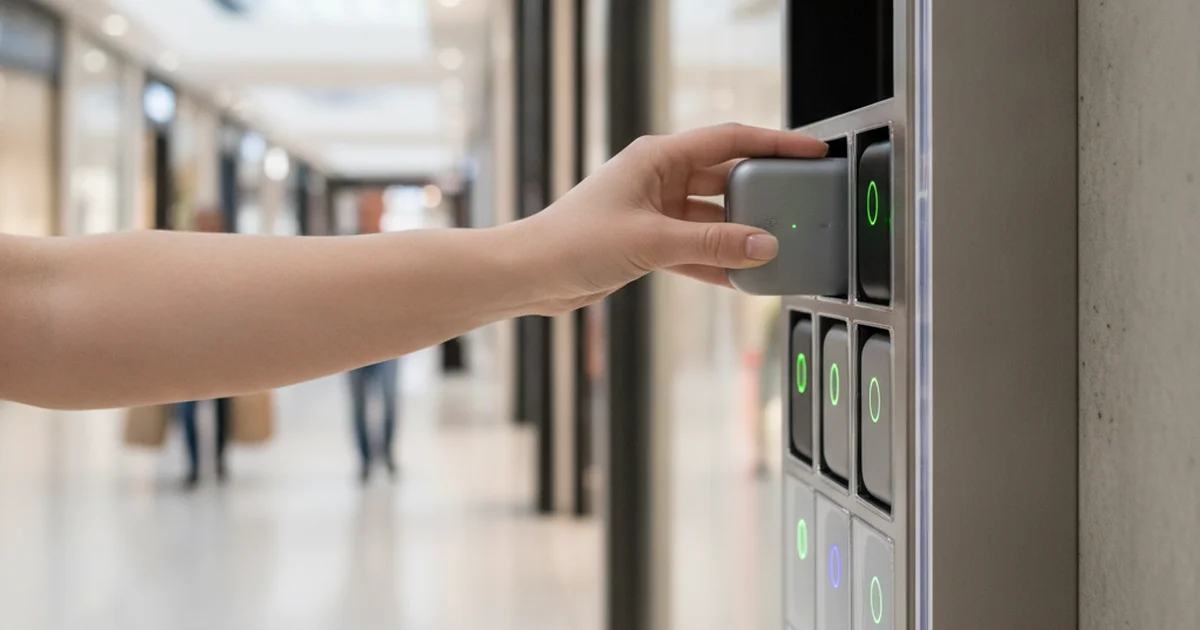
For about five years, investors could watch the power bank rental business through two windows. Smart Share Global, the Shanghai company that runs Energy Monster, listed on Nasdaq in 2021. INFORICH, the Tokyo operator of ChargeSPOT, listed on the Tokyo Stock Exchange Growth market in December 2022. Both published audited revenue, location counts and prices every year.
In 2026, both windows closed. Energy Monster completed its going-private merger on April 30, 2026, paying US$1.25 per ADS against an initial offering price of US$8.50, an 85.3% discount to the IPO. INFORICH agreed to a management buyout backed by Bain Capital at ¥4,560 per share, and the Tokyo Stock Exchange set its delisting date as June 16, 2026.
Their final filings tell two different stories about the same product, and for anyone weighing a shared power bank network in the US, the gap between them is the useful part.
Two operators, one product
The service is identical in both countries. A user scans a QR code on a cabinet in a shop, station or restaurant, takes a battery with built-in cables, and returns it to any cabinet in the network. The operator charges by time.
The scale is not identical. Energy Monster's 2024 annual report on Form 20-F lists about 1,279,900 points of interest (POIs) across more than 2,200 Chinese counties at December 31, 2024, with 9.6 million power banks available. INFORICH's annual securities report for fiscal 2025 lists 59,784 ChargeSPOT stands in Japan at the end of December 2025, plus 12,318 in Taiwan, 6,092 in Hong Kong and smaller fleets in mainland China, Australia, Thailand, Singapore, Macau and Italy. The company says it holds about 80% of the Japanese market by installed stands.
So Energy Monster had roughly 21 locations for every Japanese ChargeSPOT stand. The revenue went the other way.
Energy Monster: more locations, less money per location
Energy Monster's charging revenue peaked in 2021 and fell by more than half by 2024, while its location count kept rising. The table below uses the company's "mobile device charging" revenue line (rental fees plus sales of power banks, cabinets and charging solutions), which excludes the solar power business it started in 2023, and divides it by the POI count at year end.
| Year | Charging revenue (RMB million) | POIs at year end | Revenue per POI (RMB) | Revenue per POI (US$) |
|---|---|---|---|---|
| 2020 | 2,789.1 | 664,000 | 4,200.5 | 629.7 |
| 2021 | 3,558.7 | 845,000 | 4,211.4 | 631.3 |
| 2022 | 2,813.6 | 997,000 | 2,822.1 | 423.0 |
| 2023 | 2,869.2 | 1,233,900 | 2,325.3 | 348.6 |
| 2024 | 1,384.7 | 1,279,900 | 1,081.9 | 162.2 |
Source: Smart Share Global annual reports on Form 20-F for 2022 and 2024. 2020 and 2021 charging revenue is "mobile device charging business" plus "power bank sales", the same definition the 2024 report uses. US dollars at RMB 6.6710 per US$, the Federal Reserve H.10 rate for November 13, 2026.

Chart: Wall Street Economicists analysis of Smart Share Global Form 20-F filings for 2022 and 2024. Revenue per POI is the year's mobile device charging revenue divided by POIs at December 31, converted at RMB 6.6710 per US$.
Revenue per location fell 74.3% between 2021 and 2024. The filings blame 2022's drop partly on COVID-19 restrictions. But 2023 was a recovery year for foot traffic in China, and revenue per location still fell.
The bigger cause is a change in who collects the rental fee. Energy Monster runs a "direct model", where its own staff place cabinets and it keeps the fee, and a "network partner model", where local subcontractors place and manage the cabinets. From the second quarter of 2023, new contracts transferred ownership of the partner-run cabinets and power banks to the partners themselves. Energy Monster stopped paying them commissions and instead sells them hardware and a "mobile device charging solution" of software, billing and call-center services. The 2024 filing shows the result line by line. Rental service revenue fell from RMB 2,754.1 million in 2022 to RMB 353.1 million in 2024, while sales of power banks and cabinets rose from RMB 59.5 million to RMB 781.8 million. By 2024 the company booked RMB 479.9 million from photovoltaic projects, a quarter of total revenue.
In other words, a company that went public as a rental network spent its last public years turning itself from a rental business into an equipment vendor. It posted a net loss of RMB 13.5 million in 2024.
What the venue takes in China
The Energy Monster filings also show why the rental side was hard to keep. The company reports an "incentive fee rate", which is everything it pays to location partners and network partners (commissions plus upfront entry fees) divided by its rental service revenue.
That rate was 58.1% in 2020, 61.1% in 2021 and about 75% in 2022, then 62.2% in 2023 and 67.3% in 2024. In plain terms, for most of the period the venues and the people who signed them kept roughly 60 to 75 cents of every yuan a customer paid to rent a battery. The 2024 report says competition forced the company to offer "competitive packages" to keep locations, and that the rise in 2024 came from falling revenue per power bank amid "general competition within the mobile device charging service industry."
Consumers felt the other side of the squeeze. In June 2021 the Global Times reported that China's market regulator had summoned sharing-economy companies over pricing, noting that a shared power bank "that used to be free is now charging 4 yuan per hour" (about $0.60). Two years later, a Shanghai Daily survey republished by the Shanghai municipal government found 3 to 7 yuan an hour at Xintiandi and 8 yuan an hour at one Yuyuan Garden location, against launch-era pricing of 1 yuan an hour with the first 30 minutes free. Higher prices did not rescue revenue per location, because each yuan was split with the venue and the battery fleet kept growing faster than demand.
ChargeSPOT: fewer stands, more rentals per stand
INFORICH's numbers move in the opposite direction. The company never split out revenue by country before fiscal 2025, so the table below uses the operating figures it reports for Japan in each annual securities report, alongside consolidated revenue.
| Fiscal year (ends December) | Consolidated revenue (¥ million) | Japan stands at year end | Japan monthly rentals (million) | Rentals per Japan stand per month |
|---|---|---|---|---|
| 2022 | 4,389.1 | 38,032 | 1.09 | 28.7 |
| 2023 | 7,681.7 | 42,439 | 1.59 | 37.5 |
| 2024 | 10,701.1 | 47,330 | 1.90 | 40.1 |
| 2025 | 14,431.8 | 59,784 | 2.38 | 39.8 |
Source: INFORICH annual securities reports for fiscal 2022 to 2025 via EDINET DB. Monthly rentals are as reported for December 2022 and 2023 and as the fourth-quarter monthly average for 2024 and 2025. Rentals per stand is our calculation.
Japan's stand count rose 57% over the three years, and rentals per stand still rose from 28.7 to about 40 a month. Adding stands made each stand busier, the network effect INFORICH describes in its filings. In fiscal 2025 the company reported Japan as a separate segment for the first time, with revenue of ¥10,318.2 million and segment operating profit of ¥2,896.1 million before head-office costs, a 28.1% margin.
On those figures, ChargeSPOT's Japan business took in about ¥172,600 (US$1,079) per installed stand in fiscal 2025, 6.7 times the US$162 of charging revenue Energy Monster booked per location in its last full public year, and 1.7 times Energy Monster's best year, 2021. The method is the same for both: a year's charging revenue divided by the locations at year end, converted at the Federal Reserve rates for November 13, 2026 (¥159.93 and RMB 6.6710 per US$).
Two things explain the gap. One is price. ChargeSPOT's posted tariff in Japan went from ¥330 for anything under six hours at the end of 2022, to ¥360 for under three hours at the end of 2023, to ¥330 for under one hour and ¥430 for under three hours at the end of 2025 (about $2.06 and $2.69). INFORICH said its 2024 revenue growth came mainly from "the domestic price revision" and acquisitions. The other is ownership. INFORICH lists franchise partners only outside Japan, so in Japan the rental fee comes to the company, and the venue is paid an installation fee that INFORICH books as rent.
The hardware economics are short. INFORICH reports that a battery in Japan paid back its full cost in about 20 days at the end of 2025, down from about 29 days at the end of 2022, and that its most common stand model pays back in about 88 days.
What it means for power bank rental in the US
The two filings are a natural experiment for a US market that is still young. Pew Research Center's 2026 mobile fact sheet puts smartphone ownership at 91% of US adults, so the demand side looks a lot like Japan's. The open question is which model the supply side follows.
Three lessons stand out from the numbers.
- Density beats sprawl. Energy Monster added 434,900 locations between 2021 and 2024 and earned less in total. ChargeSPOT added stands in places people already rent, and each stand got busier. A US operator that chases logo count over usage risks the Chinese curve.
- The venue split decides the margin. Paying venues 60% to 75% of rental revenue, as Energy Monster did, left little to fund batteries and staff. A revenue share works when it is sized to traffic, not used as a bidding weapon for locations.
- Price must buy convenience. Chinese users complained about rising hourly rates and, in the China Consumers Association's phrase, batteries that were "easy to borrow but hard to return." Japanese rentals per stand held near 40 a month through two tariff changes while the network got denser.
One US example of the venue-led approach is ChargerGoGo, a Las Vegas company that runs power bank rental in the US at casinos, arenas, hotels and universities. It offers venues a free consignment plan that includes warranty, tech support, lost battery replacement and revenue sharing, alongside a subscription plan starting at $75 a month for venues that want to offer charging free to guests. Its venue page lists hosts such as MGM Grand Garden Arena and AREA15 in Las Vegas. That is closer to ChargeSPOT's operator-run model than to Energy Monster's subcontracted one: the operator keeps the battery fleet and the customer relationship, and the venue shares in the rentals without buying hardware.
None of this guarantees that Americans will rent a power bank as often as Japanese users do. But the filings show what to watch: rentals per station, the venue's share of each rental, and whether a growing network makes each station busier or merely adds pins to a map.
The takeaway
Energy Monster went private at 85.3% below its IPO price after its revenue per location fell by three quarters. INFORICH went private as its Japan segment reported a 28.1% operating margin. The difference was not the battery. It was who collected the fee, how much of it went to the venue, and whether each new location added rentals or only cost.
Sources
- Smart Share Global, Form 20-F for fiscal 2024 (SEC)
- Smart Share Global, Form 20-F for fiscal 2022 (SEC)
- Smart Share Global, completion of going-private transaction, April 30, 2026 (SEC Form 6-K)
- INFORICH annual securities report, fiscal 2025 (EDINET DB), with fiscal 2024, 2023 and 2022 reports
- INFORICH five-year results summary (EDINET DB)
- Nihon M&A Center: INFORICH MBO with Bain Capital, tender offer terms
- Japan Exchange Group: INFORICH delisting decision, May 26, 2026
- Global Times: China's market watchdog and sharing economy pricing, June 2021
- Shanghai municipal government (Shanghai Daily): rental phone charger prices, August 2023
- Pew Research Center: Americans' Use of Mobile Devices in 2026
- Federal Reserve H.10 exchange rates via FRED, yen and yuan, November 13, 2026