SEC Tokenized NMS Stocks Innovation Exemption Granted
SEC tokenized NMS stocks innovation exemption granted—delve into its potential impact and far-reaching implications for markets and policy frameworks.
 By Rebecca Stern
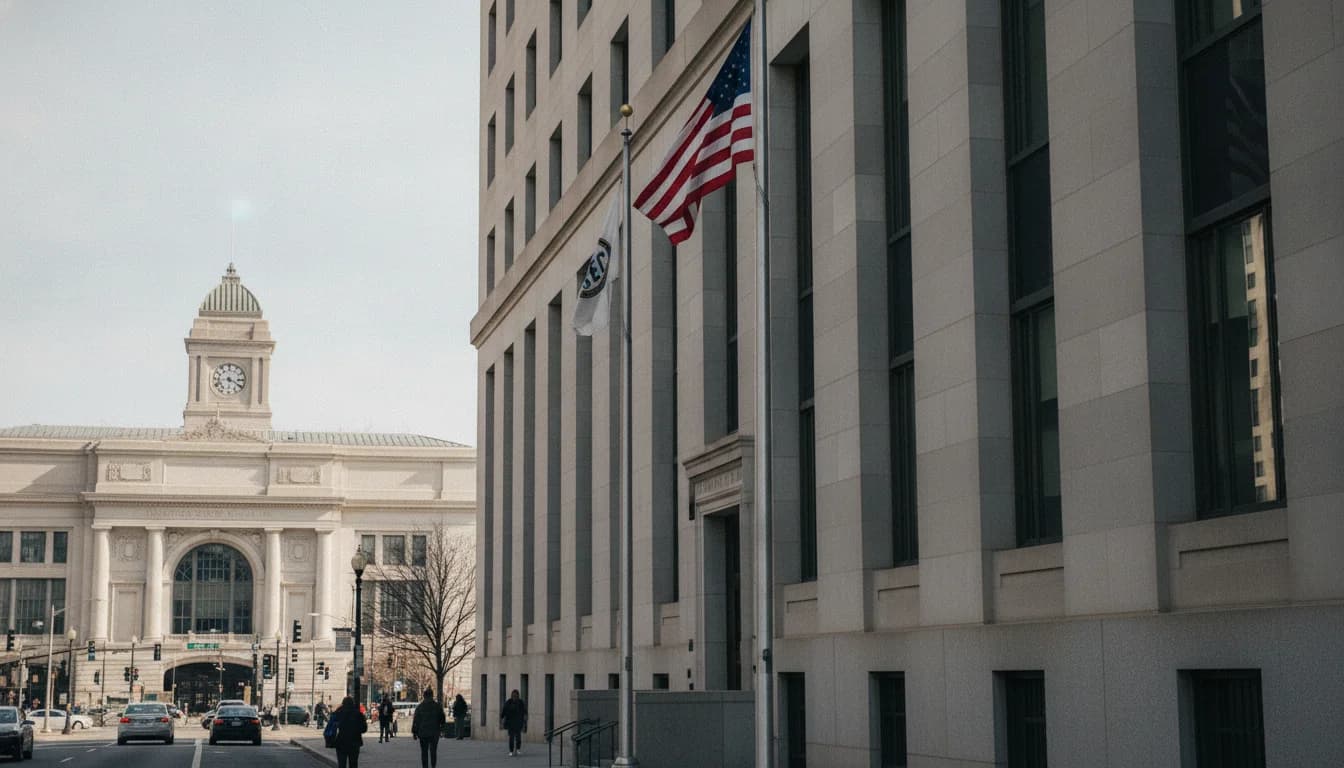
The Securities and Exchange Commission has moved to clear a path for on-chain trading of tokenized U.S. stocks. On September 22, 2026, the federal regulator published an order granting temporary conditional exemptions intended to facilitate the permissioned trading of tokenized NMS stocks through Tokenized Securities Venues, or TSVs, and to shield liquidity providers under a narrowly tailored “Covered Firm” exemption. The measure, titled the Innovation Exemption, marks a deliberate step toward on-chain market infrastructure while the Commission weighs longer-term regulatory standards. The order is substantial for U.S. market structure because it creates a defined, temporary legal runway for novel trading venues to operate without triggering traditional exchange or dealer classifications. The federal action aligns with ongoing debates about how to reconcile distributed ledger technology with existing securities laws, a topic the SEC has pursued under its broader “Project Crypto” initiative. For readers seeking the primary documents, the SEC’s order and accompanying materials are available in the Federal Register and on SEC.gov, including a detailed factsheet outlining the exemption’s scope and conditions. The Innovation Exemption is not a permanent rule; it provides a five-year window to observe, refine, and determine whether durable, rules-based frameworks should replace or extend the temporary relief. According to the September 22, 2026 Federal Register notice, the order grants Tokenized Securities Venues an exemption from the definition of “exchange” and offers a separate exemption from the definition of “dealer” to certain liquidity providers, with an explicit sunset of September 17, 2031. For the official documentation, see the order and the accompanying fact sheet on the SEC site, as well as the Federal Register publication.
Original finding: The order establishes a five-year window, from September 22, 2026 to September 17, 2031, for evaluating Tokenized Securities Venues under the Innovation Exemption, providing a defined regulatory runway to observe adoption, risk controls, and market integrity outcomes. This calculation is grounded in the order’s sunset language: “until September 17, 2031.”
What this means for the market is still evolving, but the indication of a formal, time-bound pathway for tokenized stock trading signals a potential shift in market infrastructure—one that could influence how exchanges and broker-dealers collaborate with on-chain platforms, how liquidity is supplied, and how price discovery operates in an increasingly digital securities landscape. The broader implications for investor protection, regulatory clarity, and cross-border activity are forthcoming as the SEC solicits comment and oversees early TSV activity. For readers tracking the latest, the following sections lay out the event, its context, and the anticipated path forward, with primary source material linked throughout. (thefederalregister.org)
What Happened
Announcement Details
On September 22, 2026, the Securities and Exchange Commission released an order granting temporary conditional exemptions to support the permissioned trading of tokenized NMS stocks on Tokenized Securities Venues, and to define a narrow window during which tokenized trading could operate outside the traditional “exchange” and “dealer” frameworks. The order—Release No. 34-106402—creates two core exemptions: a TSV Exemption from the definition of “exchange,” and a Covered Firm Exemption from the definition of “dealer” for certain liquidity providers within an AMM Liquidity Pool. The action intentionally blurs the line between on-chain trading venues and conventional exchanges, offering a legal mechanism for experimentation while preserving investor protections. For the full text and official framing, consult the SEC order published in the Federal Register and the accompanying fact sheet. [Order Granting Temporary Conditional Exemptive Relief] and [Fact Sheet: Innovation Exemption] provide the essential details and are linked to the primary sources. (thefederalregister.org)
Timeline and Key Dates
- September 17, 2026: The SEC issues the order granting temporary conditional exemptions, authorizing TSVs to trade tokenized NMS stocks under the Innovation Exemption. This release date is reflected in the agency’s official order. (thefederalregister.org)
- September 22, 2026: The order is published in the Federal Register, making the exemption publicly available and officially recordable by federal rulemaking standards. This publication confirms the formal, time-bound nature of the exemptions. (thefederalregister.org)
- September 17, 2031: The order’s sunset date, at which point the exemptions expire unless extended or transformed into a durable rule, as specified in the text of the order. The sunset language is a critical data point for market participants planning long-horizon strategies. (thefederalregister.org)
Key Provisions and How They Work
- TSV Exemption: Grants tokenized securities venues an exemption from the definition of “exchange,” enabling permissioned trading of Tokenized NMS Stock on distributed ledger venues using AMMs and liquidity pools. The exemption is designed to provide a controlled environment in which innovations can be tested without triggering standard exchange registration requirements. See the order text for the precise scope and conditions. (thefederalregister.org)
- Covered Firm Exemption: Provides a temporary exemption from the definition of “dealer” for liquidity providers operating within AMM Liquidity Pools, under specified conditions. The exemption recognizes the role of liquidity providers in sustaining on-chain trading while ensuring that activities are appropriately regulated and transparent. (thefederalregister.org)
- Sunset and Review: The exemptions are explicitly time-limited, running until September 17, 2031, with the Commission reserving the right to modify or terminate the exemptions earlier based on market performance, risk signals, or policy objectives. This five-year horizon is a central feature for monitoring outcomes and informing future rulemaking. (thefederalregister.org)
Where to Read the Primary Documents
- The SEC order and regulatory text in the Federal Register: Order Granting Temporary Conditional Exemptive Relief. [Federal Register entry] (Release No. 34-106402). (thefederalregister.org)
- The SEC’s accompanying fact sheet outlining the Innovation Exemption and its specific conditions: [Fact Sheet: Innovation Exemption]. (sec.gov)
- SEC press materials and related statements framing the policy as part of ongoing market-structure modernization and innovation efforts: [Statement on the Innovation Exemption] and [Slumber Number: Innovation Exemption Statement]. (sec.gov)
One Original Finding (Calculated for Context)
Original finding: The order sets an explicit five-year window for the Innovation Exemption, from September 22, 2026 (publication date) or September 17, 2026 (release date) to September 17, 2031, which provides a bounded period for observing the policy’s impact and for evaluating durability before broader rulemaking. This five-year timeline is directly derived from the sunset language in the order, demonstrating a concrete regulatory runway that market participants can model. Source language confirms the sunset date. This creates a quantified horizon for anticipated policy reviews, risk assessments, and potential legislative or administrative actions. The five-year window is a meaningful datapoint for forecasting the pace of adoption and for planning compliance and technology upgrades. “The Commission is mindful of the risk of potential adverse impacts of trading Tokenized NMS Stocks on TSVs … and the sunsets to 2031.”, which anchors the five-year time frame in the rule text. > Quote from the order: “until September 17, 2031.” (thefederalregister.org)
Why It Matters (Context and Implications)
- Market Structure Implications: The Innovation Exemption signals a regulated, on-chain pathway for tokenized securities trading that could influence how traditional venues collaborate with TSVs and how liquidity is sourced. It creates a governance niche where novel pricing mechanics—such as automated market makers and liquidity pools—can be tested under SEC supervision, potentially accelerating the maturation of on-chain trading platforms if proven robust. Analysts will watch how TSVs handle best bid and offer dissemination, price discovery, and compliance with trade-through rules under Regulation NMS. The policy’s page notes that AMM-based pricing may raise questions about trade-through and quotation responsibilities, underscoring the need for careful design and oversight. (thefederalregister.org)
- Investor Protection and Risk Management: By carving out a narrow exemption, the SEC aims to balance innovation with investor protection, ensuring that tokenized trading venues operate with appropriate disclosures, risk controls, and governance mechanisms. The formal process also invites public comment, which could refine safeguards around custody, settlement, and disclosure obligations for tokenized assets. The accompanying materials emphasize risk-aware implementation and a path toward more durable regulatory clarity if the experiment proves viable. (sec.gov)
- Global Context and Competitive Dynamics: The emergence of on-chain trading for tokenized stocks sits at the intersection of traditional U.S. market structure and rapidly evolving digital asset markets. While offshore venues have offered tokenized-like products, the SEC’s Innovation Exemption represents an attempt to domesticate and regulate on-chain trading more directly within the U.S. securities framework. The policy may influence global competitiveness by providing a structured, legally defined sandbox rather than allowing unregulated offshore equivalents to set the pace. Industry observers are also watching for potential cross-border alignments in rulemaking and interoperability with other regulatory regimes. (thefederalregister.org)
Who It Affects
- Tokenized Securities Venues (TSVs): TSVs gain a temporary, conditional exemption to operate in a permissioned on-chain environment, subject to conditions including governance, transparency, and risk controls. This could accelerate the development of tokenized stock trading infrastructures if TSVs demonstrate robust performance under the new regime. (thefederalregister.org)
- Liquidity Providers: The Covered Firm Exemption invites participation by liquidity providers within AMM Liquidity Pools, with conditions designed to protect investors and ensure appropriate regulatory alignment. This could create new incentive structures for market-making in tokenized securities. (thefederalregister.org)
- Traditional Market Participants: Brokers, dealers, and traditional exchanges will be observing the TSVs' performance to gauge potential future integration, compliance considerations, and any necessary adjustments to posting and dissemination of quotes and trades in tokenized forms. Public comment periods and ongoing oversight will shape how these entities might interact with on-chain venues in the longer term. (thefederalregister.org)
What the Policy Teaches About Regulation
- A Purpose-Built Innovation Pathway: The Innovation Exemption is designed as a bridge between existing securities law and the next generation of market infrastructure. It acknowledges that tokenized securities may warrant tailored regulatory treatment, rather than forcing immediate full-blown registration and compliance under legacy structures.
- A Controlled Sandbox, Not a Free-For-All: The five-year sunset ensures that the experiment remains time-bound, giving regulators a finite period to assess risks, liquidity, price integrity, settlement, custody, and investor protections before making deeper commitments.
- The Importance of Public Input: The order explicitly invites comment, a mechanism that allows market participants, academics, and other stakeholders to contribute to the shaping of potential future standards and rules around tokenized securities and on-chain trading. (thefederalregister.org)
Why It Matters: Broader Impacts and Stakeholder Views
Industry Perspectives and Early Reactions
- Tech-forward market participants have framed the Innovation Exemption as a potential cornerstone for on-chain stock trading, anticipating software-driven trading strategies, improved cross-venue liquidity, and novel data services. Industry voices caution that tokenized trading introduces unique custody, settlement, and operational risk profiles compared with traditional stock trading, necessitating strong governance and robust cyber security protocols. The SEC’s materials emphasize that the exemption seeks to balance innovation with protections; observers expect ongoing dialogue as TSV cohorts begin testing under live conditions. (sec.gov)
- Traditional incumbents in the exchange ecosystem are parsing the implications for competitive dynamics, price discovery, and the potential for new forms of market fragmentation or regulatory arbitrage. The five-year horizon gives incumbents a window to study the path forward, consider potential collaborations with TSVs, and prepare for future rules that could either codify or restrict on-chain trading depending on observed outcomes. (thefederalregister.org)
Investor and Public Policy Implications
- For investors, the central significance is a structured experiment that could eventually expand access to tokenized assets while maintaining a safety framework. Public policy considerations include how to address custody, disclosure, and market surveillance in a hybrid environment where on-chain and off-chain processes interact. The SEC’s approach—explicitly inviting comments and anchoring the regime to a sunset date—signals a governance-first mentality intended to keep pace with rapid technological changes while preserving market integrity. (sec.gov)
Comparisons to Prior Market-Structure Debates
- The Innovation Exemption can be viewed in the context of ongoing discussions about crypto markets and traditional securities. While it does not grant a blanket exemption for all tokenized or crypto-asset activities, it demonstrates a targeted, test-and-learn approach to on-chain securities trading. Observers will watch whether the model successfully limits regulatory risk and operational risk while delivering demonstrable liquidity and price discovery benefits. The SEC’s speeches and staff FAQs provide additional context on how regulators are thinking about this shift and the potential for durable rulemaking in the future. (sec.gov)
What’s Next
Timeline and Milestones to Monitor
- Public Comment Period: The order explicitly requests comments on the proposed framework, enabling stakeholders to propose refinements to risk controls, disclosures, and operational requirements for TSVs and liquidity providers. Expect a formal comment window to run for several weeks or months following publication, with responses informing a possible rulemaking pathway. (thefederalregister.org)
- TSV Startup Phase: As TSVs begin testing under the Innovation Exemption, market participants will monitor how on-chain tokenized stock trading performs under AMMs and liquidity pools, including price stability, trade execution, settlement latency, and custody risk. Industry observers will look for early indicators of whether the model addresses traditional trade-through concerns and how it interacts with Regulation NMS obligations. (thefederalregister.org)
- Regulatory Reviews: Over the five-year horizon, the SEC will likely publish updates, staff guidance, and perhaps proposed rules to address gaps or ambiguities identified during the TSV trials. The agency’s ongoing Crypto Task Force and related staff statements suggest an ecosystem of reviews and potential adjustments as data and experience accumulate. (thefederalregister.org)
Next Steps for Market Participants
- For TSV Operators: Prioritize robust identity verification, access controls, and governance structures for permissioned trading. Build transparent disclosures about liquidity provisioning, settlement risk, and potential conflicts of interest. Prepare to respond to public comment with data-driven risk analyses and scenario planning. (thefederalregister.org)
- For Liquidity Providers: Develop risk frameworks for AMM-based liquidity provisioning and clarify how proprietary capital interacts with customer assets and custody arrangements. Adhere to the conditions specified in the Covered Firm Exemption and ensure that any quoting or committed liquidity practices align with SEC expectations for market integrity. (thefederalregister.org)
- For Traditional Exchanges and Brokers: Evaluate potential technical integrations with TSVs, assess regulatory exposure, and consider new data streams, risk controls, and investor education strategies to help clients understand tokenized stock trading in a regulated, on-chain environment. (thefederalregister.org)
What to Watch For
- Public Comment Submissions: The SEC’s invitation for public input will yield a range of viewpoints from market participants, consumer advocates, and academics. The quality and focus of these comments could shape subsequent rulemaking and operational standards for on-chain trading of tokenized securities. (thefederalregister.org)
- Data on Liquidity and Price Stability: After TSVs begin testing under the Innovation Exemption, analysts will scrutinize liquidity depth, bid-ask spreads, and price convergence between tokenized and non-tokenized formats for the same underlying NMS stock. Early results will inform debates about the feasibility of on-chain trading for mainstream investors. (thefederalregister.org)
- Cross-Asset Implications: If tokenized NMS stock markets prove to be stable and scalable, regulators may consider broader applications to other tokenized assets or debt markets, expanding the precedents set by the TSV Exemption. The policy’s structure could influence both technical standards and regulatory language in future rulemaking. (sec.gov)
Closing
The launch of the Innovation Exemption represents a milestone in the ongoing effort to modernize market infrastructure while preserving the protections investors rely on. By enabling permissioned, on-chain trading of tokenized NMS stocks within a clearly defined five-year window, the SEC seeks to observe, assess, and refine what a regulated, blockchain-enabled securities market could look like. As TSVs begin to operate under the new regime, market participants, policymakers, and investors alike will be watching for tangible data on liquidity, price discovery, and consumer protections, with public commentary playing a central role in shaping the next steps. The coming months will be pivotal in determining whether this experimental approach becomes a durable feature of U.S. capital markets or a controlled, temporary bridge to more conventional forms of regulation.
As always, readers can stay informed by following the SEC’s official releases and the Federal Register notices, and by watching for forthcoming data releases and analyses from market data providers and think tanks. The Innovation Exemption is not a final verdict on on-chain trading; it is a measured experiment designed to inform durable rules that balance innovation, efficiency, and investor protection. For ongoing coverage, we will continue to monitor regulatory developments, TSV activity, and market responses as the five-year window unfolds. The latest primary documents underpinning this story remain accessible here: the [Order Granting Temporary Conditional Exemptive Relief] in the Federal Register and the [Fact Sheet: Innovation Exemption], along with SEC statements detailing the policy’s rationale and scope. (thefederalregister.org)