S&P 500 Hits Record High as AI Drives Market Surge
The S&P 500 reached a record high of 7,757.64 on August 7, 2026, propelled by strong technology and AI earnings amid a favorable economic backdrop.
 By Gregory Haas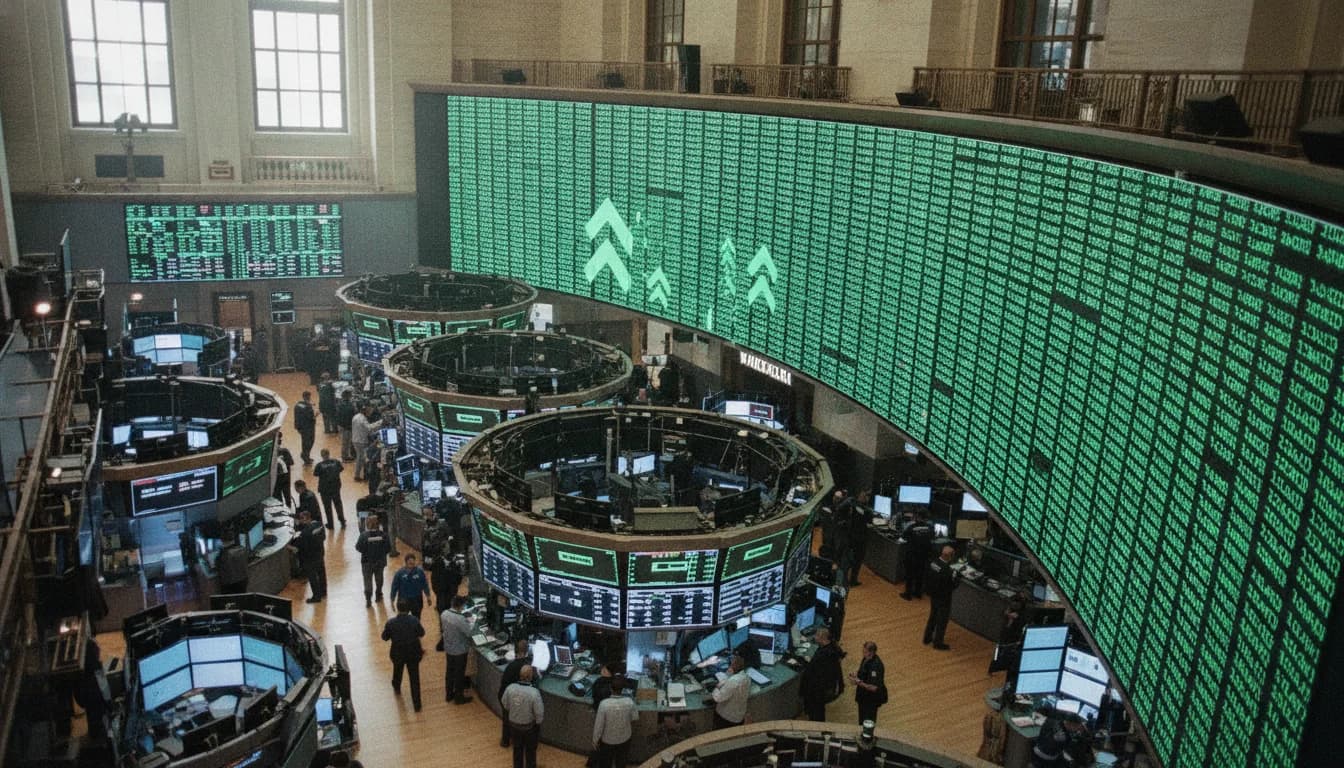
The U.S. stock market continued its summer ascent in August 2026, led by a surge in technology and AI-related earnings, pushing major benchmarks to new highs. On Friday, August 7, 2026, the S&P 500 closed at a fresh record, underscoring a broad risk-on mood as investors digested a mix of strong corporate results, cooler inflation signals, and an easing path for rate expectations. The milestone reflects a market that has traded in a high-volatility but increasingly resilient range through the first half of the year and into the dog days of summer. The day’s move comes amid a broader narrative of AI-driven leadership in equities, with technology stocks and AI-enabled leaders contributing to the broader market’s trajectory. The S&P 500 record high August 2026 marks a notable point in a year where investors have weighed earnings, policy signals, and macro twists in real time. The recent rally is not a one-day blip; it sits atop a string of sessions that have raised the index to new territory, even as some sectors experienced pullbacks or rotations within the index.
The S&P 500 record high August 2026 is not an isolated statistic; it is part of a pattern in which growth-oriented sectors—especially those tied to AI, cloud computing, and semiconductors—have shown differentiated strength even as some traditional cyclical areas have lagged. As analysts parse the latest data from payrolls, inflation indicators, and corporate earnings, the market is balancing optimism about earnings visibility with caution around potential policy shifts. This balance matters because it influences how investors allocate capital across equities, fixed income, and alternatives. The overarching takeaway from the current environment is that the market is pricing a probability-weighted path forward—one in which disinflationary signals and resilient corporate earnings interact with a supportive, but not overly easy, monetary stance. This context helps explain why the headline S&P 500 record high August 2026 is accompanied by nuanced discussions about risk, discipline, and strategic positioning for the months ahead. According to Reuters, the S&P 500 closed at a record high of 7,757.64 on August 7, 2026. (ca.marketscreener.com)
Opening paragraph note: The phrase S&P 500 record high August 2026 is central to this coverage, and readers should watch how the next wave of data—earnings, inflation metrics, and policy commentary—shapes whether the market sustains or recalibrates from today’s highs.
What Happened
Intraday and Closing Milestones on AI-Driven Sessions
The week of August 4–7, 2026 featured a sequence of records that highlighted the market’s sensitivity to AI-related earnings and geopolitical developments. On August 4, 2026, U.S. stock indexes rose on the back of stronger-than-expected results from AI-adjacent firms and hopes for an easing in geopolitical tensions, sending the S&P 500 to fresh intraday highs and contributing to a closing that reinforced the index’s all-time uptrend for the year. While the intraday dynamics varied across the day, the session closed with the S&P 500 registering a new high close that confirmed the durability of the move into early August. This set the stage for subsequent session-to-session momentum as investors priced in continued resilience in AI-related earnings and an environment supportive of higher equity multiples. The reporting on August 4 emphasized both the strength of AI earnings momentum and the market’s willingness to extend gains in the face of macro uncertainty. For a primary record of that day’s market action, Reuters documented the broad market’s closing strength, including the S&P 500’s continued advance into record territory. (ca.marketscreener.com)
On August 7, 2026, the S&P 500 closed at 7,757.64, marking a record close and adding to a week of gains that had already featured multi-day rallies. The move reflected a combination of supportive data and earnings momentum across technology and related sectors, with researchers and traders noting a broader re-acceleration in risk appetite as inflation signals appeared to soften and rate expectations remained contained. The precise close, 7,757.64, was reported by Reuters’ coverage syndicated by MarketScreener Canada and corroborated by other outlets that day. This closing record underscored the market’s health as a leading indicator for risk assets and signaled continued investor appetite for equities in a climate of ongoing AI-driven narrative drivers. (ca.marketscreener.com)
The August 13 session extended the rally, as AI-related leadership continued to push the index to another high-water mark on intraday trading. Reuters’ coverage, reinforced by Kitco’s transcript of the same reporting, showed the S&P 500 climbing to an intraday record and then moving into a close that reinforced the index’s leadership in the broader market. The specific price action from that day—an intraday high and a closing move that kept the market on its record-setting path—illustrated how the AI rally and softer inflation data have continued to shape strong equity performance. The session featured notable contributions from semiconductors and AI infrastructure names, reinforcing the thesis that the “AI trade” remained a defining driver for breadth and momentum. (kitco.com)
The Broader Context: Earnings, Inflation Signals, and Monetary Policy
To understand why the S&P 500 reached record levels in August 2026, it helps to map the surrounding economic and corporate data points. A key driver cited by market observers is the pace and trajectory of producer price inflation data, which informed expectations about Federal Reserve policy and rate paths. The August 13 reporting highlighted a softer-than-expected producer price index reading that tempered expectations for a near-term rate increase, allowing tech and high-growth stocks to push higher again. In such a climate, investors have tended to reward earnings resilience in AI-related cohorts, while also remaining mindful of the risk that policy normalization or acceleration could alter the demand environment for equities. The Reuters narrative around that session framed the market’s move as a function of both corporate performance and policy expectations, with AI-driven earnings contributing to the breadth of the rally. (kitco.com)
Section 1 thus documents a clear set of milestones: (a) August 4, 2026, intraday/closing highs driven by AI-linked earnings and Middle East deal hopes; (b) August 7, 2026, a record close of 7,757.64 as the market maintained momentum; (c) August 13, 2026, an intraday record high with a closing move that suggested continued upside potential in AI-leaning leadership and tech-driven growth stocks. These events are not isolated; they form part of a multi-session sequence that underscores the market’s current regime—forward-looking, growth-oriented, and sensitive to policy signals that could alter the pace of gains. The AI dimension in particular has been frequently cited by market participants as a meaningful driver of the current rally, with earnings powering a more durable upside than the market had shown in the prior quarter. (ca.marketscreener.com)
The Key Figures and Market Traits Behind the Move
Beyond the headline levels, the composition of the leadership matters. AI-driven firms and their suppliers — including those in hardware, software, and data infrastructure — have shown outsized gains relative to the broader market, reflecting investors’ confidence in AI-enabled growth. Analysts have emphasized that a resilient earnings trajectory in AI infrastructure names can support multiple expansion in the context of a still-supportive liquidity backdrop. The August 13 session’s numbers—an S&P 500 move of around 0.72% to 7,804.26 on the close, with an intraday high that mirrored the day’s strength—illustrate the breadth of participation across the index and the staying power of the rally, which core observers attribute to AI-linked earnings and a more constructive outlook for inflation and rates. Such dynamics are consistent with the broader market narrative that the AI cycle has become a central theme in 2026. (kitco.com)
Thematic Underpinnings: Technology, Earnings, and Investor Sentiment
Technology and AI-related leadership have remained central to the market narrative. The August sessions showed that a continued reallocation into growth and tech risk assets can sustain momentum even when macro indicators fluctuate. Analysts point to stronger-than-expected earnings from AI-adjacent names, investor optimism about the scalability and cost-efficiency of AI systems in enterprise contexts, and a belief that inflation is moderating in a way that keeps real rates anchored at levels that are not prohibitive for equity risk-taking. The interaction between earnings surprises, AI investment narratives, and macro cooling is a potent combination that has supported a run of record-level closes and intraday highs. Market coverage from Reuters and corroborating outlets through mid-August 2026 have framed these developments as evidence of a durable AI-led expansion rather than a temporary surge. (kitco.com)
Why It Matters
Implications for Inflation, Rates, and Investment Strategy
The S&P 500 record highs in August 2026 occurred in a context where the inflation trajectory and rate expectations were pivotal to the market’s direction. Analysts have highlighted that a tame or moderating producer price inflation reading reduces the odds of near-term rate hikes, which in turn supports higher equity valuations, particularly for growth and tech-oriented sectors. The August 13 session explicitly tied a softer PPI print to a lift in risk assets, with technology stocks leading the move and the broader market rally continuing despite ongoing macro uncertainties. For investors, this combination—robust earnings growth in AI-adjacent names and an inflation trajectory that keeps rate-hike expectations in check—offers a framework for constructive positioning while also demanding discipline in portfolio construction to manage risk and keep exposure aligned with evolving data. The Reuters-based reporting on this dynamic provides a primary data point for how markets interpret inflation signals in real time. (kitco.com)
Sector Leadership: AI Hardware, Cloud, and Data
The August highs have highlighted a clear pattern: AI-enabling sectors—semiconductors, cloud providers, and data infrastructure—have delivered outsized performance as investors seek exposure to AI-powered growth. The market’s tone during the August sessions underscored confidence that AI vendors and their ecosystems can sustain above-average earnings growth even as the macro environment remains uncertain in other respects. The dynamic is not simply about one stock or one subsector; it reflects a broader reallocation toward tech and AI as secular growth themes with potential defensible earnings visibility. Analysts from multiple outlets have noted the degree to which AI-trade dynamics shaped the market’s rhythm during this period, and the August record highs serve as a reference point for assessing whether this leadership remains intact as earnings seasons continue. (kitco.com)
Investor Sentiment and Market Breadth
Another important takeaway is the breadth of the rally. While a handful of large-cap names have dominated headlines, the August data points toward a broader participation across sectors that contributed to the record highs. Market observers have pointed to a mix of earnings momentum, positive revisions in AI-related segments, and a more accommodative stance from market watchers who expect inflation to trend lower without triggering a collapse in growth. This combination helps explain why a measured, data-driven approach to investing remains essential for readers seeking to navigate a market that has shown both resilience and volatility in equal measure. AP coverage and Reuters reporting through early-to-mid August 2026 underscore the importance of monitoring breadth alongside price levels, as the signal from breadth can be as telling as the absolute index levels in gauging the health of a continued rally. (apnews.com)
What's Next
Upcoming Economic Data and Corporate Earnings
Looking ahead, the market’s next decisive moves will hinge on forthcoming economic data releases, including inflation indicators, payroll figures, and the trajectory of producer prices. Corporate earnings from AI-related sectors will continue to inform the market’s evaluation of growth prospects, margins, and capex cycles. Investors will be listening for whether earnings revisions remain positive, how guidance evolves, and whether AI-driven demand signals translate into sustainable revenue growth and margin expansion. The August 2026 period has shown that investors are attentive to data that can shift rate expectations—even modest changes can meaningfully impact multiple expansions in technology and growth-oriented stocks. As always, the path of these variables will shape the S&P 500’s ability to maintain record highs in the near term and whether investors view current levels as sustainable or as the late-stage phase of a prominent cycle. Reuters’ ongoing coverage will remain a primary source for the narrative around data-driven momentum. (kitco.com)
Risks and Scenarios to Watch
Even with a constructive backdrop, risks persist. Shifts in inflation momentum, unexpected shifts in the labor market, or geopolitical developments could alter the pace of rate expectations and, by extension, equity valuations. The market’s recent focus on AI and tech leadership also raises concentration risk concerns; a meaningful setback in key AI hardware or software players could test the durability of the current rally. In addition, commodity price volatility, if persistent, could reintroduce inflationary pressures that complicate the Fed’s policy stance. For readers and investors, keeping a close watch on the path of inflation indicators, labor market dynamics, and earnings by AI-driven firms will be essential to assessing whether the S&P 500 record highs of August 2026 are a durable feature of the market regime or a momentary peak within a broader cyclical landscape. The August sessions have reminded market participants that data, discipline, and a long-term perspective remain critical in navigating a market defined by rapid change and constant recalibration. (kitco.com)
What to Watch in the Coming Weeks
- Inflation metrics and labor data: If inflation continues to ease without triggering a material contraction in demand, rate-hike expectations may remain anchored, supporting further upside for equities. If inflation surprises to the upside, investors may reprice growth expectations and adjust allocations accordingly.
- AI-scale earnings and guidance: Investors will closely follow commentary from AI infrastructure leaders and cloud/semiconductor players to gauge the durability of the AI-led rally.
- Market breadth and volatility metrics: A broad-based advance paired with contained volatility would reinforce confidence in the sustainability of the recent highs. However, any widening of breadth gaps or spikes in volatility could signal a needed re-evaluation of near-term upside.
- Global macro and geopolitical risk: Developments related to energy markets, international trade, and regional stability will influence risk appetite and the tempo of gains in high-multiple tech stocks.
What Happens Next: Timeline and Next Steps
Near-Term Path: The Next 1–4 Weeks
The immediate path for the S&P 500 will likely hinge on incoming inflation data, payroll reports, and the trajectory of consumer spending. If the data continues to point to cooling inflation and a slower but resilient economy, we could see continued vertical pressure on the index toward new highs, particularly if AI-driven earnings continue to surprise to the upside. If data surprise to the downside, investors may reassess the sustainability of the AI-led rally and adjust expectations for multiple expansion. The market’s sensitivity to rate expectations means even small changes in the perception of Fed policy could have outsized effects on equities in the short term. The August 2026 timeframe has already illustrated how quickly sentiment can shift as new data arrives, underscoring the importance of data-driven decision-making for readers and policymakers alike. (kitco.com)
Medium-Term Considerations: Quantitative Positioning and Valuation
Over the next several quarters, investors will be balancing two forces: the potential for sustained AI-driven revenue growth and the risk of multiple compression if rates rise or if inflation re-accelerates. For technology and growth investors, this means continuing to weigh the upside of AI adoption against the risk of a broader macro correction. Active and passive investors alike may shift toward scenarios with higher quality AI exposure, stronger balance sheets, and clearer path to cash flow generation, while maintaining risk controls that reflect the volatility history of this cycle. The August 2026 sessions provide a data-backed case study in how leadership in AI can alter the risk-reward calculus for equity portfolios, particularly when combined with data indicating inflation moderation and a more predictable policy environment. (kitco.com)
The Path Forward for Wall Street Economicists Readers
As a neutral, data-driven publication, Wall Street Economicists will continue to monitor the interplay between AI-related earnings, inflation signals, and policy expectations. The upcoming weeks will be crucial for observing whether the AI-led leadership endures and whether breadth broadens to sustain the recent highs. Readers should expect ongoing updates that tie real-world data to market outcomes, with a focus on actionable insights that help readers interpret the implications of the S&P 500 record highs August 2026 for investors, businesses, and policy discussions. The newsroom will prioritize primary-source data, including earnings announcements and official inflation metrics, to ensure that coverage remains grounded in verifiable facts and clear timelines. (ca.marketscreener.com)
Closing
The record-high trajectory observed through August 2026 reflects a market that has found leadership in AI-enabled growth while maintaining a cautious eye on inflation and policy dynamics. The August 2026 period shows a confluence of strong tech earnings, AI-driven investment themes, and inflation signals that may keep the Fed’s policy stance in a holding pattern for a time. For readers and investors, the message remains clear: data-driven analysis, disciplined risk management, and careful attention to the macro backdrop are essential to navigating a market that continues to push to new highs even as uncertainty persists. Wall Street economists and market watchers will keep a close watch on upcoming economic reports, corporate results, and policy commentary to determine whether the S&P 500 record highs of August 2026 mark a new sustained regime or a milestone within a longer cycle.
In a landscape shaped by AI leadership and evolving macro signals, staying informed with primary-source data and independent analysis is more important than ever. Readers can expect continued coverage that connects the dots between earnings, inflation data, policy expectations, and market performance, ensuring a clear, timely, and objective view of how the S&P 500 record high August 2026 translates into actionable insights for portfolios, risk management, and strategic planning.