
3D-Printed Housing Market Dynamics 2026: News & Trends

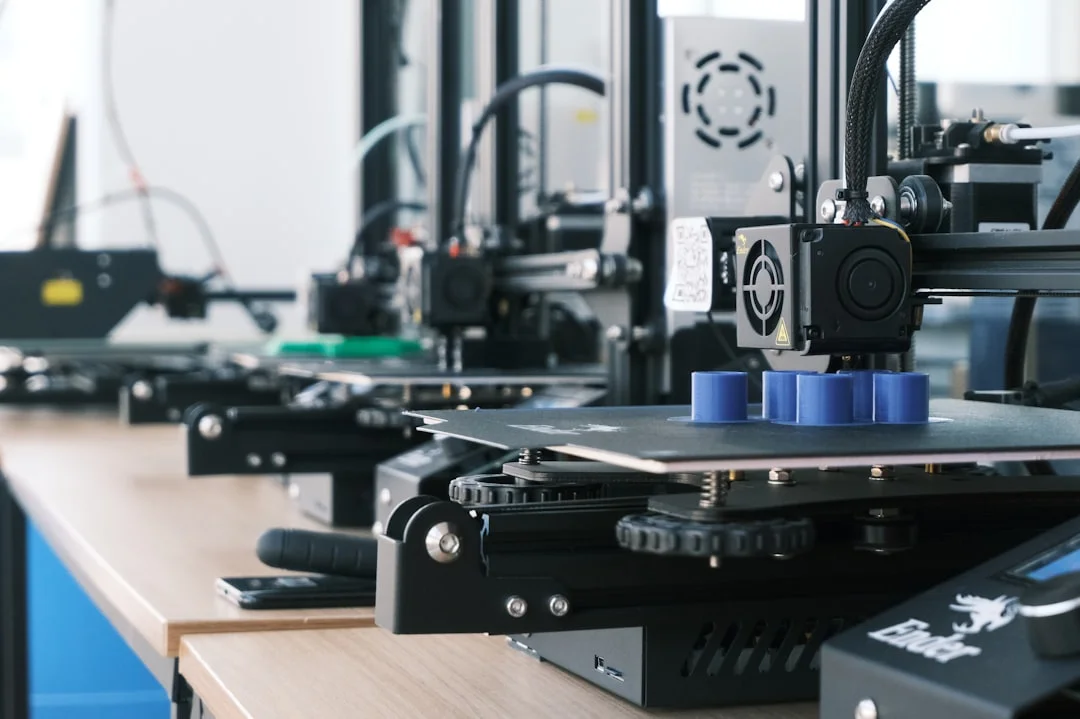
Photo by Minku Kang on Unsplash
The news cycle today spotlights a pivotal moment in the housing sector: 3D-Printed Housing Market Dynamics 2026 are unfolding as builders, financiers, and policymakers weigh how automated, concrete-based construction can reshape affordability, speed, and risk. On March 11, 2026, ICON, the Austin-based pioneer in robotic construction, formally launched Titan, a multistory 3D-printing platform priced for broader builder access. The initiative, coupled with California’s first printed-housing community nearing completion in Yuba County, marks a concrete shift from pilot projects to scalable deployment. As of late March 2026, ICON advertised Titan at a base price of $899,000 per unit, with reservations requiring a $5,000 deposit and walls that could be printed for roughly $20 per square foot, a claim that industry observers describe as a potential 40 percent reduction versus traditional wall systems in many markets. This development comes at a time when U.S. housing supply constraints and wage pressures on traditional construction are well documented, making automated printing a historically rare opportunity for large-scale improvement in price, speed, and resilience. The broader market is watching closely, given early signals from Wolf Ranch in Georgetown, Texas, and California’s fast-approaching printed-housing pilot programs. The implications extend beyond a single platform: if Titan and allied systems prove repeatable, the technology could begin to influence regional housing costs, financing structures, and neighborhood design. (axios.com)
For readers tracking the longer arc of 3D-Printed Housing Market Dynamics 2026, the moment also carries a clear thesis: automation-driven walls and modular systems are moving from demonstrations to delivery, and a new ecosystem of builders, material suppliers, and insurers is roughing out the operating playbook. In Texas, Lennar and ICON began work on Wolf Ranch, a 100-home 3D-printed community outside Austin, in November 2022; the project has since evolved into a reference point for scalable printing, with floorplans ranging roughly from 1,500 to 2,100 square feet and price expectations that place these homes in the mid-$400,000s to $600,000s range in earlier reports. The Yuba County, California, pilot—completed by 4dify with SQ4D equipment—demonstrated that 3D-printed homes can be delivered at a price point designed to resemble conventional entry-level homes, while also underscoring permitting and regulatory considerations that still accompany rapid manufacturing gains. Taken together, these milestones illuminate a pathway for market participants to evaluate whether 3D-printed homes can scale as a credible alternative to traditional framing, especially in labor-constrained regions. (iconbuild.com)
What Happened
Titan program marks a major inflection for automated housing construction
ICON’s March 11, 2026 announcement signals a strategic move from in-house pilot deployments to a formal builder-partner program. The Titan platform is designed to enable outside builders to purchase and operate a complete robotic construction system, including hardware, materials, software, and ongoing support. The base price is set at $899,000 per unit, with a $5,000 reservation and training planned for later in 2026. ICON asserts that Titan walls can be produced for about $20 per square foot, representing a substantial reduction in labor and waste relative to traditional stick-frame construction. The company frames Titan as a turnkey ecosystem rather than a standalone machine, emphasizing on-site field engineering, permitting assistance, and partner-network benefits that arise from scale. Industry observers note that Titan’s entry represents a meaningful step toward reduced on-site labor requirements and higher predictability of production timelines, especially in markets with skilled-labor shortages. The initial rollout emphasizes multi-story capabilities, which expands the addressable market beyond single-story homes and adds urban-density potential to the 3D-printed housing narrative. (axios.com)
The Titan platform’s market positioning and early deployment plans
A core aspect of Titan’s market strategy is enabling builders to access a proven, full-stack solution without shouldering the full risk of new technology adoption. The Builder Magazine assessment highlights ICON’s aim to become a vertically integrated partner offering architecture optimized for additive construction, regulatory and permitting support, and ongoing service. The ramp aligns with broader industry expectations that 2026 could be a turning point for 3D-printed housing if early projects meet or exceed attributed cost and time savings in real markets. The Titan program’s first deliveries are anticipated in early 2027, with customer training beginning in Q3 2026, subject to partner uptake and regional permitting. This timeline suggests a measured path to scale, balancing the company’s technology development with market readiness. (builderonline.com)
Notable deployments that anchor the current discourse
California’s first printed-housing micro-community in Yuba County, developed by 4dify with SQ4D equipment, stood out as a high-profile test case in late 2025. The project used a large-format 3D printer (about $1.5 million for the machine) to lay out walls, with an initial sample house printed in 24 days in a design that underscores both speed and durability advantages of concrete-based printing. The project’s progress, including its slow permitting and inspection milestones, illustrates the regulatory and logistical realities that accompany rapid manufacturing advances. The Yuba County example also illustrates cost dynamics: developers indicated that printed homes can be competitive at scale, though total ownership costs depend on land, utilities, and finishing; the broader implication is that a 3D-printed approach can impact affordability if financing and permits align with on-site production gains. (governing.com)
Long-running pilots and market context
Beyond California and Texas, Wolf Ranch in Georgetown, Texas—launched in 2022 as a collaboration among ICON, Lennar, and Bjarke Ingels Group (BIG)—remains one of the most-cited early benchmark projects. The 100-home community demonstrated that 3D-printed walls can be integrated with conventional architectural design, with model homes and floorplans designed to appeal to a broad buyer base. The market’s focus on Wolf Ranch underscores the potential for 3D-printed housing to reach scale in a way that traditional pilots have not, but it also highlights the need to align price points with conventional market expectations as the technology scales. Reports and project pages note a range of floorplans from 1,500 to 2,100 square feet and price bands initially described as mid-$400,000s to around $600,000. (designboom.com)
Cost dynamics and price ranges across the sector in 2025–2026
The cost picture for 3D-printed homes remains diverse and highly dependent on location, size, finish level, and the chosen technology stack. Industry analyses from 2025 place typical shell costs for a 1,500 square-foot home in the ballpark of $120,000 to $225,000, with total project costs varying based on land, utilities, permits, and interior finishes. Across sources, estimates suggest a per-square-foot range that can be broadly cited as approximately $80 to $150 per square foot for printing, with total project costs often landing in the mid-$100,000s to mid-$300,000s for livable shells, excluding land. Buyers and developers should expect variability by region, materials, and project scope, but the recurring message is one of meaningful savings potential relative to traditional framing, particularly in labor-constrained or high-cost markets. (underthehardhat.org)
Why It Matters
Implications for housing affordability and supply

The intersection of Titan’s commercialization and California’s printed-housing pilot points to a broader narrative about housing affordability. When 3D-printed walls can be produced at materially lower labor cost and in shorter timeframes, the marginal cost of the structure declines. In markets with acute skilled-labor shortages or high wage pressures, this can translate to faster builds and more predictable pricing. However, the total cost story remains nuanced: site prep, foundations, utilities, and interior finishes still contribute a substantial share of the final price. The California pilot suggests potential, but widespread affordability will require alignment across permitting, insurance, and mortgage financing, as well as sustained supply-chain stability for printers, mortars, and scalable deployment platforms. The ongoing pilots demonstrate the tendency for 3D-printed homes to be price-competitive with mid-market traditional homes in certain regions, but not universally. (governing.com)
Labor automation and construction productivity
The Titan program’s emphasis on reducing on-site labor and enabling a builder network to deploy automated printing is a direct response to persistent labor shortages and rising construction costs. ICON’s messaging centers on moving beyond “print a house” demonstrations to a scalable platform that supports multiple builders and projects in a given market. The Builder Magazine analysis frames Titan as part of a broader push toward a vertically integrated propulsion system for additive construction, including design optimization, material supply, and permitting support. If Titan and similar platforms achieve their claimed efficiencies, the industry could see a meaningful shift in site productivity, potentially altering unit economics and financing assumptions for new-build housing. (builderonline.com)
Market resilience, risk, and liquidity considerations
While the cost-per-square-foot improvements are compelling, several risk factors merit close attention. The economics of 3D-printed housing depend on continued reductions in print costs, reliable materials, and regulatory clarity across jurisdictions. Some observers remain cautious, noting that the current price trajectories vary across markets and that the long-term durability and maintenance costs of 3D-printed walls require further longitudinal data. In market commentary, some analyses question whether the technology will universally beat traditional construction costs once premium finishes and local code requirements are factored in. This tension between potential savings and real-world feasibility highlights the importance of liquidity and risk assessment for buyers, lenders, and insurers as 3D-printed housing moves toward scale. (futurism.com)
Regulatory landscape and insurance considerations
Regulatory readiness remains a critical variable in 3D-printed housing adoption. The Yuba County pilot underscores that even when printing speed is high, local permitting, inspections, and design-compliance requirements can slow down project timelines. As Titan expands toward commercial deployments, developers, lenders, and insurers will want to see consistent regulatory alignment and standardized construction practices that fit within existing building codes while acknowledging novel aspects of printed walls. Industry observers emphasize the need for robust field engineering, standardized testing, and credible warranty structures to reduce post-sale risk and support mortgage financing for 3D-printed homes. (governing.com)
What’s Next
2026–2027 timeline and milestone expectations
The near-term trajectory centers on Titan’s commercial rollout and the initial wave of partner-driven projects. ICON’s plan to begin customer training in Q3 2026, with early deliveries anticipated in 2027, sets a practical ramp for the broader builder ecosystem to adopt Titan. In parallel, ongoing projects like the California micro-community and Wolf Ranch will continue providing real-world data on print speeds, integration with finished architecture, and consumer response. If Titan achieves its cost and speed targets in multiple markets, the industry could see more multi-unit, multi-story printed developments, including mixed-use and higher-density configurations that go beyond single-family homes. The market’s trajectory will depend on the consistency of these early outcomes and the degree to which other players—such as COBOD, SQ4D, and Alquist 3D—scale their own platforms in parallel. (axios.com)
Watchpoints for 2026–2027 and beyond
The most consequential watchpoints include: whether Titan’s wall-cost reductions translate into net savings after land, foundations, and utilities are accounted for; how permitting and insurance underwriting evolve as 3D-printed construction becomes more common; and whether consumer demand shifts as more printed-housing options reach the market. The California pilot’s permitting timeline and the Yuba County experience illustrate the regulatory sensitivity that accompanies rapid manufacturing. Market participants should monitor not only price points but also the speed and reliability of project completion, warranty performance, and resale markets as buyers evaluate 3D-printed homes against established alternatives. (governing.com)
Closing
As Wall Street and global housing markets digest the implications of 3D-Printed Housing Market Dynamics 2026, a few truths emerge. First, automation is transitioning from a curiosity to a feasible production method in select markets, with Titan serving as a litmus test for scalable, cost-sensitive housing production. Second, the economics are tight and highly location-specific: while some markets show meaningful savings in wall construction and speed, total project costs still hinge on site-related factors, finishes, and regulatory costs. Third, the path to broad adoption will rely on sustained collaboration among builders, material suppliers, lenders, insurers, and regulators to create a stable framework for risk, financing, and quality assurance. The next several quarters will be telling as Titan’s platform expands, as printed-housing communities demonstrate their staying power, and as the market learns whether “3D-printed” will become a mainstream housing option or remain a strategic niche for select markets. Investors, homeowners, and policymakers alike should watch not only price points but the entire pipeline—from permitting to delivery—to gauge whether the 3D-printed housing model can reliably meet the demand for safe, affordable homes in a world of shifting demographics and rising construction costs. The coming year will reveal how quickly this technology moves from demonstration to deployment, and how the broader housing ecosystem adapts to a new era of automated construction.

In the ongoing dialogue about 3D-Printed Housing Market Dynamics 2026, Wall Street Economicists will continue monitoring Titan’s rollout, regulatory developments, and real-world performance across diverse markets, providing timely, data-driven analyses that help readers understand where the technology is headed and what it could mean for housing affordability, investment, and urban form. (axios.com)