Commodity Cross-asset Linkages 2026: Energy and FX Trends
Explore a data-driven analysis of Commodity cross-asset linkages in 2026, focusing on energy, metals, and currency trends amid Fed signals.
 By Catherine Brewer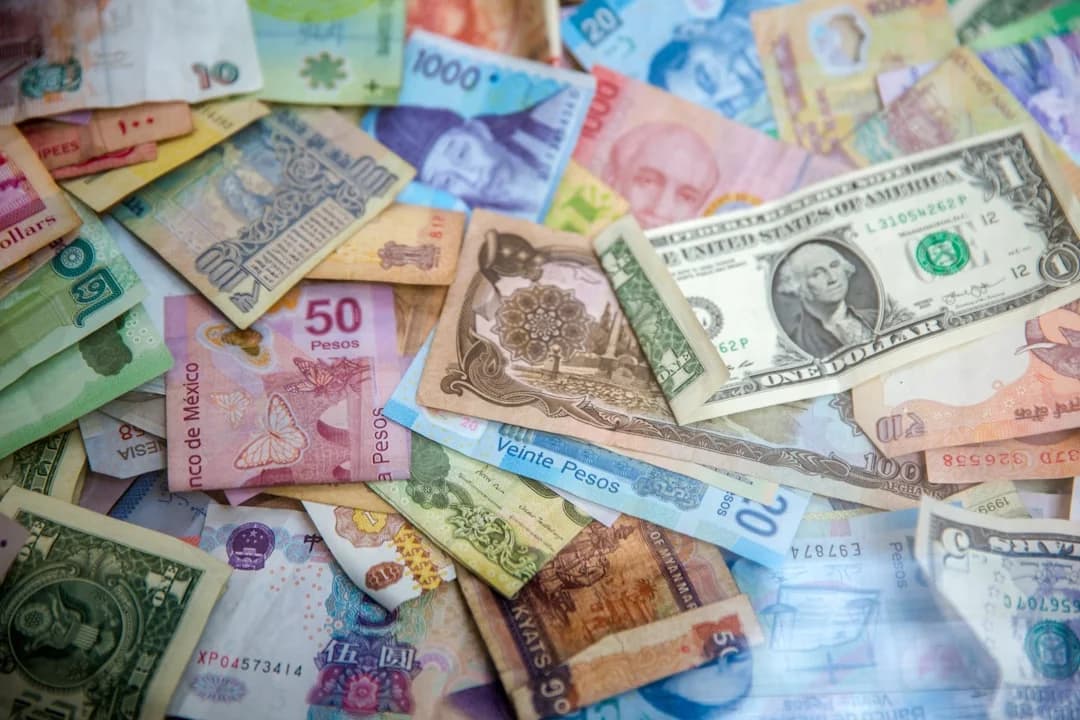
The commodity landscape in 2026 is increasingly defined by what Wall Street researchers are calling Commodity cross-asset linkages 2026. A synthesis of recent public data from the World Bank, the IMF, and central banks shows energy prices, metal markets, and currency movements moving in closer tandem as policymakers calibrate inflation and growth expectations. The latest updates, as of May 2026, underscore how geopolitics, policy signals, and supply dynamics are reshaping cross-asset interactions in ways that matter for investors, producers, and policymakers alike. In practical terms, the linkage means that a shock in one domain—say oil supply through the Hormuz corridor or a shift in dollar strength—can quickly feed through to metals and even to broad commodity baskets, altering risk premia and portfolio resilience. This piece lays out what happened, why it matters, and what comes next in a data-driven, neutral, and timely framework.
The signals are clear: policy expectations and geopolitical risks are now a common price driver across asset classes. IMF research published in April 2026 highlights that commodity prices were revised higher in the wake of the Middle East conflict, with oil, base metals, and even rare earths moving on macro and policy cues as much as on traditional supply-demand fundamentals. At the same time, market watchers are noting that the dollar’s path, inflation expectations, and shifts in risk sentiment are coupling energy, metals, and currencies into a single cross-asset narrative. As central banks navigate a higher-for-longer environment, the cross-asset linkage story is becoming a central theme for market strategy and policy assessments. [IMF commodity feature, April 2026; BIS governance paper, March 2026] (imf.org)
What Happened
Executive triggers: Middle East disruptions reframe energy and trade flows
The April 2026 World Bank Commodity Markets Outlook (CMO) emphasizes how geopolitics can restructure global price dynamics for an extended period. The report documents unprecedented disruptions to energy and fertilizer supplies tied to the Gulf region, focusing on shipping through the Strait of Hormuz. In the baseline scenario, Hormuz disruptions have caused energy and related commodity flows to become temporarily more constrained, with implications for global price formation across energy futures, fertilizers, and metals inputs. The baseline projections show the shock is not a one-off event but a set of dislocations that can push metal and fertilizer prices higher even as oil markets adjust. The report also notes the risk that these disruptions could persist longer than initially priced in by markets, particularly if maritime transit remains stressed. This cross-asset dynamics matters for 2026 as it feeds into energy prices and, by extension, metal inputs and manufacturing costs. (thedocs.worldbank.org)
The IMF’s World Economic Outlook Commodity Special Feature (April 2026) underscores how oil-market disruptions reverberate beyond energy to metals and even to exchange rates. The IMF documents oil price spikes and elevated energy costs linked to the Middle East conflict, with oil prices rising sharply through early 2026 and natural gas markets experiencing volatility as gas supply and LNG flows are affected by geopolitics. The IMF highlights that higher energy costs feed through to fertilizers and industrial inputs, and they also shape the inflation backdrop that central banks must manage. As a result, commodity price indices are revised higher in 2026, and the macroeconomic implications of those shifts—together with policy uncertainty and dollar dynamics—are central to cross-asset linkages. This cross-asset thinking is now a core part of macro forecasting and investment strategy. (imf.org)
In parallel, the BIS Quarterly Review (March 2026) traces how the review period—from late November 2025 to early March 2026—saw a notable shift in risk sentiment and cross-asset dynamics. It notes that volatility in energy markets—oil and gas in particular—created spillovers into equities, currencies, and precious metals, with safe-haven demand for gold and silver fluctuating in response to geopolitical shocks. The BIS document emphasizes that the dollar’s behavior shifted in risk-off conditions and that safe-haven flows and leverage in commodity markets amplified price moves, reinforcing the view that commodity cross-asset linkages are becoming a structural feature of 2026 market behavior rather than a transient episode. Gold and silver surged in early 2026 before retracements, illustrating how cross-asset risk channels operate in real time. (bis.org)
The February 2026 S&P Global Commodity Price Watch adds a practical, market-facing lens: most globally traded industrial commodities were anticipated to move largely sideways in 2026, with crude prices expected to dip in the middle of the year on oversupply. Yet the report also emphasizes that regional protectionism and country-specific tariff dynamics could lift or mute price trajectories in different markets. This underscores a fundamental point about cross-asset linkages in 2026: price movements are not uniform across sectors, but the cross-cutting themes—oil momentum, energy costs, metals demand, and currency movements—create a framework in which assets can move together under certain macro and policy scenarios, and diverge under others. The February update also notes that crude is a key driver of risk premia, even as regional dynamics shape other sectors. (spglobal.com)
The World Bank’s October 2025 Commodity Markets Outlook already anticipated a world where 2026 could feature a lower price trajectory for many commodities on a broad base of weak growth, but with upside risks linked to energy transitions and geopolitical tensions. The report forecast Brent crude prices around $60 per barrel in 2026 (a multi-year low by historical standards) and highlighted that energy prices, while softer, could move sharply higher if geopolitical tensions escalated. It also pointed to a potential 21% rise in fertilizer prices in 2025 before easing in 2026, a dynamic that would feed back into metal inputs and agricultural demand. This historical perspective helps contextualize the 2026 cross-asset linkages, showing how prior trajectories and current shocks combine to shape a nearby-term cross-asset environment. (worldbank.org)
Market mechanics: Correlations, volatility, and the currency channel
The CME Group’s analytic piece from 2026 emphasizes that commodity cross-asset linkages can manifest in two ways: periods where sectors move together (positive correlations) and periods where diversification benefits re-emerge as sectors decouple. Using the Bloomberg Commodity Index (BCOM) and its sectors, CME highlights the evolving relationships across energy, industrial metals, precious metals, and grains. The piece notes that correlations cluster differently depending on macro and micro drivers, including energy supply shocks, currency moves, and investor positioning. In practice, this means that a shift in oil markets or a dollar rally can lift or depress multiple commodity subgroups in ways that require an integrated, cross-asset approach to risk management. The article also documents that correlations can tighten around key stress events, underscoring the importance of cross-asset awareness in 2026 risk assessments. (cmegroup.com)
The February 2026 S&P Global narrative reinforces the currency channel as a central piece of cross-asset linkage. The article discusses how USD strength or weakness alters the USD-denominated price of commodities and can affect global demand in ways that are not symmetrical across regions. The correlation between the U.S. dollar and the Bloomberg/BCOM index shows that currency moves can amplify or dampen commodity price changes, depending on the broader macro context and investor behavior. In short, the currency channel is not a peripheral factor; it is a core transmission mechanism for commodity cross-asset linkage in 2026. (spglobal.com)
Why metals and energy behave together (and apart) in 2026
The IMF’s April 2026 analysis highlights how energy, metals, and even rare earth elements (REEs) are interlinked in complex ways that reflect the energy transition, the raw-material intensity of AI and data-center builds, and the policy environment. Prices for base metals rose in early 2026 due to shortages and supply constraints in key producing regions, while the rare earths narrative gained prominence as policymakers consider supply security for critical inputs in clean energy and high-tech manufacturing. The IMF notes that elevated energy costs raise the cost of inputs across sectors, which has knock-on effects for metals and materials used in infrastructure and technology. This cross-asset linkage is particularly important for investors and policymakers evaluating supply-chain resilience and the inflation outlook. (imf.org)
The BIS report reinforces the metals–energy coupling through the lens of market microstructure. It describes how energy price volatility can drive volatility in metals markets via input costs and investment dynamics, and how safe-haven demand for gold and silver can create abrupt shifts that spill over into other asset classes, including equities and FX. The BIS discussion of energy, precious metals, and currency interactions during late 2025–early 2026 illustrates how, in a risk-off environment, correlations can move in ways that complicate traditional diversification assumptions for portfolios with commodity exposures. (bis.org)
Why It Matters
Policy and inflation dynamics in a cross-asset world

Photo by Maxim Hopman on Unsplash
The central message from 2026 cross-asset analysis is that policy signals and inflation dynamics cannot be studied in a vacuum. IMF’s April 2026 Commodity Special Feature makes clear that energy-price shocks feed through to commodity baskets and to inflation expectations, complicating monetary-policy trajectories. As policy makers respond to evolving energy costs and input-price pressures, the path of interest rates, currency strength, and inflation expectations becomes a shared driver of cross-asset behavior. This means that a policy surprise in one country can propagate through oil markets, metals prices, and currency valuations in ways that amplify risks or create hedging opportunities for diversified portfolios. The IMF explicitly links energy and metal price dynamics to policy uncertainty and the path of the dollar, underscoring the need for cross-asset awareness in macroeconomic forecasting. (imf.org)
BIS analysis reinforces this point by highlighting how central-bank communications, yield curves, and currency dynamics interact with energy and metal price volatility. The March 2026 BIS review notes how inflation expectations adjusted upward and how risk sentiment shifted in a way that pushed safe-haven flows into gold and other assets, but which could also lead to later reversals as policy expectations changed. The cross-asset narrative is not simply about price levels; it’s about the transmission channels that link macro policy to market volatility and cross-asset correlation regimes. Investors and policymakers who ignore these linkages risk mispricing risk premia and misallocating capital during volatile episodes. (bis.org)
Market implications for investors and risk managers
From a portfolio perspective, the cross-asset linkage in 2026 argues for risk management that explicitly contemplates energy, metals, and currency channels together rather than in isolation. CME’s emphasis on regime-dependent correlations—where assets that historically diverged can move in tandem under stress—suggests that scenarios with geopolitical shocks or policy surprises can produce sudden drawdowns across multiple commodity sectors. The February 2026 S&P Global update further implies that while a broad basket may trend sideways, idiosyncratic shocks—such as fertilizer price spikes or metal-input constraints—can still drive outsized moves in specific segments. For risk managers, this means building scenario analysis that explicitly tests cross-asset shock paths (oil spikes, dollar moves, metal-input constraints) and designing hedges that address multiple asset classes simultaneously. The work from S&P Global, CME, and BIS collectively supports this cross-asset risk-management approach. (spglobal.com)
Global growth, supply chains, and the energy transition
The April 2026 IMF WEO piece on commodity markets also stresses the macro backdrop: the energy transition, the demand for critical inputs for AI and data infrastructure, and the pervasive role of energy costs in shaping inflation and growth trajectories. As global growth slows or accelerates in different regions, cross-asset linkages will reflect not only price signals but also the distribution of demand and production capabilities across the global economy. The IMF’s focus on rare earths and critical minerals highlights how supply chain resilience is a central theme for long-run macro forecasting; disruptions in REE supply or in metal markets can have outsized effects on technology adoption and manufacturing costs, thereby feeding into inflation, growth, and exchange-rate dynamics. (imf.org)
World Bank research in April 2026 further emphasizes how the energy mix and supply-chain bottlenecks influence pricing across energy, metals, and agriculture. Disruptions in energy and fertilizer inputs can transmit through to metal production costs and food costs, influencing global inflation pressures and investment incentives. The cross-asset linkages in 2026 thus have both a price-formation dimension and a real-economy dimension: they alter macro outcomes and the strategic choices of companies and governments. Investors and corporations are left rethinking hedging, procurement strategies, and capital expenditure plans in a world where energy, metals, and currencies move together in ways that reflect policy and geopolitics as much as market fundamentals. (thedocs.worldbank.org)
What’s Next
Near-term data and policy watch
The World Bank’s April 2026 Commodity Markets Outlook signals a baseline expectation of elevated commodity-price volatility driven by geopolitical risk and energy-market dislocations, with a baseline projection of a 16% year-over-year rise in the 2026 commodity-price index. However, the report also highlights that risk to price projections is tilted toward higher prices in some scenarios, particularly if supply disruptions persist or if demand accelerates due to policy shifts. For readers and market participants, the key near-term watchpoints include: the trajectory of Hormuz-related shipping constraints, the evolution of oil balances in IEA forecasts, and the response of metals markets to input shortages and smelter closures. These will feed into cross-asset risk premia and potential regime shifts in correlations. (thedocs.worldbank.org)
The IMF and BIS provide complementary near-term signals. IMF’s April 2026 commodity feature documents a higher-for-longer policy environment and a stronger dollar in response to persistent inflation risks, while BIS discussions emphasize how cross-asset linkages can intensify volatility during geopolitical flare-ups. For investors, watch for shifts in central-bank guidance, currency market divergences, and sudden changes in oil and metal prices that could alter hedging effectiveness and portfolio allocations. The combination of policy signals and geopolitical risks makes a robust cross-asset framework essential in the months ahead. (imf.org)
What to watch in the latter half of 2026
Looking toward the second half of 2026, market participants should monitor several converging dynamics that will shape Commodity cross-asset linkages 2026. First, the global energy balance and LNG trade patterns remain critical as the energy market reacts to geopolitics and evolving demand from power generation, industry, and transport. IMF’s April 2026 forecast highlights oil-market risks and potential price trajectories dependent on supply constraints and demand shifts, while World Bank projections call for continued sensitivity to geopolitical events and protectionism pressures that can alter price paths across the MPI basket. Second, base metals and rare earths prices will be closely tied to both industrial activity and the broader policy push toward a high-tech economy. The IMF feature and BIS reviews together suggest that the cross-asset dynamics could intensify further if green transition programs require more specialized inputs and the supply chain tightens. Third, the currency channel will likely remain a core transmission mechanism, with USD strength or weakness shaping the USD-denominated price of commodities and influencing global demand patterns. (imf.org)
For risk managers and policy analysts, a practical approach is to integrate cross-asset scenario analysis into forecasting and budgeting processes. This means testing how simultaneous shocks to oil, metals, and currencies could interact under different macro-scenarios, including different policy rate paths, dollar trajectories, and geopolitical risk realizations. The evidence from 2026 across IMF, World Bank, BIS, and CME supports a world in which cross-asset linkages are not a niche concern but a fundamental framework for understanding risk and opportunity in commodity markets. The ability to anticipate and respond to these linkages will distinguish portfolios and policy responses in a year where energy, metals, and foreign-exexchange markets are tightly interwoven. (imf.org)
Closing
As 2026 unfolds, Commodity cross-asset linkages 2026 are not a theoretical curiosity but a practical framework for understanding how energy, metals, and currencies interact under a policy and geopolitical regime that remains unsettled. The latest data from the World Bank, IMF, BIS, and market researchers collectively indicate that energy shocks, input costs for metals, and currency dynamics are linked in ways that can amplify volatility or create hedging channels depending on the regime. For readers who want to stay ahead, the message is simple: monitor geopolitics and central-bank communications together with commodity prices and FX trends. The cross-asset lens is now essential for assessing risk, allocating capital, and navigating policy choices in a world where the line between energy markets, metal markets, and currency markets is increasingly blurred.

Photo by Austin Hervias on Unsplash
Wall Street Economicists will continue to track these linkages as new data and policy signals emerge. Readers are encouraged to follow the ongoing World Bank Commodity Markets Outlook updates, IMF WEO releases, and BIS market briefs for fresh details on how Commodity cross-asset linkages 2026 evolve through the second half of the year. Ongoing coverage will highlight which assets are best positioned to weather or benefit from evolving cross-asset dynamics, and which hedging strategies remain most effective in an environment where energy and currency channels can reinforce or counterbalance movements in metals and other commodities. (thedocs.worldbank.org)
As the data show, the path of commodity prices, investor risk appetite, and policy expectations remains interconnected in 2026. The cross-asset linkage framework will likely become more pronounced as macro uncertainty persists and as the energy transition accelerates, shaping the way traders, policymakers, and businesses navigate risk and opportunity in the global economy. Stay tuned for further updates and data-driven analyses that illuminate Commodity cross-asset linkages 2026 in real time. (imf.org)