Cryptocurrency 2026 landscape: Regulation & Adoption

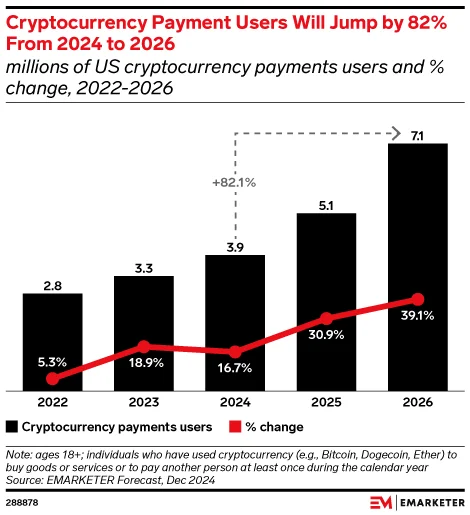
Cryptocurrency 2026 landscape is evolving at an unusually rapid pace, driven by intensified regulatory clarity, rising institutional participation, and the maturation of digital-payment rails. Across major markets, policymakers are translating broad digital-asset ambitions into concrete licensing regimes, consumer protections, and market safeguards. Simultaneously, the global adoption curve shows resilience and intensity in regions with strong on-the-ground use cases, even as macro conditions influence risk appetite and investment horizons. For readers of Wall Street Economicists, this convergence of policy, technology, and market activity is not a fringe topic—it is a core driver of capital allocation, product design, and competitive positioning in both fintech and traditional finance. The Cryptocurrency 2026 landscape matters because it shapes funding access, risk premiums, and the pace at which innovative financial services can scale from pilots to mainstream usage. For policymakers, it offers a proving ground for how to balance innovation with financial stability; for businesses, it signals where to invest, partner, or relocate operations; for consumers, it hints at the protections and services they can expect as digital assets become more integrated into everyday commerce. This is a data-driven moment in time, with clear signals from regulators, market participants, and technology ecosystems that will ripple through the global financial system in the months ahead. (esma.europa.eu)
What's happening in the Cryptocurrency 2026 landscape
Regulatory clarity rising
The European Union’s Markets in Crypto-Assets Regulation, widely known as MiCA, has entered a mature execution phase. After taking effect in 2024, MiCA requires ongoing implementation measures at the national level, and European authorities are now balancing registration, licensing, and consumer-protection regimes across 27 member states. The European Securities and Markets Authority (ESMA) explains that MiCA provides uniform, forward-looking standards for disclosure, authorization, and supervision of crypto-asset activities, aiming to curb market fragmentation and bolster market integrity. The regime’s Level 2/3 measures continue to roll out, with central registers for authorized providers and issuers evolving through 2024–2026. In short, MiCA’s skeleton is in place, and the marrow is being filled through national-adaptation steps and enforcement. (esma.europa.eu)
Meanwhile, the United Kingdom is pursuing a distinctly phased approach. The FCA has laid out a multi-year blueprint to regulate cryptoassets, with a formal regime anticipated to commence after a transitional period and licensing requirements for crypto firms. The agency has opened a public consultation on major components such as admissions, disclosures, market abuse, and custody, signaling a future where crypto firms will need formal authorization to operate in the UK. The published roadmap and recent updates show a deliberate move toward a predictable, risk-based framework designed to support innovation while reinforcing consumer protections. (fca.org.uk)
The United States is meanwhile formalizing pathways for regulated products tied to digital assets. The SEC’s move toward generic listing standards for new crypto and spot products is designed to streamline approvals and shorten time-to-market for exchange-traded vehicles tied to cryptocurrencies. Industry observers describe the reform as a watershed moment that could accelerate a broader participation by traditional asset managers and mainstream investors in crypto exposure, albeit within a framework that remains cautious and compliance-heavy. (cnbc.com)
The push toward formal frameworks is complemented by a global view from the Bank for International Settlements and the Financial Stability Board, which emphasize consistent risk-management standards and cross-border data sharing as crypto markets scale. These organizations highlight stablecoins and crypto-asset activities as areas where global standards are essential to maintain financial stability and market integrity. (fsb.org)
Adoption momentum
Global crypto adoption continues to show resilient and broad-based momentum, with regional hot spots that defy simple one-size-fits-all narratives. Chainalysis’ 2025 Global Crypto Adoption Index identifies Asia-Pacific as the fastest-growing region for on-chain activity, driven by population-scale engagement in both centralized and decentralized services. In the 12 months through mid-2025, APAC’s on-chain value received surged roughly 69% year over year, propelled by markets such as India, Pakistan, and Vietnam. The region’s total on-chain transaction volume reached about $2.36 trillion, underscoring deep consumer use, merchant acceptance, and increasingly institutional participation. North America and Europe remain substantial hubs by absolute value, but the growth dynamics are increasingly regionally divergent, with APAC leading in grassroots activity and Latin America following closely in expansion. (chainalysis.com)
A parallel signal comes from Gemini’s 2025 State of Crypto, which finds that nearly one-quarter of adults globally report owning crypto. The study’s geographic breadth includes the United States, the United Kingdom, France, Italy, Singapore, and Australia, offering a cross-section of developed and emerging markets where consumer experimentation with digital assets is now part of mainstream financial behavior. The data point underscores that crypto ownership has crossed from a niche hobby into a recognizable asset-class category for a meaningful share of households worldwide. (investors.gemini.com)
Evidence from on-chain flows and exchange activity further illuminates the adoption arc. The 2025 adoption index and related analyses show continued expansion in both retail and institutional channels, with U.S. and European markets seeing renewed momentum in the wake of regulatory clarity and the potential for regulated products to reach broader investor bases. While adoption remains uneven across regions, the overall signal is clear: the Cryptocurrency 2026 landscape is characterized by expanding on-ramp access, more visible institutional interest, and a consumer base that is increasingly comfortable interacting with digital assets as part of traditional financial routines. (chainalysis.com)
EU MiCA milestones
Two high-profile case studies demonstrate MiCA’s real-world impact on the crypto ecosystem in Europe. Coinbase has earned a MiCA authorization from Luxembourg’s CSSF, enabling it to provide crypto-asset services across the European Economic Area via Coinbase Luxembourg. This licensing milestone positions Coinbase as a regulated EU hub and signals confidence among major exchanges to establish regulated EU bases. Separately, Kraken secured a MiCA license from the Central Bank of Ireland, reinforcing Europe-wide access for regulated platforms and underscoring the central role of national regulators within the MiCA framework. Together, these developments highlight how MiCA is shaping market access, licensing, and cross-border service models for major players. (coindesk.com)
Another practical consequence of MiCA is the increasing attention to the cost and complexity of compliance. While the EU aims for harmonization, country-level implementation still introduces uneven timelines, licensing processes, and transitional regimes. As MiCA’s transitional period evolves, firms are racing to secure full licenses or determine their operational footprints within the EU’s single market. The practical effect is a more predictable regulatory environment for compliant firms, but with significant compliance overhead for those seeking to operate across multiple EU jurisdictions. (esma.europa.eu)
Comparison table: a quick glance at regulatory posture in three major digital-asset ecosystems
| Region / Regime | Key Features | Status 2026 | Market Impact |
|---|---|---|---|
| United States (Spot Crypto ETFs) | SEC to adopt generic listing standards; faster launch window for spot ETFs | 2025–2026: potential dozens of spot crypto ETFs; first movers in Bitcoin/Ethereum already cleared | Increased regulated exposure, potential new inflows from institutions; ongoing regulatory scrutiny |
| European Union (MiCA) | Single market licensing, uniform disclosures, stronger consumer protections; national registers coordinated by ESMA | Fully applicable since Dec 2024; ongoing implementation through 2026; MiCA-related licenses expanding across member states | Clear, scalable EU base for regulated crypto services; higher barriers for non-compliant actors; growth in MiCA-compliant products like euro-stablecoins |
| United Kingdom (FSMA crypto regime) | staged regime design with authorisation for crypto firms; future admissions/disclosures; consumer protection emphasis | Regime design active in 2026; expected commencement around 2027; licensing window to open 2026–2027 | A regulated UK hub could attract institutions and innovators; potential for a robust, standards-based market, albeit with transitional risk during rollout |
What’s driving the momentum and the risk mix
The Cryptocurrency 2026 landscape is not simply a regulatory story; it’s about the interplay of policy ambitions, technology maturation, and market expectations. Regulatory momentum—MiCA in Europe, a more codified approach to spot crypto products in the U.S., and the UK’s evolving regime—creates a framework within which institutional capital can be allocated with greater confidence. At the same time, global adoption is not a monolith: APAC’s surge in on-chain activity reflects large, technology-savvy populations and a growing ecosystem of payment rails and merchant adoption, while other regions catch up through targeted use cases and local regulatory permissions. BIS and FSB analyses emphasize the need for stable, transparent, and cross-border governance for crypto-assets, underscoring that the regulatory trend is as much about macroprudential risk management as it is about consumer protection or innovation incentives. (esma.europa.eu)
Why it’s happening
Market forces and policy alignment

A central driver behind the Cryptocurrency 2026 landscape is a coherent push toward policy alignment that reduces uncertainty for market participants. In the U.S., the SEC’s shift toward a predictable ETF pathway lowers the regulatory risk premium for traditional asset managers looking to offer regulated crypto exposure to clients, potentially catalyzing new product launches and asset-collecting strategies. In parallel, MiCA’s harmonization of licensing and disclosure across Europe reduces fragmentation, enabling exchanges to passport services across the single market and encouraging cross-border strategic partnerships, such as MiCA-compliant euro-stablecoin consortia emerging in the region. The UK’s 2026–2027 timeline for the crypto regime, including consultations on stablecoins and custody, reflects a broader policy aim: to create a regulated environment that preserves market integrity while preserving room for innovation. (cnbc.com)
Technology, ecosystems, and social drivers
Technological maturation underpins the regulatory and adoption story. The EU’s eIDAS and the push to extend digital trust into blockchain ecosystems (as explored in regulatory and technical literature) create pathways for institutional on-chain activity that meets compliance requirements. In addition, digital-payments infrastructure developments—like the Eurosystem’s digital euro program moving to a more concrete phase—signal a future where central-bank digital currency-like rails could coexist with crypto assets, potentially facilitating regulated settlement and cross-border efficiency. The ECB’s recent steps toward a digital euro pilot in 2027 and potential first issuance around 2029 illustrate how central banks are reimagining settlement rails, even as individual currencies and private tokens compete for utility. (centralbank.ie)
Infrastructure and risk management
The 2025 BIS and FSB analyses emphasize stablecoins and risk governance as primary areas for global coordination. As policymakers push for robust disclosures, reserve-management standards, and interoperability of data across borders, crypto firms that want scale must invest in compliance capabilities, risk controls, and cross-border reporting. In practice, that has the effect of raising the cost of entry but improving the reliability of regulated products, which, in turn, broadens the addressable market for compliant platforms and financial institutions seeking to participate in tokenized finance. (fsb.org)
What it means
Business impact: shifts in strategy and geography
For crypto firms, the 2026 landscape signals a bifurcated path: scale through regulated markets and careful retreat from uncertain jurisdictions. The MiCA framework has already driven exchanges to obtain EU-wide licenses, a trend illustrated by Coinbase’s MiCA license from Luxembourg and Kraken’s Irish authorization, enabling passporting across the EU. These moves reflect a larger strategic pivot: firms are building centralized, regulator-facing footprints in Europe to serve residents across 30-plus markets with a consistent regulatory baseline. For the U.S., the prospect of a robust slate of spot ETFs could channel a flood of institutional investment into crypto exposure via regulated vehicles, while maintaining strict disclosure and governance standards. The UK’s path toward a regulated regime—coupled with ongoing consultations on stablecoins and custody—may attract global players seeking a well-defined regulatory home, particularly as the regime becomes more mature and operational. (coindesk.com)
Consumer effects: risk awareness and access
As regulators elevate consumer protections and improve disclosures, retail investors can expect clearer information about product risk, fees, and counterparty risk when engaging with crypto assets or related financial products. The FCA’s ongoing consultations and sandbox initiatives indicate an emphasis on transparency and consumer protection, including standardized disclosure templates and risk notices. However, consumer adoption also faces headwinds, including the need for better financial literacy and a more robust understanding of volatility and liquidity dynamics—risks that regulators and industry groups are actively trying to mitigate. In the U.K., reporting on rising crypto interest among younger investors underscores the importance of education and guardrails to prevent misaligned risk-taking. (fca.org.uk)
Industry changes: market structure and product evolution
The convergence of regulation and adoption is changing how institutions design, market, and price crypto-based services. The EU’s MiCA framework has validated a passport model for regulated platforms, enabling scalable cross-border operations, while the U.S. ETF pathway can broaden the set of regulated investment options available to mainstream investors. These dynamics are likely to foster more regulated, institutionally oriented products (like ETF wrappers, futures- and option-based strategies, and regulated custody solutions) and encourage exchanges to invest in compliance, risk management, and customer protections. At the same time, the rise of regulated euro-stablecoins and renewed attention to tokenized assets may foster a broader ecosystem in which tokenized securities and cross-border settlement gain traction. (coindesk.com)
Global regulation snapshot
| Region / Regime | What it enables | Current status (2026) | Practical impact on business and markets |
|---|---|---|---|
| United States | Spot crypto ETFs via generic listing standards; potential broader institutional access | Regulatory framework evolving; multiple proposals and approvals; several ETFs launched in 2024–2025 | Expanded regulated exposure for retail and institutions; greater product innovation within a guardrail system; continued regulatory scrutiny |
| European Union (MiCA) | Unified passportability; licensing; consumer protections; centralized registries | In force since 2024; implementation across member states ongoing; national regulators issuing licenses (Luxembourg, Ireland, etc.) | Clear, scalable market for regulated crypto services; faster cross-border expansion for compliant firms; greater regulatory clarity for consumers |
| United Kingdom (FSMA crypto regime) | Licenced crypto firms; consumer protections; disclosures; market integrity provisions | Regime design underway; 2027 commencement targeted; ongoing consultations and policy papers in 2025–2026 | Potentially robust, innovation-friendly but transitional; businesses must plan for authorization windows and disclosure standards |
What it means for specific players and segments
- Exchanges and custodians: The MiCA passporting model and U.S. ETF expansion create a powerful incentive to pursue regulated footprints, prioritize licensing, and invest in customer protections. Coinbase’s Luxembourg hub and Kraken’s Ireland license serve as visible templates for regulatory-driven growth in the EU, while U.S. exchanges anticipate a broader spectrum of listed cryptocurrency products that can draw in traditional asset managers. (coindesk.com)
- Stablecoins and payments: The MiCA regime explicitly targets stablecoins and issuer-reserve transparency, which has driven banks and payment providers to pursue MiCA-aligned operations and to plan for additional licensure where necessary. The UK’s and EU discussions on stablecoins emphasize the need to pair crypto access with formal supervisory oversight and consumer safeguards. (coindesk.com)
- Retail investors and consumers: As disclosures improve and product ecosystems expand in regulated markets, consumers will see more standardized risk information and access to regulated vehicles. However, the consumer risk profile remains high in crypto markets, and regulators stress the importance of education and appropriate risk management. The FCA’s consumer-focused papers and trials highlight an emphasis on informed participation. (fca.org.uk)
Looking ahead
6–12 month predictions
- Regulatory trajectory remains constructive but complex. The SEC’s expedited listing standards for spot crypto ETFs could accelerate product introductions in the United States, assuming issuers complete filings and exchanges complete required disclosures. Analysts expect a wave of new products across a range of assets, potentially including multi-asset index ETFs, as approvals progress through late 2025 into 2026. The pace will depend on continued alignment between market timing and regulatory readiness. (cnbc.com)
- Europe’s MiCA framework will continue to evolve, with more license grants across member states and larger-scale deployments of MiCA-compliant platforms. The stablecoin and e-money token landscape under MiCA will likely see new euro-denominated stability tokens advance from pilot to broader use. The Coinbase Luxembourg milestone and Kraken’s Ireland license illustrate the typical pattern of EU jurisdictional licensing feeding into a unified market. (coindesk.com)
- The digital-euro program remains a key macro driver. The Eurosystem is advancing toward technical readiness for a potential 2029 first issuance, with pilots possibly starting earlier if legislative conditions align in 2026. This timeline suggests a gradual integration of central-bank digital currency rails into the broader payment landscape, coexisting with private digital assets and regulated crypto products. (centralbank.ie)
- Global risk-management focus around stablecoins continues to sharpen. BIS, FSB, and other international bodies emphasize the importance of robust reserve strategies, disclosures, and cross-border cooperation. Expect ongoing guidance and potential further regulatory alignment on stablecoins, particularly as institutions consider custody, settlement, and liquidity-management frameworks in regulated markets. (fsb.org)
Opportunities and how to prepare
- For crypto firms: Build a modular, scalable compliance architecture that can adapt to MiCA, the UK’s FSMA-driven regime, and U.S. ETF regimes. Prioritize passporting capabilities, robust disclosures, and customer protections to accelerate cross-border expansion. The license-granting patterns we’re seeing in Luxembourg and Ireland show that regulatory success often translates into expanded market access across entire blocs. (coindesk.com)
- For financial institutions: Consider regulated exposure strategies through spot ETFs and other futures-based products once available, while evaluating partnerships with MiCA-compliant platforms for European distribution. The regulatory push is creating clear channels for institutional participation, albeit with heightened due diligence, governance, and risk-management expectations. (cnbc.com)
- For consumers: Prepare for more information, education, and transparency around crypto products, as regulators push toward standardized risk notices and consumer disclosures. While the adoption curve remains broad, responsible participation will require careful evaluation of volatility, liquidity, and counterparty risk, especially as new investment vehicles enter the market. (fca.org.uk)
How to prepare in practice
- For firms seeking regulatory clearance: Start with a MiCA-aligned compliance program and map out a passporting plan across EU member states. Engage with regulators early, maintain clear white papers and disclosures, and build a robust governance framework around KYC/AML, data reporting, and consumer protection. Observers note that firms in the EU are increasingly prioritizing MiCA compliance as a baseline for growth. (esma.europa.eu)
- For U.S. market participants: Prepare for an expanding set of regulated crypto products; align product governance, risk, and investor disclosure processes with evolving SEC expectations; plan for potential expedited timelines under new listing standards. The regulatory shift toward structured, regulated product offerings will require internal controls, compliance staffing, and cross-functional collaboration. (cnbc.com)
- For the UK market: Monitor FCA consultations and policy papers as they shape the final rules for regulated activities, stablecoins, and custody. Firms should participate in industry dialogue and test disclosure templates, securities-compliance approaches, and customer-education initiatives to align with the anticipated regime. (fca.org.uk)
Closing The Cryptocurrency 2026 landscape is shifting toward more predictable, globally coherent standards at the same time that on-the-ground adoption accelerates in high-potential regions. Regulatory clarity—particularly MiCA in Europe, the evolving U.S. approach to spot crypto products, and the UK’s upcoming regime—creates a framework within which capital, innovation, and consumer protection can coexist. Yet the road ahead is not devoid of risk: global coordination on stablecoins and cross-border data, central-bank digital currency experiments, and the balancing act between innovation and financial stability will continue to shape how cryptocurrencies, tokenized assets, and digital payments integrate into mainstream finance. For market participants, the best path is clear: embrace a robust compliance and risk-management posture, invest in scalable infrastructure, and stay attuned to policy developments that could unlock or constrain access to regulated crypto opportunities. The near term will test both the resilience and adaptability of firms that want to thrive in a more regulated, tech-enabled financial system.
This is not merely a regulatory update; it is a blueprint for action in a dynamically evolving market. The choice for readers and players is simple: build preparedness now to benefit from the inevitable expansion of legitimate crypto activity, while maintaining vigilance around risk, governance, and compliance in a global, multi-jurisdictional landscape. (esma.europa.eu)