February 2026 US stock market and crypto momentum Update

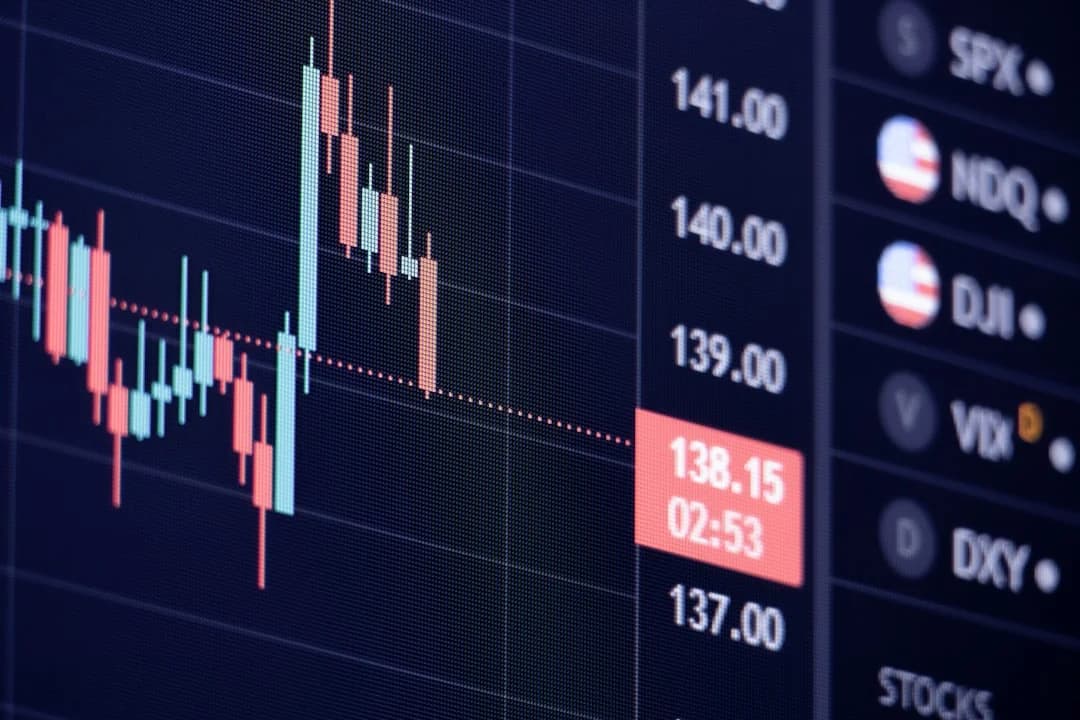
Photo by Tötös Ádám on Unsplash
The month of February 2026 has unfolded as a tense test of momentum across both traditional equities and the crypto market, with traders weighing tariff headlines, AI disruption fears, and stubborn macro forces. By mid-February, U.S. stock indices had already shown flashes of resilience, only to confront fresh headlines that rattled risk appetite. On February 23, 2026, major U.S. stock indices pulled back in tandem with reports of new tariff threats from Washington, while cryptocurrencies faced renewed volatility amid a broader risk-off backdrop and shifting macro expectations. The day’s price action underscored a broader theme: February 2026 US stock market and crypto momentum remains highly data-dependent, with leadership rotating between tech equities and more defensive sectors as investors parse policy signals and earnings outlooks. Bitcoin and other major digital assets likewise reflected this cross-asset sensitivity, trading in tighter ranges as macro headlines dominated sentiment. (apnews.com)
The tariff headlines that dominated the late-winter news cycle contributed to a broader risk-off mood that fed through to both equity and crypto markets. Markets temporarily repriced the risk of policy shifts and supply-chain disruption, a dynamic that has important implications for both near-term trading and longer-term investment strategy. In parallel, analysts highlighted AI-specific exposure as a key driver for tech equities, with investors evaluating how firms in hardware, semiconductors, and cloud infrastructure would fare under a more uncertain tariff and policy backdrop. The same week, broader macro considerations—such as labor market dynamics, inflation expectations, and Federal Reserve policy trajectories—stoked extra caution among investors. Bitcoin and Ethereum faced scaling volatility within this context, with notable moves that reflected both crypto-specific momentum and the spillover from equity risk appetite. (apnews.com)
As February 2026 progressed, market participants looked to a blend of data releases, earnings reports, and policy signals to determine whether the February 2026 US stock market and crypto momentum would stabilize, accelerate, or revert into a more pronounced downshift. The day-to-day price action remained highly conditional, with some days showing meaningful intra-day swings and others offering moments of relief as risk-on air briefly returned. The evolving narrative—driven by policy developments, the pace of AI adoption in enterprise, and the health of the labor market—continued to influence both traditional markets and digital assets. For readers tracking this momentum, the week-by-week updates offered in late February provided a practical lens on how the two markets interact in a regime characterized by policy ambiguity and macro fragility. (apnews.com)
What Happened
Tariff headlines and immediate market reaction
In the closing days of February 2026, tariff-related headlines dominated the financial news cycle in the United States, triggering a swift risk-off response across major indices. The Guardian live coverage highlighted President Donald Trump’s tariff threat posture and the market’s quick punitive reaction as investors reassessed cross-border trade dynamics and their potential spillovers into global growth. U.S. markets faced sharp leg-downs in reaction to tariff policy signals, underscoring how policy uncertainty can compress risk appetite even in a period of relative fundamental strength in certain sectors. The day’s action was consistent with a broader pattern of volatility tied to policy developments rather than pure earnings or macro data, though the underlying risk-off mood spilled over into technology and AI-related equities. (theguardian.com)
On February 23, 2026, the Associated Press reported that the major U.S. stock indexes declined after tariff-related headlines and ongoing concerns about AI disruption affecting certain industries. The S&P 500 fell about 1% to 6,837.75, the Dow Jones Industrial Average dropped roughly 1.7% to 48,804.06, and the Nasdaq Composite slid about 1.1% to 22,627.27. The AP piece framed the declines as a reflection of policy risk and sector-specific nerves—particularly among technology and AI-enabled firms. These numbers represented a continuation of the February momentum narrative, with a clear emphasis on risk management as policy uncertainty weighs on valuations. Bitcoin briefly dipped below the $64,000 mark but remained within recent trading ranges, illustrating the asset class’s sensitivity to macro headlines and shifting risk sentiment. (apnews.com)
The same day’s reporting illustrated how cross-asset dynamics were shaping momentum. Crypto markets, though continuing to trade within a broad consolidation band, reacted to the same policy-driven risk-off environment that weighed on equities. The interplay between policy risk and macro cues created a two-way dynamic: equities reacting to headline risk and crypto assets reflecting appetite for risk on or off the back of the same news cycle. This relationship is particularly salient for readers focused on February 2026 US stock market and crypto momentum, as shifts in policy perception often translate into short- to medium-term moves across both asset classes. Barron’s later coverage highlighted how AI-related concerns contributed to a risk-off tilt in digital assets as investors priced in potential labor-market disruptions and slower demand in AI-adjacent sectors. (apnews.com)
Tech sector rotation and AI risk
Even before the tariff headlines, February 2026 had shown a pronounced rotation within the tech complex, as investors weighed the growth prospects of AI-enabled platforms against the risk of policy-driven downside. The market narrative emphasized leadership shifts among megacaps and AI beneficiaries, with some days favoring defensive positioning in the technology supply chain and others favoring higher-beta growth names tied to AI adoption. The AP summary noted that technology and cybersecurity stocks were among the hardest hit during the session, reflecting investor concerns about the sustainability of AI-driven earnings growth in a macro-uncertain environment. This pattern—risk-off trading in AI-sensitive names—helped explain the broader February momentum picture for the U.S. stock market, where sector balance and leadership are as important as overall index direction. (apnews.com)
Analysts and market observers also pointed to an environment where AI-related hardware creators and cloud providers could experience both upside opportunities and heightened volatility, depending on policy signals and enterprise budget cycles. While some cloud and AI infrastructure names were temporarily pressured by the risk-off mood, others benefited from continued capital expenditure in data centers and AI compute, illustrating a nuanced momentum story rather than a simple up-or-down market. In this context, momentum-focused commentary continued to stress that leadership lagged in a way that suggested a transitional phase rather than a definitive trend breakout. (investinglive.com)
Crypto market response to macro headlines
Crypto markets in February 2026 demonstrated a sensitivity to macro headlines and equity risk sentiment similar to traditional markets, though with distinct dynamics tied to liquidity, regulatory expectations, and technology-sector cycles. Barron’s coverage of AI scare narratives in crypto highlighted how news-driven sentiment can accelerate downside moves, as investors reassessed risk exposure and reallocated capital away from high-beta digital assets during periods of heightened policy or macro risk. Bitcoin and Ethereum were reported to be trading in tighter ranges or pulling back from recent peaks, consistent with a broader risk-off context. While some crypto metrics suggested the potential for stabilization in mid-February, the overall momentum remained negative in the near term, consistent with a cautious stance among traders seeking clarity on policy and growth trajectories. (barrons.com)
Investing-focused outlets in February 2026 also noted how crypto may be influenced by the broader equities environment and Nasdaq’s leadership dynamics. A mid-February analysis highlighted how Bitcoin had stabilized but not decisively reclaimed prior resistance zones, while Ethereum’s price action suggested greater vulnerability within the crypto complex. The cross-asset takeaway was that crypto momentum in February 2026 was closely linked to macro risk appetite and the tech sector’s performance, rather than developing as an independent, self-sustaining trend. These insights align with the broader narrative of February 2026 US stock market and crypto momentum as a connected, data-driven story rather than two isolated markets. (investinglive.com)
Timeline of key February events
- February 11–12, 2026: Mixed market signals as January payrolls and inflation expectations influenced near-term Fed rate expectations; several technology and AI-related stocks displayed divergent performance within a rotating leadership pattern. Contemporary market commentaries noted a pause in the most decisive leadership moves and a focus on macro data and policy cues. While not a formal market turning point, the period established a framework for how momentum might evolve in a policy-driven February 2026 environment. (reddit.com)
- February 23, 2026: Tariff headlines triggered a broad risk-off move; major indices declined, with the S&P 500 down about 1%, the Dow off roughly 1.7%, and the Nasdaq down around 1.1%. Crypto markets experienced continued volatility alongside Bitcoin’s brief (but notable) dip beneath $64,000. These moves underscored the sensitivity of February 2026 US stock market and crypto momentum to policy developments and AI risk narratives. (apnews.com)
- February 24, 2026: Crypto momentum remained in a cautious stance as traders digested fresh policy headlines and AI risk signals; Bitcoin trading near the mid-$60k range and Ethereum testing key support levels. Market commentary emphasized that the absence of a dominant leadership signal in equities was mirrored by a lack of sustained upside in crypto, suggesting a transitional momentum regime rather than a new expansion phase. (barrons.com)
Why It Matters
Implications for policymakers and market expectations

Photo by Anne Nygård on Unsplash
The February 2026 news cycle highlighted how tariff policy and trade tensions can reverberate through equity markets and crypto momentum. Tariffs, if implemented or threatened at scale, have the potential to dampen global growth expectations, influence input costs for technology and manufacturing firms, and raise uncertainty about supply chains. The reaction observed in late February reflected a market attempting to price in policy risk, with investors seeking clarification on the persistence and scope of any proposed measures. For readers tracking the February 2026 US stock market and crypto momentum, this underscores the significance of policy clarity in shaping near-term trajectories and risk budgets across asset classes. The Guardian’s live coverage and AP’s market-oriented recap illustrate how policy signals can compress risk appetite, particularly in high-growth tech and AI-enabled segments that are sensitive to capital discipline and earnings visibility. (theguardian.com)
From a macro perspective, the policy environment intersects with labor market dynamics and inflation expectations, both of which influence Fed policy expectations. As February advanced, market participants looked for signs about the path of interest rates, which in turn affect equity valuations, particularly for rate-sensitive sectors like technology and growth equities. The interplay between policy, macro data, and asset momentum helps explain why February 2026 US stock market and crypto momentum has displayed a pattern of episodic strength followed by renewed consolidation rather than a clear, sustained breakout. Observers noted that momentum in AI-related equities could still provide ballast if enterprise IT budgets remain robust and if policy signals stabilize. However, the policy risk embedded in tariff headlines continued to challenge a durable, long-duration up-leg in stock markets. (apnews.com)
Cross-asset momentum: stocks and crypto in a shared narrative
Analysts have long observed that equities and crypto often move in tandem during periods of broad risk-on or risk-off sentiment, even if the drivers differ across asset classes. In February 2026, the cross-asset momentum story was shaped by a combination of policy headlines, AI adoption dynamics, and macro uncertainty. Crypto momentum, though periodically buoyant during risk-on periods, struggled to sustain upside amid a cautious environment where policy risk and corporate earnings visibility remained in flux. This alignment—rates, risk appetite, and policy clarity as the three pillars shaping momentum—highlights the value of a holistic, data-driven approach to market analysis for readers of Wall Street Economists who seek to understand how policy and technology trends intersect with asset-class performance. (barrons.com)
Sector leadership and the AI cycle
The February 2026 narrative around AI demonstrates both the potential and the fragility of momentum within technology and data-center megatrends. Nvidia and other AI beneficiaries have historically driven alpha when capital expenditure in cloud and AI infrastructure accelerates, and digital ecosystems expand. Yet, the market’s testy reaction to tariff headlines demonstrates that leadership in the AI cycle can be sensitive to policy risk and broader macro headwinds. For investors and readers following February 2026 US stock market and crypto momentum, the key takeaway is that leadership may rotate rather than persist, and that a single catalyst—policy clarity or a major earnings beat—could reset momentum for a new phase. This nuanced understanding helps explain why the market might experience bouts of strength interspersed with periods of consolidation, even within a data-driven, neutral framework. (apnews.com)
What’s Next
Near-term data to watch and policy signals
The near-term trajectory for February 2026 US stock market and crypto momentum hinges on a handful of critical data points and policy indicators. Traders will likely monitor:
- Policy clarity on tariffs and trade policy: any further statements or policy proposals from Washington will shape risk appetite and corporate planning, with direct implications for tech and manufacturing equities.
- Labor market and inflation indicators: fresh payroll data, wage growth signals, and consumer price dynamics will influence Fed expectations and, by extension, equity valuations and risk assets.
- AI sector earnings and capex trends: results and forward guidance from AI-enabled platforms, cloud providers, and semiconductor manufacturers could shift leadership within the tech complex and influence cross-asset momentum.
These focal points are consistent with the February 2026 momentum narrative, where policy signals and macro data tend to drive both stock and crypto moves. (apnews.com)
Timeline and next steps
- Short term (weeks): Expect continued volatility around policy headlines, with possible bouts of rotation within tech and AI-related names as investors test support and resistance levels. Crypto momentum may remain range-bound or exhibit selective breakouts in response to micro catalysts such as exchange listings, liquidity shifts, or regulatory developments.
- Medium term (1–2 months): If policy signals stabilize and macro data aligns with a more favorable growth outlook, leadership could coalesce around AI infrastructure beneficiaries, data center demand, and cloud-ecosystem stocks. Crypto markets could either consolidate within a supported range or begin to exhibit more directional moves if risk appetite broadens.
- Longer term (beyond March 2026): The momentum narrative will depend on the synchronization of policy clarity, inflation dynamics, and AI deployment speeds across industries. Continued data-driven management of risk and exposure will be essential for investors tracking February 2026 US stock market and crypto momentum, particularly in a landscape where policy and technology intersect to shape valuations. (apnews.com)
What investors and readers should watch for
- Validating leadership signals: Watch whether a single asset class or sector begins to lead decisively, a signal that momentum could be entering a more durable expansion phase.
- Correlation shifts: Keep an eye on whether crypto momentum strengthens or weakens its correlation with equities, as a decoupling or re-coupling could indicate changing risk dynamics.
- Geopolitical and policy developments: Tariff policy outcomes and international trade indicators are likely to remain key market drivers, especially for technology supply chains and manufacturing-heavy equities.
For readers seeking a concise, data-backed read on where the momentum stands, the current week’s headlines, macro data, and earnings guidance will be critical in shaping expectations for February 2026 and the weeks ahead. The cross-asset momentum backdrop—where policy headlines influence both stock indices and crypto prices—will continue to challenge traditional “risk-on” assumptions and call for a disciplined, data-driven approach to navigating this environment. (apnews.com)
Closing
February 2026 has proven to be a test of resilience for both the U.S. stock market and crypto momentum. The combination of tariff headlines, AI disruption concerns, and evolving macro signals created a cautious, data-driven environment in which leadership was hard to pin down and risk appetite fluctuated with each new data point. As readers of Wall Street Economists, the path forward requires a careful synthesis of policy developments, earnings trajectories, and technological adoption cycles to understand how momentum in February 2026 may translate into the weeks and months ahead.

Photo by Arturo Añez on Unsplash
Staying updated will require close attention to the latest market data, official policy statements, and credible market analyses from established outlets. Regular checks on AP News for index-level movements and policy context, along with independent, data-driven commentary on crypto momentum and macro risk, can help readers navigate this evolving landscape. The ongoing dialogue between policy, macro, and technology will shape February 2026 US stock market and crypto momentum in ways that demand rigorous analysis, balanced interpretation, and a clear view of how momentum translates into opportunity and risk.