global-macro-indicators-2026: Market Pulse

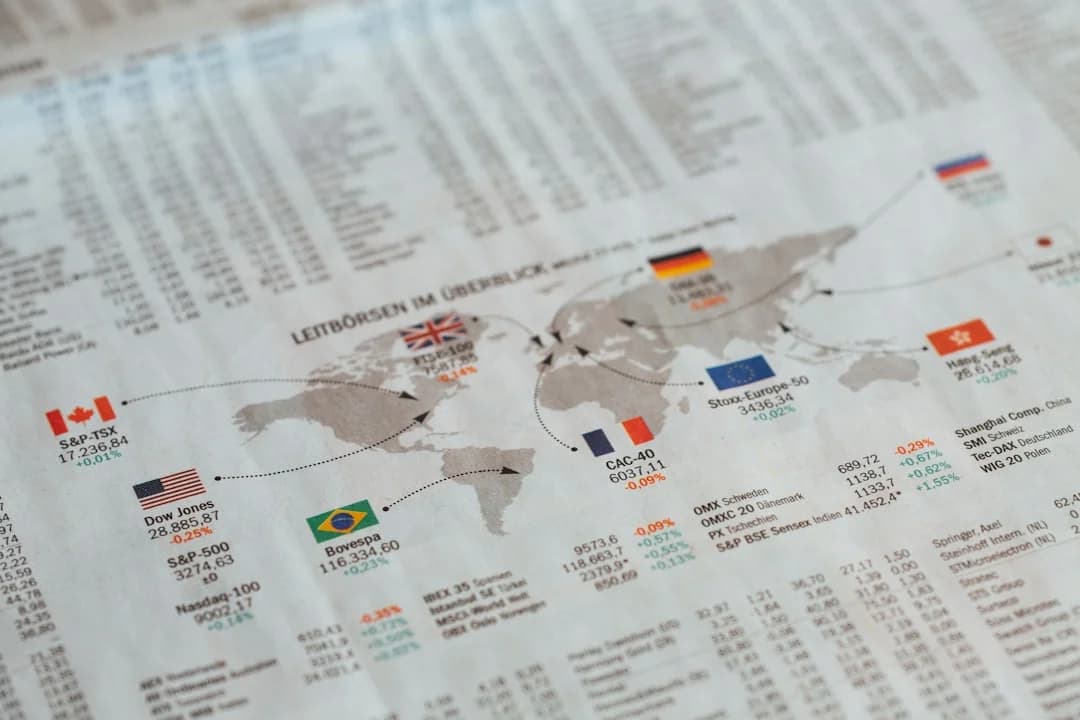
Photo by Markus Spiske on Unsplash
As the calendar turns to 2026, the global economy faces a patchwork of forces that could shape markets for months to come. Wall Street Economicists is publishing a comprehensive view centered on the latest data and forward-looking indicators—the kind of evidence-backed, data-driven analysis that investors and policymakers rely on to understand how growth, inflation, and policy signals interact across regions. The synthesis draws on the IMF’s January 2026 World Economic Outlook Update, a slate of private-sector outlooks from Deloitte, and a strategic forecast from Goldman Sachs, complemented by central-bank commentary and high-frequency data. The central question: How will the global macro environment evolve in 2026, and what does that imply for portfolios, policy, and corporate strategy? The early 2026 briefing highlights resilient growth, tempered by policy uncertainty and a technology-driven push that could redefine productivity and inflation dynamics in the year ahead. global-macro-indicators-2026 is not a throwaway label here; it’s a framework readers can use to gauge where growth risks exist, where inflation may slow, and how technology adoption could tilt the balance of forces in major economies. (imf.org)
Two weeks into 2026, the big picture remains: global growth is not collapsing, but it is uneven, and inflation trajectories are diverging across regions. The IMF’s January 2026 update emphasizes that global growth is projected to be 3.3 percent in 2026 and 3.2 percent in 2027, with headwinds from shifting trade policies offset by tailwinds from technology investment, including AI, and continued fiscal and monetary support. The IMF notes that this is a period of notable resilience, as technology-driven productivity, accommodative financial conditions, and private-sector adaptability help offset trade frictions. The report also flags that global inflation is expected to ease, though US inflation is forecast to return to target more gradually than elsewhere. This framing is central to the 2026 macro indicators narrative because it situates technology as a potential catalyst for faster productivity, even as policy uncertainty creates a continued hurdle for investment and hiring. These projections come with downside risks, including the possibility that AI productivity assumptions are revised lower or that geopolitical frictions re-emerge. For readers tracking the global macro indicators-2026 storyline, the IMF’s baseline scenario provides a reference point for comparing other institutions’ outlooks and for interpreting market price signals in the months ahead. “Global growth is projected to remain resilient at 3.3 percent in 2026 and 3.2 percent in 2027,” the IMF states, “as headwinds from shifting trade policies offset by tailwinds from surging investment related to technology, including AI.” US inflation is expected to return to target more gradually, adding to the complexity of the policy outlook. In the same document, the IMF underscores the need for policymakers to restore fiscal buffers and to pursue structural reforms to maintain stability as the macro environment evolves. (imf.org)
Section 1: What Happened
IMF WEO Update: Resilient Global Growth and AI-Driven Tailwinds
The January 2026 World Economic Outlook Update delivers a crisp verdict on the year ahead: global growth is projected to hold steady, with a 3.3 percent expansion in 2026 and 3.2 percent in 2027. The update frames the resilience as a balance of divergent forces—trade policy tensions and geopolitical uncertainty are offset by technology-driven investment, including AI, as well as ongoing fiscal and monetary support and broadly accommodative financial conditions. This direct assessment is the backbone of the global-macro-indicators-2026 narrative, because it anchors expectations about productivity gains, inflation dynamics, and the path for monetary policy across the major economies. The IMF also signals that the inflation path will trend downward, even as inflation trajectories differ by country; the United States is specifically noted as likely to experience a slower return to its inflation target relative to some other large economies. The document highlights that policymakers should focus on restoring fiscal buffers, preserving price stability, and implementing structural reforms to bolster resilience in the face of ongoing uncertainty. For readers, this means that the macro indicators in 2026 will likely reflect a tug-of-war between policy tightening and technology-driven growth, with market implications that hinge on how quickly AI-driven productivity gains translate into broad-based GDP and inflation outcomes. “Global growth is projected to remain resilient at 3.3 percent in 2026 and 3.2 percent in 2027,” while “global headline inflation is expected to decline” in the coming years, according to the IMF’s January 2026 Update. The IMF’s projections situate AI and technology investments as a central driver of the year’s growth dynamic, particularly in North America and Asia, while trade tensions and policy reforms continue to introduce volatility into the outlook. This framing is essential to the global macro indicators-2026 narrative because it connects the dots between policy, productivity, and price dynamics across regions. (imf.org)
Subsection: AI and Tech Investments as Growth Accelerants
The IMF’s January 2026 Update underscores the role of AI and other technology investments as a primary source of upward momentum for 2026. The report highlights that investments in technology are acting as a counterweight to fiscal and monetary headwinds and to trade-related uncertainties. The emphasis on technology-driven productivity suggests that the macro indicators in 2026 could diverge from earlier cycles where policy shocks dominated the signal. The update explicitly notes that “headwinds from shifting trade policies are offset by tailwinds from surging investment related to technology, including AI.” This perspective aligns with other major forecasts in early 2026 and helps explain why the Wall Street Economicists’ global macro indicators-2026 framework treats technology adoption as a pivotal variable for inflation, growth, and monetary policy paths in 2026. It also foreshadows how equity markets may respond to AI capital expenditure, corporate earnings resilience, and the potential for productivity-driven improvements in real GDP growth. Investors should monitor AI deployment timelines, semiconductor supply chains, and the adoption rate of AI-enabled processes within major industries as leading indicators of macro momentum. (imf.org)
Deloitte’s Global Economic Outlook 2026: Policy Shifts, AI, and Growth Uncertainty
Deloitte’s 2026 Global Economic Outlook adds depth to the IMF framework by highlighting the policy shifts and the ongoing race to remain at the frontier of technological innovation. Deloitte’s chief global economist notes that elections and policy shifts in 2025 have reshaped inflation trajectories, borrowing costs, and currency values—and the effects of those shifts will become clearer in 2026 as governments adapt to a new geopolitical reality and as investment in AI ecosystems continues. Deloitte emphasizes that AI investment remains a central growth engine in 2026, though there is a cautionary note that excessive or mistimed spending could lead to a downward adjustment if productivity gains fail to materialize as expected. The report also points to structural reforms and fiscal consolidation as critical to sustaining growth, given the elevated debt and policy uncertainty in several major economies. This aligns with the global macro indicators-2026 storyline by reinforcing the idea that policy credibility and reform momentum will influence inflation dynamics and the growth impulse in 2026. Deloitte’s outlook adds geographic granularity, noting that the United States, parts of Europe, and some Asian economies are at different stages of policy normalization, which could create differentiated growth and inflation paths across regions. The Deloitte foreword explicitly flags that AI investments are expected to surge, but also cautions that the pace and allocation of these investments must be managed to avoid overheating or misallocation. In short, Deloitte’s perspective reinforces the IMF's view that technology-driven growth will be a dominant force in 2026, with policy responses and fiscal space playing a decisive role in translating that growth into stable inflation and robust employment. “In 2026, we expect to see the effects of these global policy shifts more clearly. Governments are adapting to a new geopolitical reality and adjusting their fiscal and structural policy plans accordingly,” Deloitte notes, while underscoring the ongoing race to lead in AI and related technologies. (deloitte.com)

Photo by Markus Spiske on Unsplash
Goldman Sachs Macro Outlook 2026: Moderate yet Steady Global Growth
Goldman Sachs’ Macro Outlook 2026 presents a slightly more optimistic but differentiated view across regions, with a baseline expectation of sturdy global growth and a clear emphasis on the United States as a relative outlier of strength. The bank’s analysis, published in late December 2025, argues for global growth of about 2.8 percent in 2026, with the U.S. expected to outperform due to tariff relief, tax policy, and easier financial conditions. The contrast with consensus forecasts (around 2.5 percent) underscores the risk-reward calculus embedded in the global macro indicators-2026 framework: a scenario where AI adoption, capital formation, and policy stabilization could push growth above the baseline, while policy friction or inflation persistence could restrain activity. The Goldman piece highlights that private-sector investment and productivity gains are central to the 2026 macro path, and it flags that labor markets in some economies may lag the improvements in demand and output, creating a more nuanced inflation dynamic than a single, global inflation target. The explicit forecast that the U.S. could lead growth reflects a common theme in many private-sector forecasts for 2026: the United States could experience a relatively favorable macro impulse if policy is supportive, while other regions adjust to slower growth or higher debt burdens. The Goldman analysis provides a counterpoint to the IMF’s baseline, illustrating how market participants might price risk in different regions as the year unfolds. In Apple-to-Apple terms, Goldman’s call—2.8 percent global growth in 2026—suggests that the global macro indicators-2026 framework should consider a range of plausible outcomes depending on policy paths, AI productivity, and the speed of global supply-chain normalization. “Goldman Sachs Research economists expect sturdy global growth of 2.8% in 2026,” the firm states, underscoring a constructive if selective outlook for the year. (goldmansachs.com)
Central Bank and Inflation Signals: A Constellation of Narratives
The macro indicators for 2026 also hinge on the path of inflation and the stance of central banks. IMF data point to a broad easing of inflation in 2026, albeit with regional heterogeneity. The US inflation trajectory is expected to return to target more gradually than in other economies, which has implications for timing and pace of monetary policy normalization in the United States. The IMF’s framing is complemented by other central-bank signals around early 2026, including regional expectations from the Euro area and the Asia-Pacific region. The ECB’s Survey of Professional Forecasters for the first quarter of 2026 shows that inflation expectations in the euro area remain anchored around the 2 percent target, with some upside risk in 2026 and 2027 as climate-related and energy components influence prices. The SPF projects HICP inflation around 1.8 percent for 2026, rising to 2.0 percent in 2027 and 2028, suggesting that Europe’s inflation path remains on a moderating trend but with nuances depending on energy prices, wage developments, and government policy. This euro-area view provides a counterpoint to US inflation dynamics and helps explain why the global macro indicators-2026 framework stresses diverging inflation narratives across regions, which, in turn, inform the timing of policy normalization and the risk premium embedded in financial assets. The inflation dynamics are not purely domestic; global supply chains, commodity prices, and exchange-rate movements will continue to matter. The macro indicators are consistent with a world in which inflation is gradually declining but not uniform, creating a landscape where investors must be selective about timing in rates-sensitive assets and cyclically sensitive sectors. (ecb.europa.eu)

Photo by Tina Hartung on Unsplash
What It Means for Markets and Economic Policy
Taken together, these perspectives from the IMF, Deloitte, and Goldman Sachs depict a 2026 in which the global economy is more resilient than many anticipated at the outset of the year, yet tempered by policy risk and the uneven adoption of AI-enabled productivity gains. The macro indicators-2026 frame points to a few recurring themes:
- Growth is supported by technology investment, especially AI, and is funded by supportive monetary and fiscal conditions in many regions. This is a key driver behind higher-than-expected 2026 momentum in certain economies, even as other regions face slower growth due to structural challenges.
- Inflation trends are diverging by region, with a general trajectory downward, but the distribution of inflation risks remains highly country-specific. As a result, central banks are likely to pursue a cautious, data-dependent path, avoiding uniform, across-the-board tightening or easing. The euro area’s inflation expectations, while showing a downward trend, indicate that coordinated global inflation management remains essential for financial stability. (imf.org)
- The AI and technology investment cycle is a double-edged sword: it has the potential to lift productivity and growth, but it could lead to misallocation if capital is not deployed efficiently or if productivity gains take longer to spread to the broader economy. This tension is echoed in Deloitte’s caution about the risk of spending outpacing actual gains and in the IMF’s emphasis on structural reforms to ensure the stability and sustainability of growth in a more tech-enabled world. (deloitte.com)
- The 2026 macro indicators emphasize the role of policy credibility and macro discipline. Restoring fiscal buffers, maintaining price stability, and advancing structural reforms are highlighted as prerequisites for translating growth into durable, low-inflation outcomes. This aligns with the IMF’s policy recommendations and complements Deloitte’s emphasis on the need for policy adaptation in a changing geopolitical and technological environment. (imf.org)
Section 2: Why It Matters
The Relationship Between Growth, Inflation, and Policy Signals
The macro indicators-2026 narrative centers on the interplay between growth momentum, inflation evolution, and the policy responses that will shape financial conditions. The IMF’s January 2026 update reinforces the central premise that while growth can remain robust, inflation persistence in some regions or sectors can restrain the pace of easing by central banks. The update emphasizes that policymakers should “restore fiscal buffers, preserve price and financial stability, reduce uncertainty, and implement structural reforms.” In practice, that means investors should expect a data-driven policy stance that is both measured and selective—raising or lowering expectations for rate cuts or hikes based on evolving the inflation dynamic, the strength of AI-led productivity, and the resilience of domestic-demand sectors. The euro area area-specific inflation expectations from the ECB SPF round, showing a baseline inflation path around 1.8% for 2026, underscore the heterogeneity that markets must price into multi-asset portfolios and cross-border strategies. The key takeaway for readers of global-macro-indicators-2026 is that a one-size-fits-all policy signal is unlikely to emerge in 2026; instead, central banks could pursue diverging paths depending on country-specific inflation pressures, growth momentum, and exchange-rate dynamics. (imf.org)

Photo by Dorian Labbe on Unsplash
AI, Productivity, and Equity Markets: A Critical Link
The AI and technology investment theme is not merely a backdrop; it is an active, measurable driver of macro outcomes. The IMF underscores technology investment as a tailwind supportive of growth, while Deloitte emphasizes the ongoing investment cycle in AI ecosystems and its implications for productivity and macro stability. Goldman Sachs’ 2026 outlook reinforces that technology-led productivity could push growth above the baseline in the United States, with the potential for positive spillovers to other economies if the AI innovation cycle is global in scope. The convergence of these views suggests that AI-driven investment could be a persistent force behind corporate earnings, sector rotations, and capital-budget decisions. For readers tracking the topic of global-macro-indicators-2026, the AI narrative is a central thread: it helps explain why technology companies, semiconductor suppliers, and data-center developers may outperform in 2026, while the broader macro environment remains sensitive to policy decisions and the pace of infrastructure investment. The IMF’s momentum narrative, which ties global investment and private-sector adaptability to growth, provides a framework for interpreting these market dynamics. A blockquote from the IMF WEO Update captures the sentiment: “Momentum Is Uneven. The global economy has continued to be remarkably resilient, adapting to the shifting landscape, with growth in the third quarter of 2025 decelerated, but with positive surprises in some countries offset by downside surprises in others.” This underscores the sense that 2026 will be a year of uneven progress, potentially favoring sectors and regions with stronger AI investment and productivity gains. (imf.org)
Regional Divergence: US, Europe, and Asia in 2026
The macro indicators-2026 framework emphasizes the heterogeneity of outcomes across major regions. The IMF’s January update suggests a notable structural balance: the United States might experience a robust growth impulse supported by technology investment and policy accommodation, whereas the euro area faces a more gradual inflation path and growth profile that could be influenced by fiscal spending and ECB policy evolution. The IMF’s regional projections, presented in the full report, show that Asia’s growth may be buoyed by technology exports and investment in AI-enabled sectors, with notable exceptions in countries where domestic demand remains constrained or where policy adjustments complicate the growth path. Deloitte stresses that global policy shifts and geopolitical tensions will weigh on inflation and growth differently by country, with some economies reaping the benefits of new trade arrangements and others contending with higher costs of capital or structural constraints. Goldman Sachs’ regional narrative points to the United States as a possible source of outsized growth relative to many peers, but it also notes the potential for more modest growth in other regions if policy normalization is slower or if productivity gains from AI adoption are delayed. Together, these perspectives highlight a 2026 macro indicators landscape characterized by a mosaic of growth rates, inflation pressures, and policy cycles. For readers, that means staying attuned to country-specific indicators—GDP growth, inflation momentum, wage dynamics, and the policy stance of central banks—as much as to global averages. The IMF’s regional breakdowns for 2026 and 2027 show this dispersion, with North America and parts of Asia showing different momentum versus Europe and other regions. (imf.org)
Implications for Investors, Firms, and Policymakers
The global macro indicators-2026 synthesis suggests several practical implications:
- For investors, price discovery will be driven by a combination of AI productivity surprises and policy signals. The divergent inflation path means that asset classes with exposure to technology adoption, productivity gains, and cyclical sensitivity will perform differently across regions. Equities tied to AI and data-center growth may benefit from a favorable demand/supply dynamic, while bonds could reflect varying inflation expectations and the pace of rate normalization across major central banks.
- For firms, the 2026 outlook underscores the importance of capital allocation in AI-enabled projects, with a focus on efficiency gains, supply-chain resilience, and digital infrastructure. Deloitte’s emphasis on AI investments and the risk of misallocation highlights the need for disciplined project evaluation and clear productivity metrics to translate investment into real growth.
- For policymakers, the macro indicators-2026 framework reinforces the value of credible fiscal and monetary policies that support price stability while anchoring long-run growth. The IMF’s policy recommendations and the euro-area inflation outlook from the ECB SPF illustrate the need for targeted measures that support investment in technology and human capital while managing debt sustainability and financial stability.
Section 3: What’s Next
Near-Term Milestones and Data That Could Move Markets
The macro indicators-2026 story remains dynamic as new data flow in and policy decisions unfold. The IMF’s January 2026 update emphasizes that policymakers should stay prepared to adjust fiscal and structural reforms to preserve stability and enhance growth potential. In the euro area, the ECB SPF results show that inflation expectations for 2026 are anchored, but the path remains contingent on energy prices, wage dynamics, and euro movements. The upcoming months will likely bring a stream of high-frequency indicators—industrial production, services PMI, consumer confidence, labor market data, and sector-specific readings in AI-driven industries—that will test the resilience of the IMF’s baseline scenario and the private-sector outlooks from Deloitte and Goldman. The RBA’s February 2026 speech highlights that inflation could peak mid-2026, with a policy path that may involve higher cash rates before a gradual normalization, depending on how domestic demand and capacity pressures evolve. These signals suggest a data-dependent approach to policy decisions and market expectations in 2026, with particular emphasis on how quickly inflation trends toward targets and how productivity gains translate into real-time economic activity. The next six to nine months will be critical for investors and policymakers to observe the actual throughput of AI investment, the speed of supply-chain normalization, and the reaction of labor markets to evolving demand conditions. The macro indicators-2026 timeline will hinge on these data inflection points as well as ongoing policy developments in major economies. (rba.gov.au)
The Roadmap for 2026: Key Dates and Watch Points
- January 19, 2026: IMF releases World Economic Outlook Update (global growth 3.3% in 2026; 3.2% in 2027; inflation path and AI tailwinds highlighted). This is the benchmark for the year’s macro narrative and the baseline against which other forecasts are measured. (imf.org)
- January 21, 2026: IMF hosts a press briefing accompanying the WEO Update, reinforcing the interpretation of growth resilience and inflation trajectories. The briefing complements the written update with real-time commentary and responses to market questions. (imf.org)
- February 2026: Deloitte publishes the Global Economic Outlook 2026, detailing policy shifts, AI investment dynamics, and country-by-country outlooks that shape the macro landscape. The Deloitte foreword emphasizes that 2026 will reveal the real effects of policy changes and technology-driven investment on inflation and growth. (deloitte.com)
- February 24, 2026: RBA delivers a major speech outlining inflation dynamics, capacity pressures, and the policy trajectory in Australia, with an explicit discussion of the expected peak of inflation mid-2026 and the path toward balance in the medium term. While Australia-specific, the speech provides a window into how central banks are calibrating policy in a world where AI investment and global demand shifts influence inflation and growth. (rba.gov.au)
- Ongoing 2026: Goldman Sachs releases its Macro Outlook 2026, projecting 2.8% global growth, with the U.S. outpacing the rest of the world under favorable policy conditions and a more favorable capital-cost environment. This frame adds a professional, market-oriented tally to the macro indicators-2026 conversation and can inform sector allocations as the year progresses. (goldmansachs.com)
What to watch in the near term includes but is not limited to:
- Updates to inflation expectations across major economies, especially the U.S. and the Eurozone, and the implications for central-bank policy paths.
- The pace of AI-driven productivity gains in technology, manufacturing, and services sectors, including investment cycles, capital expenditures, and the resulting impact on output growth and cost structures.
- Global trade dynamics as tariff policies and supply-chain realignments continue to evolve, potentially altering import prices, exchange rates, and regional growth differentials.
- Fiscal policy developments in major economies, particularly around debt sustainability, deficit paths, and targeted investments in infrastructure and technology.
Closing
In sum, global-macro-indicators-2026 presents a data-driven, balanced account of a year that could be defined by resilience amid divergence, with AI and technology investments acting as a critical accelerant for growth while inflation and policy pathways remain nuanced by country and sector. The IMF’s baseline scenario, reinforced by Deloitte’s policy and AI emphasis and Goldman’s growth optimism, provides a framework for analyzing the year’s developments as they unfold. Readers should expect ongoing updates as new data arrive, with a continued emphasis on the interplay between productivity gains from technology and the policy environment that shapes financial conditions. For those seeking to stay ahead in 2026, the most valuable signals will come from the data—quarterly growth prints, inflation readings that reflect both demand and supply dynamics, and the major central banks’ evolving communications. The global-macro-indicators-2026 framework is not a static forecast; it is a living narrative that evolves with every data release and policy change, and Wall Street Economicists will continue to monitor and report these updates in real time, with rigorous sourcing and transparent methodology.
To stay updated, readers should follow IMF WEO updates, Deloitte’s country-by-country outlooks, Goldman Sachs macro notes, and central-bank communications, as well as credible market data providers that synthesize these signals into actionable insights. The dynamic nature of 2026’s macro indicators means that the narrative can shift as technology investments accelerate, as policy responses adapt to new conditions, and as consumer and business behavior evolves in response to these forces. The goal of global-macro-indicators-2026 is not to predict every twist of the journey but to provide a clear, evidence-based map of the main currents shaping global economies, markets, and policy in 2026.