Global-Trade-Supply-Chain-2026: Market Signals

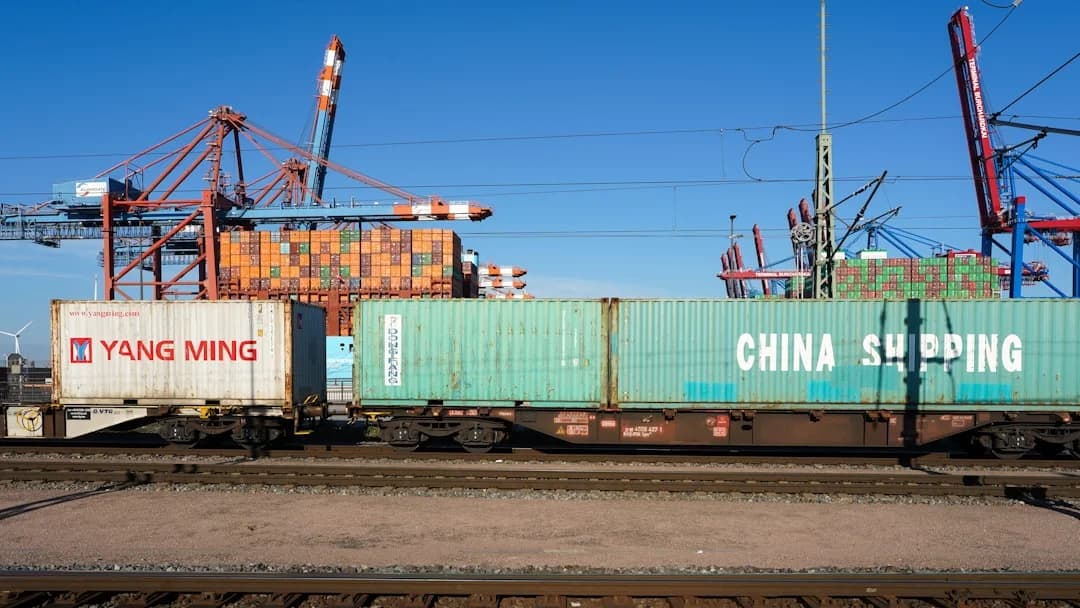
Photo by Wolfgang Weiser on Unsplash
In a coordinated signal from leading economic and trade institutions, the global-trade-supply-chain-2026 landscape is unfolding with a blend of resilience and risk. On January 15, 2026, the World Economic Forum published a report outlining five strategic shifts shaping how multinational companies structure their supply chains in 2026. The core message is pragmatic: firms are reconfiguring operations to prioritize agility, regional resilience, and geopolitical insulation, even as policy volatility and tariff pressures continue to influence every sourcing decision. The announcement, rooted in interviews with executives across 11 sectors, points to a shift away from the traditional, globally integrated, just-in-time model toward regionalized configurations that can adapt quickly to shocks and policy changes. This trend line is central to the global-trade-supply-chain-2026 narrative and has immediate implications for production planning, supplier diversification, and capital allocation. (weforum.org)
Economic forecasters warn that the world still faces a fragile yet capable macro backdrop in 2026. The IMF’s March 9, 2026 keynote in Tokyo underscores that the global economy is navigating "deep currents of change—in technology and demographics, in geopolitics and trade, in climate," while projecting world growth of 3.3% in 2026 and 3.2% in 2027. The message for traders and policymakers is clear: resilience will be tested by energy security, supply disruptions, and price volatility, with trade policy increasingly shaping market expectations and corporate risk profiles. At the same time, geopolitical tensions and energy-market dynamics—such as the Strait of Hormuz’s role in oil and LNG flows—continue to influence financial conditions and commodity prices, reinforcing the need for adaptive supply chain strategies. (imf.org)
In the broader policy and institutional context, the World Trade Organization’s October 2025 update remains a critical reference point for 2026 expectations, highlighting a mixed outlook: world trade momentum was robust in 2025, aided by AI-enabled goods and front-loading of orders, but the forecast for 2026 carries greater uncertainty as tariffs, regulatory changes, and regional trade realignments persist. The update also notes the ongoing expansion of digital value chains and the need for more granular data to track global trade flows. Taken together, these developments anchor the current discussion of global-trade-supply-chain-2026 as a pivotal period for policy, business strategy, and market risk management. (wto.org)
The period also features practical corporate guidance on near-term responses. Marsh’s 2026 supply chain trends emphasize that geopolitical uncertainty, climate-related disruptions, and economic pressures will keep supply chain risk at the forefront of corporate resilience planning. The firm highlights a coming year when trade barriers may rise, tariffs shift, and compliance frameworks tighten, including the EU’s Carbon Border Adjustment Mechanism taking effect in 2026. These dynamics underscore the need for scenario planning, supplier diversification, and robust risk management as core elements of the global-trade-supply-chain-2026 playbook. (marsh.com)
Section 1: What Happened
Announcement Details
-
The World Economic Forum released "Navigating trade in 2026: 5 strategic shifts in business decisions" on January 15, 2026. The piece distills findings from interviews with executives across more than 20 multinational corporations and 11 sectors, identifying five core shifts reshaping global supply chains in 2026. The focus is on moving away from a purely globalized, just-in-time model toward regionalized configurations that prioritize agility, resilience, and geopolitical insulation. The forum emphasizes that the shift toward regionalization is not a simple retreat from globalization but a strategic reallocation that enables rapid responses to tariff changes, currency risk, and policy shifts. The report frames supply-chain restructuring as a deliberate capability rather than a reactive bandaid, with modular production nodes and asset-light approaches gaining traction. >This is a strategic pivot, not a temporary adjustment, and it has lasting implications for how capital expenditure is allocated and where production nodes are located across the world.(weforum.org)
-
The IMF’s March 9, 2026 keynote in Tokyo, delivered by Managing Director Kristalina Georgieva, provides the macro context: an expectation of 3.3% global growth in 2026 and 3.2% in 2027, alongside heightened energy-security concerns and logistical chokepoints. The IMF notes that even as growth holds, energy-market developments—such as disruptions in shipping through critical routes—can translate into inflationary pressures and delayed investment. The IMF highlights that a 10% permanent rise in oil prices typically correlates with a 0.1–0.2 percentage-point drop in global output, illustrating how energy risk feeds into the broader supply-chain risk calculus for 2026. In short, the news is a mix of resilience and exposed nerves, with policy and energy markets acting as major amplifiers of supply-chain volatility. (imf.org)
-
The global-trade-policy backdrop remains strongly shaped by 2025-2026 developments. WTO’s late-2025 updates show that AI-enabled goods and front-loading boosted 2025 trade, while inventories and tariff dynamics introduced new distortions and opportunities in 2026. In practical terms, this means companies must balance the prospect of tariff relief in certain regions against the risk of renewed protectionist measures elsewhere, while also leveraging AI-enabled logistics and data-driven demand planning to reduce inventory costs and improve service levels. The 2026 environment is thus characterized by both opportunities stemming from AI-enabled efficiency gains and caution prompted by policy volatility. (wto.org)
-
On the corporate-facing front, the HSBC Global Trade Pulse Survey (May 2025) remains a key reference point for near-term business sentiment. The survey indicates a strong move toward reshoring and nearshoring as parts of resilience-building, with 77% of respondents either reshoring or planning to do so to reduce tariff exposure, and 83% planning to nearshore or nearshore with increased frequency. The same survey shows roughly 90% of respondents planning to diversify supplier bases across multiple regions to hedge against tariff shocks and regulatory uncertainty. Taken together, these numbers provide a numerical backbone for the strategic shifts described by the Forum and reflected in policy and macro forecasts. (business.hsbc.com)
-
The real-world impact of tariffs and policy shifts is underscored by Marsh’s 2026 outlook. The firm notes that US steel and aluminum tariffs doubled to 50% in 2025, reshaping global trade flows and pressuring sectors from automotive to construction. It also flags a more complex trade-compliance environment, including the EU’s CBAM, taking effect in 2026, which adds a carbon-intensity dimension to the cost of imported goods. For firms, this adds a layer of strategic complexity to sourcing decisions and could accelerate moves toward regional production and supplier diversification. (marsh.com)
Timeline and Key Facts
- January 15, 2026: World Economic Forum publishes Navigating trade in 2026, outlining five strategic shifts in business decisions and signaling a shift toward regionalized trade configurations. (weforum.org)
- March 9, 2026: IMF delivers keynote in Tokyo forecasting 3.3% global growth in 2026 and 3.2% in 2027, highlighting energy security and geopolitical risk as central levers for trade and prices. (imf.org)
- October 2025: WTO issues updated Global Trade Outlook and Statistics, projecting 2026 trade patterns with mixed momentum, and noting AI-driven trade and inventory dynamics as important 2025-2026 catalysts. (wto.org)
- 2025–2026: HSBC Global Trade Pulse Survey results show high nearshoring and reshoring momentum, with 83% nearshoring or planning to nearshore and 77% reshoring, alongside diversification of supplier bases. (business.hsbc.com)
- 2025–2026: Tariff increments and trade-policy measures—such as US steel/aluminum tariffs at 50% and the EU CBAM—reshape cost structures and sourcing choices, reinforcing the move toward regional hubs and more resilient supply networks. (marsh.com)
Section 2: Why It Matters
Economic and Operational Impacts on Firms
The convergence of policy shifts, tariff dynamics, and AI-enabled efficiency gains is reshaping the calculus of where and how firms build, move and manage production. Nearshoring and reshoring—already evident in earlier years—are accelerating as companies seek to reduce tariff exposure, improve supply reliability, and minimize currency risk. The HSBC Pulse Survey’s findings show that a large share of firms are actively moving production closer to end markets, with a corresponding push to diversify supplier networks to spread risk across regions. This is not just a regional logistics decision; it affects financing, capital expenditures, and technology investments across the corporate value chain. The Forum’s analysis indicates that these shifts are accompanied by an emphasis on modular manufacturing and asset-light models, enabling firms to reallocate capacity quickly in response to tariff or demand shocks. In practical terms, we’re seeing a broader adoption of regional hubs and digital visibility tools that enable more agile response to policy changes and market shifts. (weforum.org)
- The macro backdrop amplifies the stakes. IMF’s forecast for 2026 (3.3% global growth) is not a uniform picture: growth will be uneven across regions and sectors, complicating planning and capital allocation. The IMF stresses energy security as a critical input to trade and inflation dynamics, and the potential for oil price shocks to feed into inflation and growth, which in turn can influence shipping costs and inventory carrying costs. These macro dynamics directly affect supply chain budgets and contingency planning, reinforcing a need for dynamic risk modeling and scenario planning at the corporate level. (imf.org)
Policy Landscape and Competitive Dynamics
Policy uncertainty remains a defining feature of the 2026 environment. The WTO’s findings from 2025 show that while AI-enabled trade and front-loading boosted activity, the medium-term outlook for 2026 carries higher risk from tariff swings and regulatory changes. Companies that anticipate these changes and align their sourcing, supplier diversification, and regionalization strategies stand to gain a competitive edge. The EU’s CBAM, along with tariffs in major economies, creates a carbon-intensity cost layer for imports, incentivizing firms to move production closer to consumer markets or to source from lower-carbon inputs. The Marsh assessment emphasizes the operational planning needed to navigate this policy maze, including risk hedging and insurance strategies to offset the financial impact of tariff volatility. (wto.org)
- Market implications for investors and traders are nuanced. While the 2026 outlook includes a more favorable window for certain trade-related investments, the underlying risk remains elevated due to ongoing policy shifts and geopolitical tensions. The IMF’s resilience narrative—coupled with policy-induced re-shaping of global value chains—suggests opportunities in regions that serve as regional hubs or that become centers for AI-enabled, high-value manufacturing. The Forum’s framework for strategic shifts supports the idea that investment in flexibility, digitization, and supplier diversification can be a source of competitive advantage during periods of elevated policy volatility. (imf.org)
Global Integration, Regionalization, and the Trade-Tariff Trade-Off
A central tension in 2026 is the ongoing push-pull between broader global integration and regionalized resilience. The near-term picture shows that companies are not abandoning global strategies entirely; rather, they are embedding geopolitical risk assessment into core planning. This aligns with the Forum’s five-shift framework, which includes capital reallocation toward regions that offer greater political and economic stability, and the IMF’s emphasis on the policy environment and energy dynamics as key inputs to supply-chain design. The net effect is a more differentiated and multi-speed global trade system, in which some firms benefit from tariff relief or strategic location advantages, while others face persistent headwinds from policy changes or energy volatility. (weforum.org)
Section 3: What’s Next
Immediate Steps and Timelines for 2026
-
Monitor policy rollouts and tariff environments by region. Marsh highlights the likelihood of continued tariff volatility and new regulatory measures throughout 2026, making ongoing risk assessment critical. Firms should update their scenario analyses to reflect potential changes in CBAM implementation timelines, tariff adjustments, and any new export-control regimes that may affect critical materials and technologies. A structured approach to political risk insurance and supply-chain stress testing will be essential as events unfold. (marsh.com)
-
Invest in regional capabilities and AI-powered visibility. The McKinsey-backed insight into AI use cases in supply chain planning—demand forecasting, inventory optimization, and supply planning—points to a continued acceleration in digital transformation as a core enabler of resilience. Firms should prioritize investments in AI-driven forecasting and end-to-end supply-chain visibility to reduce delays, improve orchestration across regional hubs, and support faster reallocations in response to policy or demand shifts. (mckinsey.com)
-
Track macro-growth signals and energy risk. IMF’s forecast of 3.3% growth in 2026, with energy security as a principal driver of risk, implies continued sensitivity to oil and gas price dynamics and potential disruption in key trade corridors. For traders and supply chain leaders, this means maintaining tight linkages between procurement, logistics, and finance teams to capture rapid changes in input costs and shipping rates. (imf.org)
Longer-Term Outlook and Scenarios
-
Regional hubs gain permanence, but global links persist. The World Economic Forum’s analysis suggests that the shift toward regionalized manufacturing is not a short-term workaround; it is a structural adjustment designed to balance resilience with efficiency. In this scenario, firms will likely sustain a multi-regional footprint—anchored by North America, Europe, and Asia-Pacific hubs—while continuing to exploit global trade links where policy and cost conditions are favorable. This aligns with the WTO’s 2025-2026 trajectory and IMF’s resilience framing. (weforum.org)
-
Tariff and climate policies will shape competitiveness. CBAM and tariff regimes create a cost signal that can drive shifts in supplier selection, product design, and capital investments. The 2026 landscape is likely to reward those who integrate climate costs into sourcing decisions and who adopt modular, regionally anchored supply networks that can mitigate exposure to tariff swings and policy reversals. The Marsh analysis and HSBC survey both underscore the importance of resilience and strategic diversification in this context. (marsh.com)
Closing
As 2026 unfolds, the global-trade-supply-chain-2026 narrative remains characteristically data-driven: a mix of resilience-building practices, policy-driven challenges, and a technology-enabled acceleration of supply-chain visibility and agility. The coordinated signals from the IMF, WTO, and World Economic Forum—along with real-world corporate sentiment from HSBC and McKinsey-adjacent research—point to a year in which regionalization and digitization become central to competitiveness. Market participants—whether manufacturers, shippers, or investors—will need to balance the potential upside of tariff relief and efficiency gains with the downside risks of policy volatility and energy-price shocks. Staying informed through ongoing updates from major economic institutions and adaptive risk-management practices will be crucial for navigating the evolving global landscape described by global-trade-supply-chain-2026.
To stay ahead, firms should maintain a dual focus: (1) strategic investments in regional production capabilities and AI-enabled supply-chain tools, and (2) disciplined monitoring of tariff, regulatory, and energy-market developments. In this environment, those who combine flexibility with foresight will be best positioned to capture opportunities as markets evolve in 2026 and beyond. (weforum.org)