
Stock Market Volatility 2026 AI Rotation

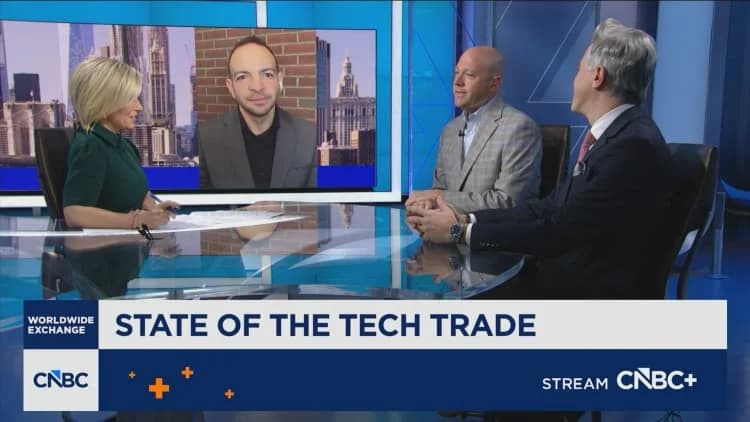
The year 2026 has begun with a renewed emphasis on how artificial intelligence is reshaping market dynamics. Stock market volatility 2026 AI rotation is no longer a one-note narrative about instant wealth from blockbuster AI headlines; it’s a nuanced, data-driven process driven by capex cycles, earnings trajectories, and shifting risk appetites. As AI investments accelerate, investors are balancing the promise of productivity gains against the risk of overbuilding, mispricing assets, and regulatory headwinds. The market’s sensitivity to AI news—ranging from chip shortages and data-center expansions to software disruption fears—has made this rotation a central theme for traders, portfolio managers, and corporate strategists alike. The latest data point suggests volatility is not merely a product of macro swings but a response to evolving AI infrastructure spend and the pace at which AI monetization proves durable. (barrons.com)
In early 2026, analysts warned that AI-led momentum could translate into sharper, more persistent volatility as investors reassess ROI from AI capex and recalibrate exposure across sectors. A key thread has been a potential inflation impulse from a rapid technology buildup, which could complicate monetary policy expectations and drive swings in rates-sensitive assets. Market commentary since the start of the year has highlighted that AI-driven earnings narratives may both uplift mega-cap tech names and expose vulnerabilities in software and financing Linked exposures, including the broader debt market. These dynamics help explain why the stock market—despite record enthusiasm in 2025—entered 2026 with elevated hedging costs and a greater emphasis on downside risk controls. (investing.com)
This trend analysis draws from recent research, market data, and company-level results to map how stock market volatility 2026 AI rotation is taking shape. We’ll cover what’s happening with concrete metrics, explain why the forces are at work, outline what it means for businesses and consumers, and offer a forward-looking view with actionable takeaways for investors and corporate leaders. The discussion leans on observed volatility patterns, the AI investment cycle, and the observable impact on a handful of marquee players, including Nvidia, Microsoft, and Meta, as well as the broader software and semiconductor ecosystems. (fred.stlouisfed.org)
What’s Happening
AI Rotation Backdrop
The AI rotation in 2026 is not simply about one sector surging while others languish; it’s a broad, multi-front adjustment driven by how quickly AI-intensive investments translate into realized profits, and how markets price that transition. In the software space, worries about the pace of AI disruption have fed into stock moves, with lenders signaling elevated refinancing risk as AI-enabled productivity pressures alter traditional software licensing models. Analysts have likened the mood to a “domino effect”—where early AI-driven unease spreads to adjacent sectors as valuations reset and risk budgets tighten. This backdrop helps explain why a wave of software and AI infrastructure names have traded with outsized volatility even as headline AI headlines continue to proliferate. (barrons.com)
Key Metrics and Stats
- Volatility indices have traded in a higher-than-average range at the outset of 2026. Data from the CBOE VIX, compiled by the Federal Reserve Bank of St. Louis, shows VIX hovering in the mid-teens in early January 2026 and spiking toward the low- to mid-20s by February 5, 2026, signaling meaningful but not unprecedented risk re-pricing in equities. This pattern aligns with a market that is digesting AI-related capex pressures and earning revisions. (fred.stlouisfed.org)
- The software-credit cycle has drawn fresh attention. Morgan Stanley warned that AI-led software disruption could spill into credit markets, with as much as $235 billion in software loans at risk and a sizable share rated B or CCC, signaling refinancing and default-risk concerns should AI disruption accelerate. The market’s sensitivity here matters because software remains a large component of U.S. corporate leverage and equity demand, and a broad wave of AI investment could stress credit more than equity prices alone. (investing.com)
- AI-driven inflation is among the risks that investors are weighing. A Reuters analysis published in early January 2026 highlighted that AI-related investment boons could feed into inflation pressures, potentially altering the trajectory of monetary policy expectations and driving volatility as inflation dynamics intersect with rate expectations. This is relevant for equity risk premia, multiple expansions, and cross-asset correlations. (investing.com)
- Real-world AI demand continues to reshape earnings trajectories, particularly for data-center heavyweights. Nvidia’s data-center revenue — driven by AI infrastructure demand from hyperscalers and cloud providers — has shown persistent strength, with quarterly data-center sales posting multi-billion-dollar gains and a path to continued expansion as new generations of AI silicon ramp. This demand backdrop remains a primary driver of AI rotation dynamics and market bets on AI compute players. (datacenterdynamics.com)
- The AI investment cycle is also visible in the market’s reaction to big tech capex. Market observers have noted that AI-driven capital expenditure by megacap technology firms can produce a two-sided dynamic: earnings upside on the back of efficiency gains, offset by near-term margin pressure and valuation recalibration as investors reassess the ROI of rapid buildouts. This tension has contributed to the volatility seen in mega-cap stocks that lead the AI narrative. (investing.com)
Real-World Examples
- Nvidia’s AI infrastructure boom: Nvidia has emerged as a bellwether for the AI hardware cycle. In late 2025, the company reported that its data-center business was the primary engine of growth, with sustained demand for its GPU and AI accelerator platforms. As hyperscalers commit to large-scale AI deployments, Nvidia’s backlog and execution are closely watched, and the company’s performance has often been a leading indicator of AI-driven market sentiment and volatility. Some industry observers project multi-year revenue momentum as chip demand remains robust, even as supply tightness and geopolitical considerations complicate the pace of expansion. This dynamic underscores why Nvidia remains central to discussions of stock-market volatility tied to AI. (datacenterdynamics.com)
- Microsoft’s AI capex and market reaction: Microsoft’s AI and cloud capex spree has become a focal point for debates about AI profitability and market pricing. Analysts and journalists reported that heavy AI infrastructure spending—coupled with cloud-service growth dynamics—produced periods of elevated stock volatility around earnings and guidance. In late January 2026, Microsoft’s stock faced a notable selloff amid concerns that AI investments might not translate into immediate ROI, illustrating how AI-driven spend can contribute to short-horizon volatility even when operating metrics beat estimates. This case study illustrates the risk-reward trade-off in AI investment cycles and why investors remain sensitive to capex commitments. (aljazeera.com)
- Meta’s AI hardware expansion and Nvidia partnership: Major AI investments by hyperscalers continue to influence the AI rotation. Meta’s multiyear deal with Nvidia to acquire millions of AI chips signals continued demand for AI compute and highlights the dependence of large platforms on specialized hardware to sustain AI workloads. Such partnerships reinforce Nvidia’s role as a core supplier in the AI stack and contribute to volatility in AI-related equities as market participants calibrate supply risk, pricing power, and the pace of deployment. (ft.com)
Who’s Affected
- Investors and traders: The AI rotation increases cross-asset correlations and can broaden dispersion in growth vs. value and cyclical vs. defensives. The market’s tempo is increasingly anchored to AI news, capex data, and the monetization timeline for AI initiatives. This means higher sensitivity to quarterly results from AI hardware leaders and strategy shifts among mega-cap tech firms. (barrons.com)
- Hyperscalers and AI infrastructure suppliers: Companies delivering AI hardware, cloud compute, and AI software tooling are directly exposed to cycles of overbuilding and price competition. Nvidia, AMD, and other hardware providers, along with data-center integrators, face the dual challenge of meeting surging demand while managing margins in a frenetic capex environment. (datacenterdynamics.com)
- Software platforms and lenders: The software ecosystem, including AI-enabled platforms, could see a repricing of earnings, licensing models, and debt exposure. Morgan Stanley’s software-credit concerns illustrate how AI disruption can reverberate beyond equity markets into credit markets when the ROI of AI investments remains uncertain or delayed. (investing.com)
- Consumers and end users: Indirect effects may emerge as AI-related efficiency gains alter product pricing, service quality, and the speed of innovation in consumer technologies. Inflation dynamics tied to AI-capex could eventually influence consumer prices and purchasing power, depending on how quickly AI-driven productivity translates into tangible benefits. (investing.com)
Why It’s Happening
AI Buildout and Capital Expenditure Cycles

The acceleration of AI investments by hyperscalers, enterprises, and software providers has created a substantial, multi-year capex cycle. The cost of AI infrastructure—data centers, GPUs, networking gear, and ancillary services—has risen as organizations race to deploy, scale, and monetize AI workloads. This cycle has immediate implications for market liquidity, sector leadership, and the trajectory of earnings for AI-related companies. Observers have noted that the pace of capex and the timing of ROI will be essential determinants of how long volatility remains elevated and where it will cluster among AI beneficiaries and AI critics. Nvidia’s data-center leadership and backlog reflect the scale of this investable AI infrastructure theme. (datacenterdynamics.com)
Market Forces and AI-Driven Drivers
- Momentum and valuation dynamics: The AI narrative supported a sizable uplift in valuations in late 2024 and 2025, but 2026 has brought questions about sustainability as investors reprice risk and reallocate away from crowded winners or into more defensive combinations. This has contributed to episodes of sharp reversals or consolidations as market participants reassess AI monetization paths. Market commentary and earnings cycles show that the AI wave has moved from an exuberant phase toward a more data-driven, ROI-focused phase. (barrons.com)
- Inflation and policy expectations: The risk that AI-driven investment could contribute to inflation has drawn attention from policymakers and investors alike. If AI-related capex pushes prices and wages higher or alters productivity signals, the path of interest rates and the discount rates used to price equities could shift, triggering adjustments in stock market valuations. This inflation-angle narrative has been highlighted by market observers and Reuters’ analysis of AI-driven inflation risks. (investing.com)
- Credit market sensitivities: The AI disruption story extends into leverage and credit markets, especially in software and AI-enabled services. If AI disrupts traditional software business models or accelerates the maturity of AI-related debt, credit conditions could tighten for sectors most exposed to AI-driven disruption. Morgan Stanley highlighted this risk in its analysis of software and AI-related credit exposure. (investing.com)
Industry Factors
- Hardware vs software cycles: The AI rotation has a strong hardware backbone because AI inference and training demand more compute capacity. This places Nvidia and other GPU/chipmakers at the center of the cycle, while software platforms and cloud providers face a twofold challenge: monetization of AI capabilities and managing incremental capex without eroding margins. The dynamics between hardware supply, product cycles, and software monetization shape the volatility landscape in 2026. (datacenterdynamics.com)
- Global supply and geopolitics: AI expansion is intertwined with global supply chains, semiconductor ecosystems, and regulatory decisions. Chinese and geopolitical developments can magnify volatility as supply constraints, export controls, and capital expenditure plans interact with corporate earnings expectations and market sentiment. Industry coverage and earnings commentary emphasize the sensitivity of AI-driven results to external risk factors and policy decisions. (theguardian.com)
What It Means
Business Impact
- Earnings trajectories are becoming more dependent on AI ROI timing. For hardware leaders like Nvidia, AI compute demand translates into sustained revenue growth, but the pace and durability of that growth will determine whether valuations remain supported. Conversely, software-focused players facing AI disruption risk profitability if new AI-native offerings cannibalize legacy revenues or require steep investment with uncertain near-term ROI. Investors and corporate planners must weigh AI adoption curves against capital allocation, pricing strategies, and margin dynamics. (datacenterdynamics.com)
- Capital-efficient AI monetization is a priority. Firms are increasingly judged on how quickly AI investments are monetized and how well AI-driven productivity translates into higher operating margins. As market participants watch for ROI signals, the pace of AI monetization will shape sector leadership and volatility. The Microsoft AI spend narrative, including GPUs and Azure capacity constraints, illustrates how capex intensity can influence investor sentiment even when top-line results beat expectations. (aljazeera.com)
- Sector rotation and risk management shift. With AI-related narratives dominating headlines, investors are expanding their risk controls and diversifying away from crowded AI winners into more defensive or traditional growth segments. Defensive sectors—energy, healthcare, utilities—have historically provided ballast during AI-related drawdowns, while AI-adjacent infrastructure and semiconductors continue to command attention as potential high-conviction bets. (barrons.com)
Consumer Effects
- Price and product dynamics may reflect AI-driven efficiency gains over time. If AI enables cost reductions and productivity gains across industries, consumer prices and service quality could improve, albeit with a lag as firms realize efficiencies and pass savings through. The inflation discussion around AI investments suggests the potential for broader macro effects that eventually reach consumer pricing and affordability. (investing.com)
Industry Changes
- AI infrastructure as a competitive moat. Companies investing heavily in AI infrastructure, including GPUs, software platforms, and data-center capacity, are likely to emerge with lasting competitive advantages if their deployments translate into durable revenue and margin growth. Nvidia’s leadership in AI compute hardware and the large-scale deals with hyperscalers and platforms underscore this dynamic. (datacenterdynamics.com)
- Partnerships and ecosystem tightening. As AI workloads proliferate, strategic partnerships (like Nvidia-Meta deals) become important signals of how ecosystems will evolve. The reliance on specialized hardware accelerates, at least in the near term, and can influence stock volatility as partners announce new deployments and capacity commitments. (ft.com)
Sector Rotation Dynamics
- The AI-driven rotation is not monolithic. It includes elements of growth rebasing, risk-off hedging, and selective leadership in AI hardware versus AI software. The tension between near-term margin pressure and longer-term productivity gains creates a nuanced volatility profile across technology, financials, energy, and healthcare. This complexity requires investors to assess not just earnings trajectories but the timing and scale of AI monetization, the durability of AI-driven demand, and the sensitivity of portfolios to policy and macro shifts. (investing.com)
Looking Ahead
6–12 Month Outlook

- Forecasts for S&P 500 and AI leadership. Several respected market models and bank strategists have signaled that AI-driven earnings strength could sustain broad equity gains, but with the caveat that valuations will reprice as ROI from AI capex becomes clearer. The Morgan Stanley Global Strategy Outlook points to US equities potentially outperforming non-US markets in 2026 on operating leverage and AI-driven efficiency gains, even as rate expectations remain a watchpoint. This suggests a year of selective alpha where AI infrastructure leaders may outperform, and AI-disruption risk could provoke sharper corrections in more exposed software franchises. (investing.com)
- AI capex normalization risks. As AI-related capex ramps up, the market will begin to scrutinize the sustainability of returns and the degree to which AI investments can be monetized in a rising-rate environment. The Microsoft capex episode provides a useful cautionary tale: even with strong top-line growth, investors may demand clearer ROI signals before adjusting valuations higher. Expect more earnings calls and guidance that emphasize AI monetization timelines and capacity utilization. (aljazeera.com)
Opportunities
- AI infrastructure and semiconductors remain core opportunities. Nvidia’s AI data-center leadership, along with the broader AI hardware ecosystem, is likely to remain a focal point for capital allocation if the push toward AI inference and training continues. Analysts and investors have highlighted strong supply-demand dynamics and large-scale cloud investments that could support durable revenue growth for hardware suppliers. (datacenterdynamics.com)
- Enterprise AI monetization plays. Beyond hardware, AI-enabled software platforms that deliver measurable ROI, automation, and decision-support capabilities could gain prominence as the market moves from “AI hype” to “AI ROI.” The investor community will be watching for signs that AI tooling translates into repeatable, revenue-rich business models that can withstand macro volatility. (investing.com)
- Defensive hedges and diversified exposure. Given the potential for inflation-driven policy shifts and rate volatility, investors may favor a diversified approach that blends AI-enabling equities with defensives and income-generating assets. This aligns with observed patterns of sector rotation that favor stability during episodes of AI-related volatility. (barrons.com)
Preparation Tips
- For investors: Emphasize risk management, scenario analysis, and a disciplined ROI lens on AI spend. Consider tilting toward AI infrastructure leaders with visible backlog and recurring demand, while maintaining exposure to a broader AI-enabled software space through diversified funds that meet AI revenue thresholds. Monitor VIX trends and credit-market signals as early warning indicators of changing risk appetite. (fred.stlouisfed.org)
- For corporate leaders: Focus on transparent AI ROI narratives, capacity planning, and scalable monetization milestones. Communicate capital allocation plans clearly, including timelines for AI-driven efficiency gains and potential margin trajectories, to reduce market surprise and stabilize investor sentiment during episodes of AI-driven volatility. (aljazeera.com)
Comparison Table: AI Rotation Drivers and Market Reactions
| Driver | Market Effect | Key Indicators | Notable Examples |
|---|---|---|---|
| AI infrastructure buildout (hardware, data centers) | Primary driver of demand and equity leadership for hardware suppliers; can lift overall market multiples if ROI is clear | Data-center revenue growth, GPU backlog, hyperscaler capex levels | Nvidia data-center results; Meta-Nvidia hardware deals; hyperscaler AI capex commentary. (datacenterdynamics.com) |
| AI disruption in software and services | Potential earnings pressure; risk of downgrades if AI substitutes accelerate | AI-driven licensing changes, software revenue mix, loan/default risk in AI-adjacent software | Morgan Stanley credit concerns on AI-driven software disruption; AI-related software selloff. (investing.com) |
| Inflation and monetary policy signals | Cross-asset volatility as investors price inflation risk and rate-path changes | Inflation expectations, bond yields, VIX, rate-cut timing | Reuters inflation risk analysis; Market-wide rate expectations updates. (investing.com) |
| Market sentiment and risk appetite | Short-term volatility spikes with headlines; longer-term re-rating depending on ROI evidence | VIX levels, sector dispersion, earnings surprise magnitude | VIX data; investor sentiment commentary from Barron’s AI risk coverage. (fred.stlouisfed.org) |
Closing The stock market volatility 2026 AI rotation narrative remains a blend of opportunity and risk. The most durable signal is the ongoing AI infrastructure cycle—the hardware and data-center backbone that enables real-world AI deployment. Nvidia’s data-center momentum, Meta’s chip deals, and hyperscaler capex all point to a multi-year arc of compute demand that could sustain leadership in the AI space. Yet the flip side is equally real: AI disruption and inflation dynamics risk undermining near-term earnings momentum in software and other AI-adjacent sectors, potentially triggering sharper intrayear volatility as markets reprice risk and validate ROI across a wide array of AI investments. For now, the prudent course is to blend disciplined risk management with a nuanced, ROI-focused view of AI monetization, while staying alert to policy shifts and cross-asset dynamics that could redefine the pace and direction of the AI rotation. Investors and corporate decision-makers alike should prepare for a year of selective leadership, where the strength of AI hardware and the speed of AI-enabled monetization will determine who leads and who lags in a market that remains highly responsive to the latest AI news. (datacenterdynamics.com)