Tokenized Real Assets Market Dynamics 2026

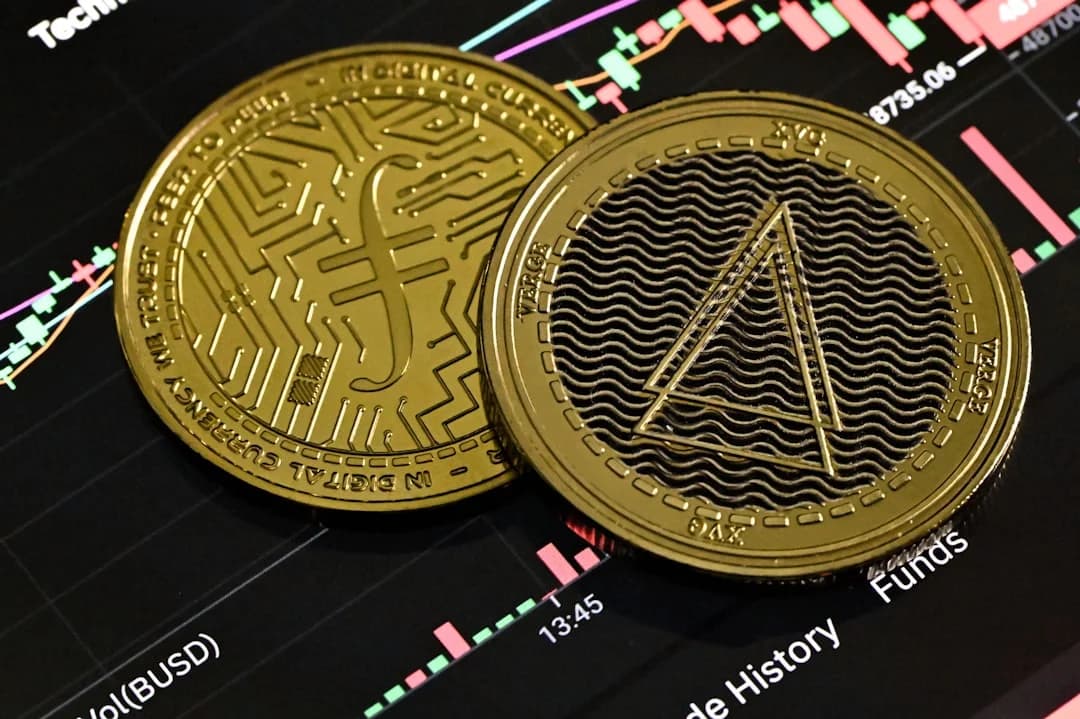
Photo by Traxer on Unsplash
The tokenized real assets market dynamics 2026 are shaping up as a watershed moment for how institutions access otherwise illiquid assets. As of March 31, 2026, total on-chain value of tokenized real-world assets (RWAs) climbed to about $19.3 billion, marking a more than two-and-a-half-fold increase from early 2025 and signaling a shift in how traditional assets are represented, traded, and priced on blockchain rails. This acceleration is reverberating through real estate, government securities, commodities, and private credit, fueling conversations about liquidity, settlement speed, and regulatory clarity across a broader spectrum of market participants. The publication and dissemination of CoinGecko’s RWA Report 2026 have become a focal point for traders, asset managers, and policymakers seeking to disentangle the dynamics driving this growth and to assess what it means for mainstream adoption of tokenized assets. (coingecko.com)
In a market that once lived primarily in pilot programs and boutique platforms, 2025 and 2026 have produced a confluence of regulatory guidance, institutional engagement, and product innovation that appears to be sustainable rather than speculative. Tokenized Treasuries remain the largest single asset class within RWAs, but their dominance has begun to give way to increasing tokenization across commodities, equities, and private credit. The share of tokenized Treasuries fell from 73.7% to about 67.2% by Q1 2026 as other asset classes expanded, underscoring a diversification trend among tokenized offerings. The broader narrative is that tokenized real assets are moving from a niche instrument to a structured, multi-asset framework that can potentially plug into existing market infrastructures, including traditional exchanges and regulated venues. This shift has attracted participation from major asset managers and exchange operators exploring dedicated tokenized products and supportive trading mechanics. (coingecko.com)
Against this backdrop, observers are watching several intertwined dynamics: price formation and liquidity for tokenized positions, the quality and availability of pricing data across asset classes, and the evolution of custody, settlement, and compliance standards that underpin credible, scalable markets. If 2025 was a year of experimentation, 2026 is being characterized by accelerated scaling, more robust data, and clearer pathways for regulated participants to deploy RWAs as both investment primitives and collateral in decentralized and centralized venues. The result may be a broader, more resilient market with higher participation from traditional finance, fintechs, and crypto-native platforms alike. This article synthesizes the most recent data, quotes, and industry-facing insights to present a clear picture of tokenized real assets market dynamics 2026 and what they portend for the remainder of the year and beyond. (coingecko.com)
What Happened
Context: The RWA Tokenization Surge Gains Momentum
Since tokenization began to attract serious attention in 2024, the space has evolved from experimental pilots to a more widely recognized segment within digital asset markets. The momentum in 2025 carried into 2026, with RWAs crossing a notable threshold in on-chain valuation and secondary trading activity. CoinGecko’s RWA Report 2026 details a market that expanded roughly 256.7% over fifteen months, rising from $5.42 billion at the start of 2025 to $19.32 billion as of March 31, 2026. This growth is not purely a crypto-driven phenomenon; it reflects deeper institutional interest and regulatory clarity that has opened doors for TradFi players to participate more fully in on-chain representations of off-chain assets. The report emphasizes that the RWAs market, while still smaller than the scale of the broader crypto market or traditional asset markets, exhibits a distinct, structural expansion pattern driven by real-world assets now being tokenized and traded with more reliability and ease. (coingecko.com)
Timeline: Key Milestones in 2025–Q1 2026
- Early 2025: Tokenized RWAs begin a rapid ascent in on-chain market cap as more asset classes are tokenized beyond Treasuries, with a rising number of platforms offering cross-asset tokenization and secondary trading capabilities. The market share of tokenized Treasuries remains high but begins to diversify. (coingecko.com)
- February–March 2026: The on-chain RWA market hits a landmark in the context of institutional momentum, with tokenization across commodities, stocks, ETFs, and private credit showing notable growth. By March 31, 2026, tokenized RWAs totalled approximately $19.3 billion, confirming a sustained acceleration rather than a short-lived spike. Regulators and major players continue to publish guidance and best practices, reinforcing the perception that tokenization can operate within well-defined regulatory frameworks. (coingecko.com)
- Q1 2026: Tokenized Treasuries remain the largest single asset class but with a reduced share (down to roughly 67.2% of the RWA market) as other segments catch up, pointing to a more balanced portfolio of tokenized assets. Trading and liquidity indicators in Q1 2026 show robust on-chain activity, including elevated perpetuals and futures volumes on tokenized products, suggesting growing appetite for on-chain exposure to RWAs. (coingecko.com)
Key Facts: What Asset Classes Are Driving Growth
- Tokenized Treasuries: The largest share of the RWAs market, with continued accumulation of on-chain issuance and trading. The trend shows strong institutional demand for high-quality, liquid benchmarks represented on-chain, even as other asset classes expand. The February 2026 inflection point—where the on-chain market crossed important liquidity thresholds—helped catalyze broader participation. (coingecko.com)
- Tokenized Commodities: A rapid acceleration in 2025–2026, led by gold-backed tokens and precious metals, contributing a substantial portion of growth as investors seek cross-border, 24/7 access to real assets. This shift aligns with broader macro storage and inflation-hedge narratives, reinforcing the role of RWAs in diversified portfolios. (coingecko.com)
- Tokenized Stocks and ETFs: Early-stage but structurally expanding, with traders using tokenized equities and ETFs to gain on-chain access to traditional asset classes. While still a smaller slice of total RWAs, liquidity is improving as platforms mature and regulatory clarity improves. (coingecko.com)
- Tokenized Private Credit and Other Asset Classes: A growing share of the market as platforms push into asset-backed lending, securitized private debt, and other off-chain assets represented on-chain. This diversification is a central theme in 2026 market dynamics. (coingecko.com)
Regulatory Context: How Clarity Supports Growth
Regulatory clarity has emerged as a critical enabler of tokenized asset markets in 2025–2026. In the United States and overseas, ongoing policy developments, tax treatment considerations, and securities-law alignment are reducing the “unknowns” that previously discouraged large institutions from participating in on-chain RWAs. These dynamics are referenced by multiple market analyses and policy-focused studies, which highlight that a more predictable regulatory environment tends to correlate with higher institutional participation and product breadth. In the U.S. and Europe, supporting frameworks are cited as enabling a more credible tokenization path for RWAs, including potential use of tokenized instruments as collateral and a pathway for regulated exchanges to list tokenized products. (imf.org)
Immediate Takeaways for Markets
- The growth in tokenized RWAs is becoming more cross-asset and cross-venue, suggesting a broader, liquidity-enhancing effect beyond a single flagship product.
- Institutional adoption appears to be expanding from tokenized Treasuries into commodities, private credit, and even some equity representations, with the pace influenced by regulatory clarity and platform reliability.
- The on-chain RWA market remains a fraction of the overall asset market, but its growth rate is steep enough to draw significant interest from major asset managers, exchanges, and fintechs exploring new ways to optimize capital efficiency and liquidity. (coingecko.com)
What This Means for Risk and Return
- Liquidity and pricing data for RWAs are improving, but challenges remain around on-chain liquidity depth for certain asset classes and cross-chain price discovery. Analysts emphasize disciplined risk management, robust custody solutions, and regulatory compliance to support confidence among institutional users. The balance of risk and opportunity in tokenized RWAs will hinge on market structure improvements, standardized disclosures, and interoperability between on-chain and off-chain pricing references. As academic and industry reports note, liquidity bottlenecks persist even as total on-chain value expands, underscoring the need for ongoing market infrastructure development. (arxiv.org)
Section 1 Summary: Recent Developments and Key Facts
- RWA market capitalization reached approximately $19.32 billion as of March 31, 2026, up 256.7% over 15 months. Treasuries represented the largest share but faced a slightly reduced dominance as other asset classes expanded. (coingecko.com)
- Tokenized commodities surged, led by gold tokens, with spot trading activity reaching tens of billions in 2026, indicating heightened investor interest in on-chain access to physical assets. (coingecko.com)
- Institutional participation continued to grow in 2026, aided by regulatory clarity and the appetite of large asset managers to explore tokenized formats for diversification and liquidity management. (coingecko.com)
Why It Matters
Broader Market Implications: Liquidity, Transparency, and Accessibility

The tokenized real assets market dynamics 2026 carry implications far beyond crypto markets. By digitizing real-world assets on public or permissioned ledgers, investors gain near-instantaneous settlement, programmable control, and greater liquidity for historically illiquid holdings such as certain real estate portfolios and private credit obligations. In practice, this can translate into faster capital deployment, improved price discovery, and more granular access for a wider set of investors, including institutions and high-net-worth individuals who historically faced high barriers to entry. The degree to which RWAs can deliver credible liquidity hinges on robust secondary markets, reliable price feeds, and interoperable custody and settlement solutions across multiple platforms. (assets.coingecko.com)
Industry Momentum: Real Estate, Treasuries, and Commodities
- Real estate tokenization: The sector has gained traction as platforms demonstrate fractional ownership models and scalable distributions of property portfolios. Industry-focused analyses show that platform leadership and asset-class breadth contribute to the overall market’s momentum, with continued attention to regulatory alignment and investor education. The reported scale of tokenized real estate assets indicates growing but still incremental market share relative to the broader asset universe. (tokenreits.com)
- Treasuries and money market equivalents: Tokenized Treasuries anchor the market due to their high liquidity and established market structure, with regulatory discussions shaping the feasibility of tokenized versions as core components of institutional portfolios. The ongoing evolution of related product types—such as tokenized money market funds—suggests a structural shift in how cash-like exposures could be managed in on-chain environments. (web-assets.bcg.com)
- Commodities and other asset types: Tokenized gold and commodity tokens have shown strong demand, reflecting investor interest in cross-border access to physical assets and the diversification benefits of tokenized exposure. The expansion into commodities highlights a broadening of the RWAs landscape beyond traditional fixed-income tokens. (coingecko.com)
Regulatory and Infrastructure Considerations
A key theme in 2026 analyses is the interplay between regulation, market infrastructure, and asset-class breadth. The path toward scalable, compliant tokenized markets requires: clear securities-law alignment, custody and settlement reliability, standardized disclosure practices, and cross-venue interoperability. Industry studies and policy notes emphasize that tokenized RWAs are most likely to achieve durable growth when regulatory expectations are well understood, and market operators deliver credible, auditable processes. The ongoing involvement of major financial institutions underscores the seriousness of this trajectory and provides a counterpoint to concerns about fragmentation and compliance risk. (imf.org)
Section 2 Summary: Why the 2026 Dynamics Could Reshape Market Structures
- Tokenization expands the potential addressable market by converting a broader set of real assets into tradable, on-chain representations, offering enhanced liquidity and reach for otherwise illiquid holdings. (coingecko.com)
- The diversification of asset classes within RWAs—treasuries, commodities, stocks, ETFs, and private credit—points to a multi-venue ecosystem where investors can access varied risk/return profiles in digital form. (coingecko.com)
- Regulatory clarity and improved market infrastructure are pivotal, with policy movements and best-practice adoption helping to bridge crypto-native channels and traditional financial markets. (imf.org)
What's Next
Near-Term Milestones: 2026 Through 2027
Analysts predict continued acceleration in tokenized asset issuance and trading across multiple asset classes, with several drivers likely to shape the trajectory:
- Platform expansion and product diversification: More venues are expected to offer tokenized real estate, tokenized private credit, and tokenized commodities, with enhanced liquidity and tighter spread management as trading volumes grow. This dynamic is fueled by investor demand for 24/7 access, risk-adjusted return potential, and the ability to deploy tokenized assets as collateral in DeFi or TradFi ecosystems. (coingecko.com)
- Regulatory maturation and compliance tooling: Expect more formalized guidance and standardized frameworks across major markets, which will reduce friction for incumbents and new entrants alike. The role of compliant, auditable processes will be central to building trust and scalability in RWAs. (imf.org)
- Data and pricing transparency: As on-chain data networks mature, more reliable price discovery mechanisms will emerge, enabling better valuation and risk management for tokenized assets. This is critical for institutional adoption and cross-venue arbitrage opportunities. (arxiv.org)
Long-Term Trajectory: Market Structure and Potential
Looking further ahead, several scenarios are plausible depending on how quickly regulatory clarity solidifies and how efficiently market infrastructure scales:
- If the current growth pace persists and institutional demand remains robust, RWAs could become a meaningful, multi-trillion-dollar on-chain market by the end of the decade. Analysts caution that this would require sustained improvements in liquidity, custody, and settlement, along with consistent policy clarity to avoid regulatory bottlenecks. Some market models project a multi-trillion-dollar TAM in tokenized RWAs with a mainstreaming of regulated platforms and cross-border issuance. (images.ctfassets.net)
- A more incremental path could see RWAs remain a complementary slice of portfolios, primarily used for diversification, hedging, and liquidity management within larger, traditional asset programs. This would still represent a meaningful shift in how asset owners access and manage illiquid exposures, but with slower diffusion into everyday investing. (web-assets.bcg.com)
Section 3 Summary: What to Watch for in 2026–2027
- Regulatory developments and enforcement actions that clarify what constitutes compliant tokenized securities and how cross-border trading should be structured.
- The pace of platform innovation in custody, settlement, and liquidity provisioning, including new on-chain vaults, asset custodians, and standardized disclosures.
- The degree of collaboration between traditional financial institutions and crypto-native platforms to create interoperable, scalable ecosystems for tokenized RWAs.
What’s Next: Implementation Roadmap for Investors and Institutions
- Short term (next 6–12 months): Monitor regulatory updates and platform announcements from major exchanges and perpetuals providers; evaluate liquidity depth and price transparency for top asset classes (treasuries, gold, real estate tokens). Expect continued growth in tokenized Treasuries as a baseline, with attention to non-Treasury RWAs gaining share. (coingecko.com)
- Medium term (12–24 months): Assess cross-venue liquidity, parachain or interoperable settlement bridges, and standardized risk disclosures; evaluate the role of tokenized RWAs as collateral in DeFi protocols and in TradFi lending ecosystems. (arxiv.org)
- Long term (beyond 24 months): Watch for regulatory convergence, larger institution-led issuance, and potential scaling to multi-trillion-dollar markets as infrastructure matures and market participants gain confidence in tokenized asset representations. (imf.org)
Closing
The year 2026 is shaping up as a defining period for tokenized real assets market dynamics. The on-chain RWAs market’s ascent—from roughly $5.4 billion at the start of 2025 to over $19.3 billion by Q1 2026—reflect a broader transition in how investors access physical and financial assets via blockchain-enabled channels. This evolution is not merely a technological curiosity; it represents a fundamental reimagining of market structure, liquidity, and regulatory alignment that could extend to public markets, private markets, and the intersection of TradFi with DeFi. As regulators publish guidance and market infrastructure improves, the path forward for tokenized RWAs appears increasingly navigable for institutional players seeking to balance risk, return, and liquidity in a rapidly changing financial landscape. For readers and investors watching tokenized real assets market dynamics 2026, the key signal is clear: the shift from experimental pilots to scalable, compliant, and diversified tokenized asset markets is well underway, with 2026 serving as a critical inflection point. (coingecko.com)

As coverage continues, Wall Street Economicists will track new issuances, platform expansions, and regulatory developments, bringing you updates on the tokens that underpin this evolving market. The combination of data-driven analysis, expert commentary, and practical implications for investment strategies will remain central to our coverage, ensuring readers stay informed about how tokenized real assets market dynamics 2026 unfold in real time.