US equity market February 2026 tech rotation: Early Signals
In-depth, neutral, data-driven analysis of US equity market trends in February 2026, focusing on tech rotation impacts and early signals.
 By Catherine Brewer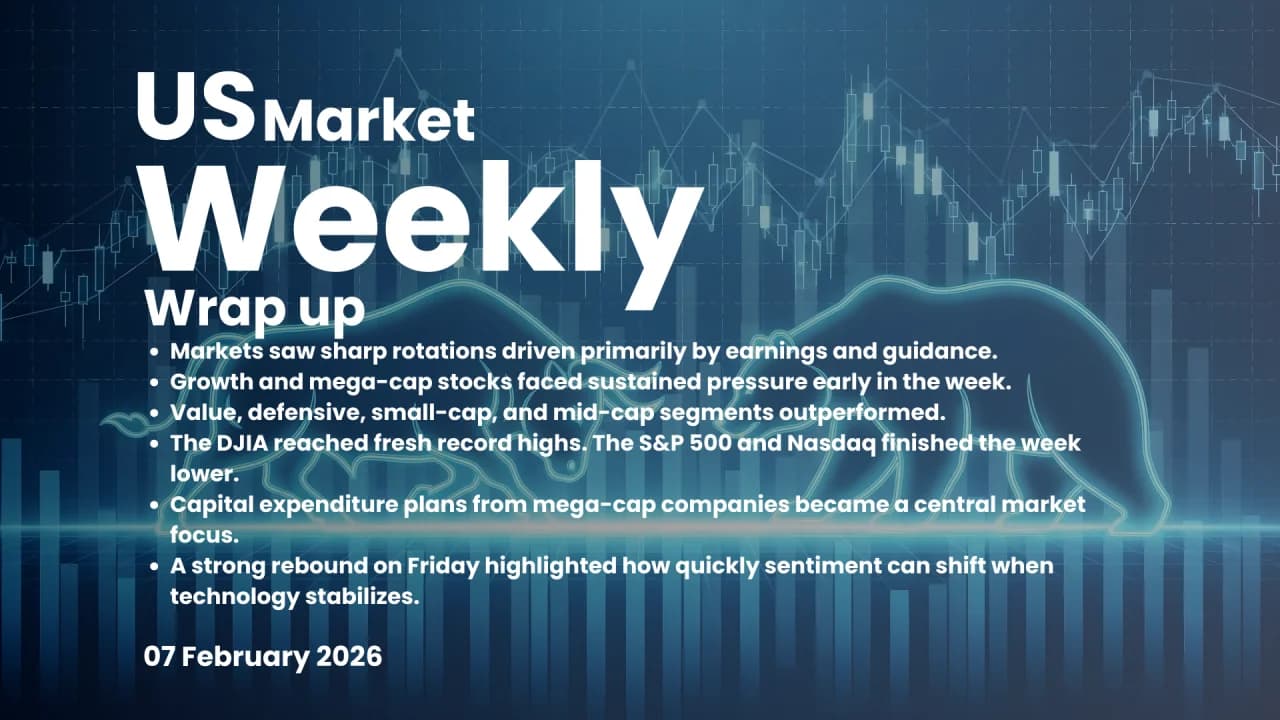
The US equity market in February 2026 continues to reveal a defining shift: a pronounced tech rotation that is pushing leadership away from the mega-cap tech complex toward broader value-oriented and domestic-focused stocks. For readers tracking the US equity market February 2026 tech rotation, the early-year data underscore a regime change in market leadership, with meaningful implications for portfolios, corporate strategy, and consumer-facing tech adoption. This piece threads together the latest week-by-week snapshots, credible data points, and concrete company examples to illuminate what’s driving the rotation, who’s being affected, and what it might mean for the next 6–12 months.
As investors, policymakers, and corporate executives digest the freshest numbers, the central question becomes not only which stocks are outperforming but why this rotation is happening now and how durable it might prove. The period has featured competing narratives: a continued AI-driven value case for infrastructure and semiconductors, a broadening of market breadth that reduces reliance on a handful of high-fliers, and a cautionary note from risk professionals about concentration risk in a market still shaped by the AI investment boom. This analysis relies on data from market researchers, brokerage researchers, and credible financial media to present a data-driven view of the US equity market February 2026 tech rotation, with concrete examples and careful caveats where data remain volatile or provisional.
What’s happening in the US equity market February 2026 tech rotation
Rotation magnitudes reveal a regime shift
Early 2026 marked a clear reversion from the glare of mega-cap tech leadership toward a broader market leadership spectrum. January 2026 featured a historic rotation, with the Russell 2000 up 5.39% while the S&P 500 gained 1.44%, and the Nasdaq Composite up 0.97%. The “Magnificent 7” tech giants posted only a modest gain of 0.55%, signaling that the most-cited AI leaders were no longer pulling the market as a whole as they had in prior years. This shift is widely interpreted as a broadening of leadership away from mega-cap tech toward domestic-focused, value-oriented stocks. In fact, market breadth reached a level not seen in years, with about 65% of S&P 500 components outperforming the index in January. These datapoints are cited in market commentaries that track the Great Rotation’s early 2026 legs. (jamesinvestment.com)
Tech leadership fractures: breadth and dispersion widen
The rotation’s impact on sector leadership has been pronounced. The year-to-date (YTD) performance through early February shows a dramatic split between software-focused and semiconductors vs. other tech subsectors. The iShares Expanded Tech-Software Sector ETF (IGV) was down roughly 22% year-to-date through early February, illustrating the deep pullback in high-valuation software names despite a broader AI spending narrative. In contrast, the VanEck Semiconductor ETF (SMH) posted roughly +11.5% YTD, reflecting ongoing demand for AI-accelerated hardware and the resilience of semiconductors in a volatile market. The dispersion between these two major tech-area benchmarks signals a broader “rotation within tech” rather than a simple tech vs non-tech story. (nasdaq.com)
Real-world examples show the tension and the payoff
Two concrete narratives illustrate the tension within the rotation. First, Nvidia’s OpenAI investment story—once framed as a linchpin of AI infrastructure growth—began to attract skepticism about the timing and structure of such capital commitments. A prominent technology outlet reported that the deal’s momentum was slowing, with Nvidia publicly pushing back on the notion that the arrangement would be non-binding or fully realized in the near term. The market reaction was mixed: while AI infrastructure remains a long-run growth theme, the near-term volatility around mega-deals pressured tech leadership. This episode helps explain the February weakness in software platforms that rely on AI monetization models. TechCrunch covered Nvidia’s pushback on the report and the evolving funding conversation. (techcrunch.com)
Second, a separate set of data points highlights how capital markets are pricing AI exposure differently across subsectors. In another widely cited note, analysts highlighted a broader AI capex boom among hyperscalers and cloud players—aggregating to an estimated $610 billion-plus in AI infrastructure spending by 2026, a figure that underscores durable demand for AI hardware and data-center capacity even as software valuations come under pressure. This nuance is critical for understanding the tech rotation: hardware-heavy AI exposure remains a relative source of earnings resilience even as software equities undergo reevaluation. Axios’ coverage of hyperscaler spending provides a useful framing for this dynamic. (axios.com)
Two case studies that anchor the rotation narrative
Case study 1: Sandisk (SNDK) and memory-chip demand. Memory-related equities have been among the most dramatic beneficiaries and victims of AI-driven demand swings. An industry-focused publication highlighted that Sandisk, after its spin-off from Western Digital in February 2025, delivered a striking year-to-date performance, driven by AI-driven memory demand and a broader AI infrastructure cycle. The same reports noted strong performance in memory-related names as investors priced in AI-enabled data-center capacity. This case study illustrates how AI-adjacent hardware plays can lead to outsized returns even when software leadership is under pressure. (investors.com)
Case study 2: Apple as a relative safe haven within a tech-rotation backdrop. Amid the AI spending ramp and software valuation concerns, a major consumer tech company—Apple—emerged in market commentary as a potential “safe haven” within the tech complex, benefiting from steady cash flow, diversified product streams, and less exposure to the most aggressive AI software bets. While not immune to broader swings, Apple’s performance and investor narrative in early 2026 reflected the rotation’s tilt toward more durable, cash-generative tech franchises during a period of elevated AI capex expectations. Barron’s coverage of Apple’s role in the tech rotation provides a strong, credible example of how the rotation can reframe leadership within a single sector. (barrons.com)
Who’s feeling the effect: winners and losers
The rotation’s effects extend beyond sector labels to portfolio risk and return dynamics. On the winners side, value-oriented and smaller domestic stocks gained traction as investors sought a broader set of growth opportunities outside the traditional top-heavy tech names. Market commentary and weekly performance data show a shift in breadth that supports a more balanced market structure, reducing the risk of concentration in just a few high-flying tech stocks. Conversely, the rotation produced near-term headwinds for software platforms and high-valuation AI software plays, which faced profit-taking pressures amid rising doubts about the sustainability of AI-driven monetization in the near term. The breadth signal described earlier—65% of S&P 500 components beating the index—is a useful early indicator of this broadening leadership. (jamesinvestment.com)
Section 1 at a glance: quick data points and patterns
- January rotation results: Russell 2000 +5.39% vs S&P 500 +1.44%; Nasdaq +0.97%; Magnificent 7 +0.55%. Breadth: 65% of S&P 500 components beating the index. (jamesinvestment.com)
- February tech dispersion: IGV down roughly 22% YTD; SMH up roughly 11.5% YTD as of early February. (nasdaq.com)
- Weekly performance snapshot (week of Feb 2–6, 2026): S&P 500 -0.36% for the week; Nasdaq -2.10%; Russell 2000 +1.95%; IT sector -1.50%; Energy +4.38%. (lpl.com)
- Nvidia/OpenAI narrative: reported stall in the OpenAI investment deal, with market participants weighing near-term implications for AI infrastructure bets. (techcrunch.com)
- AI infrastructure spend: hyperscalers projected to spend more than $610B in AI infrastructure in 2026. (axios.com)
- Hardware/memory exposure case: Sandisk’s standout relative performance linked to AI-driven memory demand post-2025 spin-off. (investors.com)
- Durable safe-haven narrative: Apple as a defensive stance within tech leadership amid AI-driven capex debates. (barrons.com)
Why it’s happening: market forces and structural drivers
Tech rotation as a landscape-level shift

The US equity market February 2026 tech rotation is not a fleeting blip; it reflects a broader shift in leadership from a tech-heavy growth regime toward a more diversified mix that includes value, small caps, and cyclicals. January’s breadth expansion and the transition away from Magnificent 7 leadership hint at an environment where investors seek a larger set of earnings drivers beyond AI-centered megacaps. The January breadth signal—65% of S&P 500 components outperforming the index—points to a market that may be becoming less dependent on a handful of AI-driven giants. This breadth improvement, combined with a meaningful small-cap performance outturn in January, provides the groundwork for a multi-quarter rotation rather than a one-off event. (jamesinvestment.com)
AI capex and the “halo” of hardware demand
A central theme behind the rotation is the divergent behavior of software versus hardware within AI infrastructure. On the software side, valuations remain sensitive to growth expectations, margins, and the durability of software-as-a-service (SaaS) models in an environment of cost scrutiny. On the hardware side, the AI hardware cycle—accelerated by hyperscalers’ capex and data-center expansion—continues to support semiconductors and related equipment, even as some software equities wobble. Analysts and market commentators highlight that hyperscaler AI capex is set to reach hundreds of billions of dollars and could be a persistent source of demand for semiconductors and data-center gear. This dynamic helps explain why SMH remains a relative anchor of strength versus IGV, even as tech leadership rotates. (axios.com)
Market breadth, risk, and the two-speed narrative
Industry commentary in early 2026 has highlighted a two-speed market: a broad, value-leaning rotation supported by improving breadth and a AI-driven growth subset that remains volatile and highly valued on expectation rather than immediate cash generation. The data from market researchers and weekly market reviews show that sectors like Energy and Materials have led in some weeks, while Information Technology and Software have been more mixed. This supports a narrative of a more resilient breadth regime, which may reduce the risk of a sudden, painful correction driven by a handful of high-valuation players. (lpl.com)
The role of policy, macro sentiment, and external shocks
Beyond pure stock-level dynamics, macro policy shifts, geopolitical risk, and consumer demand cycles influence the rotation. In January and February 2026, market observers noted that policy signals and macro-driven risk appetite played into the rotation—especially as investors evaluated AI spending against broader macro conditions like inflation, labor markets, and the pace of corporate CapEx. The rotation’s durability will hinge on how these macro signals evolve and how much capital markets trust in AI-driven growth versus the ability of broad-based value and small-cap segments to sustain higher earnings growth. Credible market commentary and weekly performance data emphasize that breadth-led strength is a meaningful counterweight to tech-stock volatility during this period. (lpl.com)
Section 2 at a glance: what’s driving the shift
- AI capex momentum remains robust but complicated by deal structure dynamics and near-term execution risk (Nvidia/OpenAI discussion). (techcrunch.com)
- Hyperscaler AI infrastructure spend projected to exceed $610B in 2026, creating a durable demand backdrop for semiconductors and related hardware. (axios.com)
- Broad market breadth improvements and small-cap leadership in January 2026 point to a more sustainable rotation path than a one-month wonder. (jamesinvestment.com)
What it means for businesses, consumers, and industry
Business implications: strategy, budgeting, and capital allocation
Corporate budgeting in AI-adjacent sectors is increasingly framed around durable hardware infrastructure and long-cycle capex, rather than solely on accelerating SaaS growth. This has implications for suppliers of data-center hardware, networking equipment, and memory components, which historically tie to AI-driven demand and resultant capital expenditure. As the AI infrastructure story matures, investors and executives will be assessing the balance between software margin expansion and hardware-led growth. Analysts note that the AI hardware cycle can provide steadier, more capital-intensive growth versus the more volatile software software cycles, which may be more sensitive to profitability and subscription renewal dynamics. (axios.com)
For software-centric firms, the rotation serves as a reminder of the importance of cash flow resilience and cost discipline. If AI-related revenue ramps stall in the near term, software providers may need to accelerate unit economics improvements or diversify revenue sources beyond AI-driven use cases. The sector’s pullback in software ETFs and the observed breadth dynamics suggest a market evaluating risk-adjusted returns rather than chasing unproven AI promises. (nasdaq.com)
Consumer effects: price and product cycles amid a broader AI pullback
- Consumer technology demand could be influenced by the cadence of AI feature releases, device upgrade cycles, and the overall macro environment. While hyperscalers push AI hardware expansion, consumer-facing tech ecosystems may experience a more measured product refresh cycle if corporate spending translates into more cautious pricing and feature acceleration. Observers note Apple’s relative stability during the rotation period, underscoring how consumer hardware leaders can act as stabilizers in a broader tech rotation. (barrons.com)
Industry changes: what sectors gain, what sectors recalibrate
Hardware and memory sectors stand to benefit from AI-driven data-center expansion. Sandisk’s performance narrative, anchored in AI-enabled demand for memory, exemplifies how AI infrastructure can sustain demand for specific hardware categories even when software valuations wobble. This dynamic supports a rotation narrative that emphasizes hardware, semiconductors, and memory stocks as durable beneficiaries of AI hardware cycles. (investors.com)
The software and platform space faces more near-term volatility. The IGV’s substantial drawdown year-to-date reflects the re-pricing of high-valuation software exposures as investors reassess business models, monetization risk, and the sustainability of elevated growth expectations in AI software. This reframing is central to the rotation’s business implications, particularly for venture-backed or high-multiple software players. (nasdaq.com)
Section 3 at a glance: practical implications
- AI hardware demand remains a long-run growth pipeline, with hyperscalers driving capex beyond 2025 levels. (axios.com)
- Software-driven AI valuations faced a near-term reevaluation, contributing to the rotation’s breadth across sectors. (nasdaq.com)
- Consumer hardware leaders may serve as a ballast in a volatile tech environment, illustrating the rotation’s tilt toward durable franchises. (barrons.com)
Looking ahead: 6–12 month predictions, opportunities, and preparation
6–12 month outlook: what the rotation could mean next

The rotation could sustain a multi-quarter path if breadth remains robust and if AI infrastructure demand maintains momentum. The early-February data suggest mixed performance across different tech subsectors, with energy, materials, and industrials showing resilience in certain weeks, while information technology remains susceptible to volatility. If investors accept broader leadership beyond mega-cap tech, 6–12 months could feature continued breadth expansion, with small caps and value stocks continuing to outperform mega-cap growth in selective environments. Market commentary and weekly performance snaps indicate that a pause or consolidation is likely before a potential re-acceleration, rather than a full reversal of the Great Rotation expectations. (lpl.com)
Another plausible scenario is a “two-speed” dynamic persisting, where AI infrastructure beneficiaries continue to grow, but with a more balanced market leadership that reduces the risk of a sharp, concentrated drawdown. This scenario aligns with the breadth improvements and the rotation’s spread across sectors, rather than a single cohort driving all returns. (lpl.com)
Opportunities for investors and corporate strategists
Tilt toward value and small-cap exposure to capture the rotation’s breadth expansion. January’s outperformance by small caps and evidence of broad-based leadership suggest that overweighting value and domestic-focused equities could improve risk-adjusted returns in a rotation that is not solely reliant on AI mega-cap names. The January performance context, highlighting small-cap leadership and broad breadth, supports a strategic tilt toward more diverse leadership. (jamesinvestment.com)
Consider AI infrastructure beneficiaries within semiconductors and memory as core exposure rather than relying only on software platforms. Semiconductors (SMH) have shown relative strength amid AI capex momentum, while software indices (IGV) have faced multiple volatility episodes. A disciplined approach could blend hardware exposure (semis, memory) with selective software, anchored by valuation discipline and long-term growth prospects. (nasdaq.com)
Monitor Nvidia/OpenAI developments and hyperscaler guidance closely. The Nvidia-OpenAI narrative illustrates the risk-reward balance of mega deals versus ongoing underlying AI growth. As capital deployment structures evolve, investors should watch for signs of deal acceleration or re-pricing that could tilt market leadership back toward AI-enabled software or, alternatively, toward broader infrastructure and hardware. (techcrunch.com)
Preparation tactics: building a resilient portfolio for the rotation
Emphasize breadth: diversify across sectors showing leadership in recent weeks (energy, materials, industrials) to reduce concentration risk in a small group of AI-laden names. Weekly market performance notes and breadth indicators point to a healthier, more diversified leadership base than a narrow tech rally. (lpl.com)
Manage risk around the software AI cycle: maintain a disciplined valuation framework and ensure exposure to AI-related software aligns with concrete earnings progress and margin expansion potential. The software sector’s recent drawdown signals a need for robust risk management and selective exposure rather than full-bore blind bets on AI acceleration. (nasdaq.com)
Consider safety nets in consumer tech: where plausible, favor cash-generative franchises with durable business models and visible cash flows (for example, consumer hardware leaders with diversified revenue streams). The Apple narrative amid AI capex debates illustrates how consumer tech can serve as ballast within a broader rotation. (barrons.com)
Follow the memory and data-center themes: AI-driven memory demand and data-center expansion provide a counterpoint to software price risk, with Sandisk’s narrative serving as a concrete example of hardware resilience in an AI-heavy environment. Such themes offer an additional layer of diversification during a tech rotation. (investors.com)
Section 4 at a glance: actionable insights for the near term
- The rotation remains multi-faceted, with AI hardware demand supporting semis and memory while software valuations reprice in the near term. (nasdaq.com)
- A breadth-driven approach is prudent, given the observed shift away from megacap tech leadership toward domestic-focused and value-oriented equities. (jamesinvestment.com)
- Policy and macro signals will matter: the rotation’s durability will depend on the trajectory of AI capex, macro stability, and consumer demand, all of which influence the pace and scope of leadership shifts in the market. (lpl.com)
Closing: key takeaways and practical advice
The February 2026 tech rotation in the US equity market is shaping up as a structural rotation rather than a one-off event. Data from January’s breadth expansion and early February sector dispersion indicate leadership is broadening beyond a narrow AI-centric cohort, with small caps, value stocks, and cyclicals beginning to participate more meaningfully. The AI infrastructure story remains central, but the market is pricing risk and return across a wider spectrum, highlighting the importance of diversification, disciplined risk management, and a balanced exposure to hardware-led growth and software-enabled efficiency.
For investors and corporate leaders, the era calls for a clear-eyed, data-driven approach to portfolio construction and strategic planning. Seek opportunities in AI infrastructure and hardware as a durable growth axis, while balancing exposure to software with a focus on unit economics and margin resilience. Maintain awareness of breadth signals, watch for shifts in leadership within tech subsectors, and be prepared to adjust allocations as macro conditions and AI-capex cycles evolve over the next 6–12 months.
In short: the US equity market February 2026 tech rotation is real, data-supported, and likely to persist as market leadership broadens. The prudent path combines exposure to AI infrastructure beneficiaries with selective, value-oriented bets that reflect a healthier, more diversified market regime.