US inflation trajectory 2026: Trends and Outlook
Explore a data-driven analysis of the US inflation trajectory by 2026, examining its impact on technology market trends and future projections.
 By Catherine Brewer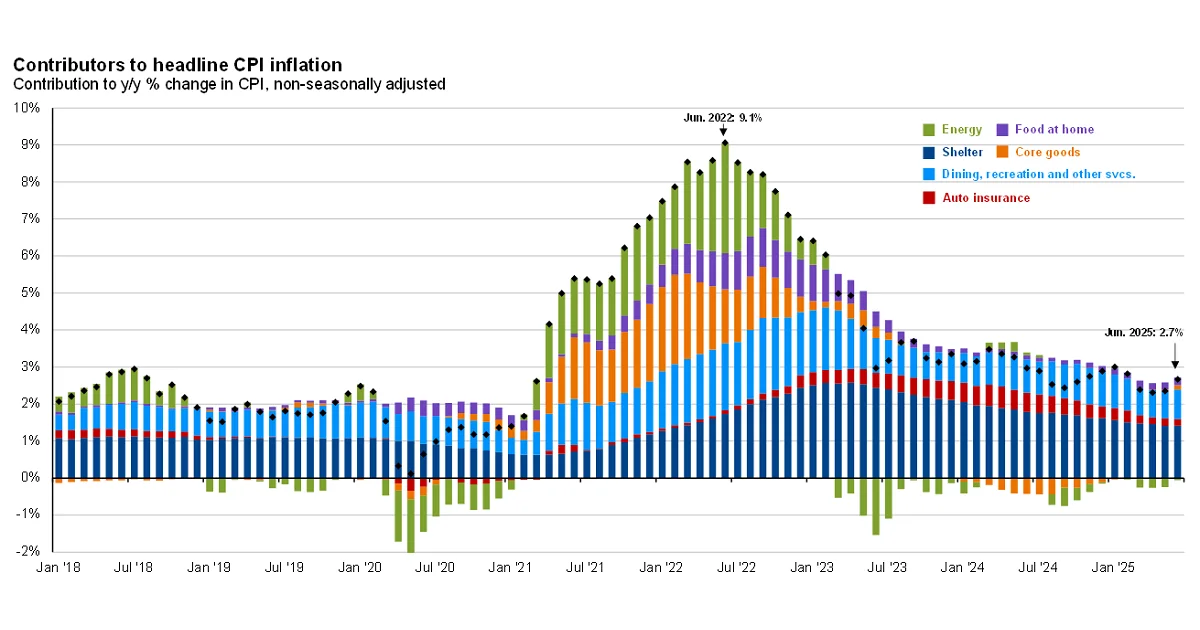
The US inflation trajectory 2026 is unfolding against a backdrop of cooler headline price gains and a still-volatile mix of services and goods. In January 2026, the Bureau of Labor Statistics reported a 2.4% year-over-year increase in the Consumer Price Index (CPI), with monthly CPI ticking up 0.2% for the month, and core CPI running at about 2.5% year over year. Those numbers mark another step in inflation’s deceleration from peak, even as household price pressures linger in shelter, health care, and certain services. This trajectory matters profoundly for technology and market dynamics, because the pace of inflation feeds into business planning, capital costs, and the pricing power of memory-intensive hardware and cloud services that underpin AI and digital transformation. (bls.gov)
Inflation trends in 2026 cannot be read in isolation from broader macro forces. The Fed’s own projections — aligned with the U.S. inflation path and labor market signals — suggest inflation staying in the low- to mid-3% range on a quarterly basis through parts of 2026 before easing deeper into 2% territory if tariffs and noncore pressures abate and productivity improves. International institutions project a multi-year easing of global price pressures, too, even as pockets of goods and memory-intensive tech gear experience persistent stress from supply constraints linked to AI-era demand. For technology and market watchers, this means a nuanced environment: inflation is retreating, but the path is not uniform across sectors, and the price signals coming from memory, semiconductors, and cloud services may diverge from headline consumer inflation. IMF notes that inflation is expected to ease more generally, even as advanced economies face different tariff and supply-chain dynamics that can reintroduce volatility in pockets of the tech stack. (mediacenter.imf.org)
Opening The inflation landscape matters for technology-driven markets because price stability underpins investment, hiring, and the capital intensity of AI infrastructure. As memory shortages, high-performance computing needs, and cloud cost pressures intersect with consumer price trends, firms must gauge not just the headline CPI but the undercurrent of PCE (personal consumption expenditures) inflation and sector-specific price signals. The latest January 2026 CPI numbers indicate a still-fragile balance: consumers are paying into shelter and services, while goods inflation shows more moderation. In this sense, the US inflation trajectory 2026 is a mosaic — one that requires reading both macroeconomic proxies and industry-specific price signals to understand where inflation is headed and what that means for technology and markets over the next 12 months. (bls.gov)
A core takeaway for readers is that 2026 will likely feature a two-speed inflation dynamic: consumer prices (CPI) easing toward 2–3% by year-end, while specialized segments tied to AI hardware and cloud services face higher price pressures due to constrained supply and rising demand. This nuance matters for investors, CIOs, and entrepreneurs who must plan budgets, pricing, and capital expenditure in an environment where broad inflation cools but critical components remain tight. The IMF’s broader inflation outlook for 2026 supports a gentler global trend, even as the U.S. faces tariff-driven shifts and sector-specific cost pressures that ripple through tech ecosystems. >Blockquote: “Global inflation continues to decline, reaching 3.6 percent in 2026,” as described in IMF’s latest World Economic Outlook communications, underscoring the global easing backdrop even as regional pockets of price dynamics diverge.(mediacenter.imf.org)
Section 1 — What’s happening
Inflation Pulse Today
- CPI in January 2026: 2.4% year over year; monthly increase 0.2%. This marks continued moderation from the earlier peaks and aligns with a broader trend of slower price growth in core goods and services. Shelter remains a notable contributor, while energy prices moved lower on a month-to-month basis. Core CPI remains anchored around 2.5% year over year. These figures are based on the January 2026 CPI release from the U.S. Bureau of Labor Statistics. (bls.gov)
- PCE inflation context: BEA’s PCE price index remained in the 2.7–2.9% range through mid-late 2025, consistent with a still-considerable but easing inflation influence in the Fed’s preferred gauge. The PCE trend matters because the Fed looks at PCE for policy guidance, and the divergence between CPI and PCE signals the underlying price dynamics across goods and services. (bea.gov)
- Global context: IMF’s 2025–2026 outlook indicates that inflation on a global basis is expected to decline, with some advanced economies showing resilience to tariffs and supply constraints, while still facing differing policy environments. This global backdrop matters for U.S. inflation in the sense that external price pressures and exchange-rate dynamics can feed into domestic prices, particularly for import-intensive sectors. (mediacenter.imf.org)
Tech Price Dynamics and Real-World Effects
- Memory scarcity and AI demand are driving price signals in semiconductors and memory. Bloomberg and Reuters reporting in late 2025 and early 2026 highlighted sustained memory-tightness, with price pressures concentrated in DRAM and NAND, partly driven by AI infrastructure demand and a shift toward high-bandwidth memory (HBM) for AI accelerators. These supply-demand dynamics reverberate through PC and data-center hardware pricing and can contribute to sector-specific inflation even as consumer prices trend lower. (bloomberg.com)

- Cloud and enterprise IT cost trends are evolving in response to AI workloads and capacity constraints. Industry observers note cloud pricing pressures tied to AI infrastructure, with sector analysts like S&P Global Market Intelligence documenting pricing adjustments and new billing models in 2025 and 2026. While AWS, Microsoft Azure, and Google Cloud pricing moves differ by region and service, the underlying trend is that AI-enabled workloads are reshaping the cost structure of cloud computing and enterprise software. This dynamic is a meaningful driver of firm-level inflation in tech spend. (spglobal.com)
Case Studies
Case Study 1 — Memory Shortage and AI Infrastructure Pricing
- Context: Memory shortages (DRAM and NAND) intensified as AI training and inference workloads ramped across hyperscale data centers. Major memory producers redirected capacity toward AI-optimized memory (HBM) and high-density DDR5, tightening supply for other segments and lifting prices for memory modules, PC components, and data-center hardware. This has had visible pricing implications for servers, GPUs, and storage devices, contributing to a divergence between consumer price trends and enterprise hardware costs.
- Evidence: Industry coverage in late 2025–early 2026 pointed to persistent memory supply tightness, with Reuters and Bloomberg noting that supply strains could endure into 2026 and beyond as AI infrastructure demand remains robust. Samsung, SK Hynix, and Micron continued capacity reallocation toward AI-focused memory, with price effects reverberating through the broader tech ecosystem. (bloomberg.com)
- Implications: For technology buyers and vendors, this translates into higher up-front hardware costs and potentially longer replacement cycles for memory-intensive systems. It also influences enterprise CapEx planning and the timing of refresh cycles for data-center infrastructure, a critical consideration for firms pursuing AI-enabled digital transformations.
Case Study 2 — Cloud Pricing and Enterprise IT Spending in 2025–2026
- Context: Enterprises increasingly rely on AI-enabled services and cloud platforms. In 2025–2026, cloud providers signaled price adjustments to align with higher AI infrastructure costs, with regional differences and service-level nuances affecting total spend. Analysts at S&P Global Market Intelligence and other outlets documented the evolution of cloud pricing, including price adjustments for compute, storage, and data transfer, as well as changes in subscription models and billing constructs.
- Evidence: Notable industry analyses in 2025–2026 highlighted price adjustments across the big three hyperscalers and regional variations, with some reports indicating price changes for AI-enabled services and premium compute offerings. While provider-specific moves vary, the broader trend is toward higher effective costs for AI workloads and more complex FinOps considerations for enterprises. (spglobal.com)
- Implications: For CIOs and CFOs, the cloud pricing landscape underscores the importance of FinOps discipline, workload optimization, and strategic planning around savings plans, regional deployment, and memory/GPU utilization to manage total cost of ownership in an inflationary-but-stabilizing environment.
Alliance of indicators: these dynamics in memory pricing and cloud costs sit alongside consumer inflation data to shape the overall inflation narrative for 2026. The bottom line is that while consumer price inflation remains on a downward path, sector-specific price pressures within tech hardware and AI infrastructure can create pockets of higher inflation that businesses must monitor closely.
Section 1 — The drivers behind the inflation trajectory
Macro Underpinnings
- Tariffs and trade frictions: Tariff-related cost pass-through shaped inflation dynamics in 2025 and contributed to tariff-driven shifts in 2026. IMF’s analysis highlighted tariffs as a negative supply shock that could influence inflation dynamics, depending on policy responses and the duration of tariff regimes. The implications for 2026 include potential temporary price pressures in tradables but an overarching trend toward lower inflation as policy and productivity adjustments take hold. (cnbc.com)

- Labor market resilience and productivity: The Philadelphia Fed’s Survey of Professional Forecasters (SPF) indicates ongoing job growth and a relatively stable unemployment trajectory into 2026, with inflation expectations embedded in wage dynamics and consumer spending. The SPF’s 2025 Q4 forecast shows continued labor market strength but with inflation projections that remain elevated in the near term, before easing into the latter part of 2026. These labor-market signals help explain why inflation can drift lower without triggering a rapid drop in nominal wages. (philadelphiafed.org)
- Global inflation trajectory: IMF’s World Economic Outlook and related communications in 2025–2026 emphasize a gradual global disinflation trend, with risk factors centered on trade policy, geopolitical tensions, and policy autonomy. This global backdrop supports a view that the U.S. inflation path is part of a broader trend toward lower inflation, albeit with sector-specific deviations. (mediacenter.imf.org)
Sector-Specific Dynamics
- Memory and AI hardware demand: The AI demand surge has reoriented memory supply chains, with AI accelerators driving demand for high-bandwidth memory and advanced DRAM/NAND. Market observers and industry reports indicate that memory pricing remains volatile as capacity shifts take time to come online, creating a structural factor in tech-sector inflation that can persist into 2026. (bloomberg.com)
- Cloud infrastructure costs: The AI‑driven cloud demand is reshaping the cost structure of cloud services. Industry analyses from S&P Global and related outlets highlight that cloud pricing moves in 2025–2026 reflect higher underlying infrastructure costs, with pricing formulas and billing models evolving to accommodate AI workloads. This dynamic is important for business planning, as cloud spend becomes a larger share of IT budgets in a world where AI is central to competitive strategy. (spglobal.com)
Section 2 — Why it’s happening
Market Forces and Policy
- Tariffs and supply shocks: Tariffs introduced in 2025 created supply-side pressures that fed into goods inflation at the margin. IMF’s commentary and the broader policy discourse emphasize that tariff pass-through depends on the temporary vs. permanent nature of measures, with longer-term effects contingent on productivity and trade policy evolution. The inflation path for 2026 will still be sensitive to tariff trajectories and policy responses. (cnbc.com)
- Monetary policy posture: The Fed’s policy stance in late 2025–2026, including the December 2025 Summary of Economic Projections, indicated a path of gradual easing if inflation cooperates, but with a cautious approach given persistent services-sector inflation and wage dynamics. The Fed’s forecast path suggests end-of-year policy rate in the mid-3% range, which has downstream implications for credit costs and investment in AI infrastructure. The Philadelphia SPF confirms continued monitoring of inflation metrics across CPI and PCE. (am.jpmorgan.com)
Industry and Technology Drivers
- AI hardware cycle and memory pricing: The memory market’s tightness and the AI-capacity build-out in 2025–2026 are central to understanding price signals in tech hardware. Analysts project continued memory supply tightness, with potential for mid-2026 price movements as capacity additions come online. This is a critical driver of tech inflation that may diverge from CPI trends faced by consumers. (deloitte.com)
- Cloud cost structures and AI workloads: Cloud providers are adapting pricing constructs to reflect AI workloads, capacity use, and data transfer dynamics. The pricing adjustments and billing-model shifts documented by S&P Global Market Intelligence and related outlets underscore a shift in enterprise IT spend that could influence inflationary pressures within the business segment, even as consumer inflation cools. (spglobal.com)
Section 3 — What it means
Business Impacts
- Budgeting for AI infrastructure: With AI-driven memory and cloud costs showing signs of persistence, technology-driven firms must incorporate FinOps discipline, regional pricing strategies, and workload optimization into budgets. The SPF’s inflation projections for 2026 imply a consumer-price backdrop that is improving, but enterprise costs tied to AI infrastructure and memory may remain sticky. This dual reality requires careful capital allocation and vendor negotiation. (philadelphiafed.org)
- Investment cycles and profitability: The memory supply cycle and cloud pricing dynamics imply that investment in AI infrastructure may not be immediately offset by cost reductions. Firms should plan multi-year hardware refreshes and consider hedges against price volatility in memory components and data-center hardware. Industry coverage on memory pricing supports the view that prices could stay elevated in 2026 as AI infrastructure demand remains robust. (bloomberg.com)
Consumer and Market Effects
- Household budgets and tech consumption: The CPI data show ongoing inflation moderation for consumers, which could support consumer demand for tech devices and services as real incomes stabilize. However, shelter and certain services costs remain sticky, which can influence discretionary spending and consumer tech adoption cycles. The January 2026 CPI data provide a concrete baseline for consumer inflation that analysts will monitor month by month. (bls.gov)
- Industry changes and price sensitivity: The cloud and hardware price dynamics described above imply a more nuanced price environment for businesses and consumers who rely on AI-enabled services and devices. Firms that can optimize cloud usage and memory allocations may gain a competitive edge by controlling costs in a higher-cost inflation backdrop. (spglobal.com)
Industry Shifts and Competitive Dynamics
- Memory and AI hardware leadership: The pricing power in memory, driven by AI demand, could reinforce leadership positions for the largest memory suppliers and AI hardware ecosystem players. The 2025–2026 period has been characterized by aggressive capacity reallocation toward AI memory, with implications for price discipline across the supply chain and potential capex cycles in memory and semiconductor equipment. (bloomberg.com)
- Cloud providers and enterprise software: The cost evolution of cloud services is likely to influence enterprise software purchasing decisions, data strategies, and digital transformation initiatives. As AI becomes more embedded in business processes, the cost of cloud services and data storage may become a more important component of total cost of ownership, requiring more sophisticated FinOps practices and budgeting. (spglobal.com)
Section 4 — Looking ahead
6–12 Month Outlook
- Inflation path: Expect CPI inflation to hover near 2.4–3.0% in the near term, with a continued deceleration into the second half of 2026 if energy prices stay soft, services inflation continues to moderate, and wage growth remains contained. The SPF’s quarter-by-quarter 2026 CPI forecast shows a path toward lower near-term inflation readings, with PCE continuing to trend lower as tariff effects pass through, but with sector-specific pressures in tech hardware and cloud services. The January 2026 CPI release provides the current anchor for these projections. (philadelphiafed.org)
- AI and memory cost trajectory: Memory and AI-related hardware costs are expected to remain a focal point of inflation in the hardware stack through mid-2026, as capacity additions come online and AI workloads scale. Deloitte’s 2026 semiconductor outlook emphasizes continued AI-driven demand and potential price volatility in high-value memory segments, suggesting strategic opportunities for suppliers and pricing discipline for users. (deloitte.com)
- Cloud pricing dynamics: Cloud price signals are likely to continue evolving, particularly as AI services become more pervasive and as contracts and pricing models mature. S&P Global Market Intelligence’s monitoring of cloud pricing provides a framework for enterprises to anticipate shifts in annual IT spending and to optimize cloud configurations accordingly. (spglobal.com)
Opportunities and Preparation
- For technology firms: The inflation backdrop creates opportunities in memory and AI accelerators for suppliers with scale and efficiency. The memory market’s tightness can yield pricing power, while the AI-era demand supports data-center investments and HPC infrastructure. Firms should align capital expenditure plans with expected memory capacity ramp-ups and regionally optimized cloud strategies to maximize cost efficiency. Deloitte’s semiconductor forecasts underscore the AI-driven growth trajectory and capacity constraints that shape investment decisions. (deloitte.com)
- For enterprises: FinOps, workload optimization, and strategic cloud procurement will be essential to navigate cloud pricing shifts and potential cost escalations in AI workloads. The SPF’s inflation projections for 2026 suggest a relatively favorable macro backdrop for corporate pricing power but emphasize the importance of cost discipline in IT budgets to avoid margin compression. (philadelphiafed.org)
- For policymakers: The path toward sustained price stability will be aided by policy clarity on tariffs, competitive markets, and investment in productivity. IMF’s global inflation trajectory and the Fed’s SEP guidance imply a cautious but constructive stance on policy normalization that supports innovation while maintaining price stability. (mediacenter.imf.org)
Comparison table — Inflation indicators and forward-looking expectations (illustrative, based on current data) Note: Values are rounded and reflect the latest available forecasts from SPF (Philadelphia Fed), BLS data, and IMF guidance as summarized in this article.
| Indicator (2025–2026) | 2025 Avg (approx) | 2026 Q1 | 2026 Q2 | 2026 Q3 | 2026 Q4 | Source/Notes | | Headline CPI | ~2.9% | 3.0% | 2.8% | 2.7% | 2.6% | SPF quarterly projections; CPI data release Jan 2026 show 2.4% YoY for Jan 2026; the SPF reflects higher near-term expectations and a path to cooling. (philadelphiafed.org) | | Core CPI | ~3.0% | 3.1% | 3.0% | 2.7% | 2.7% | SPF projections show elevated core inflation in early 2026 with gradual deceleration. (philadelphiafed.org) | | Headline PCE | ~2.9% | 2.8% | 2.6% | 2.5% | 2.4% | SPF projections; BEA PCE data indicates ongoing inflation within Fed’s preferred framework. (philadelphiafed.org) | | Core PCE | ~2.9% | 2.9% | 2.6% | 2.6% | 2.4% | SPF forecasts; Fed SEP discussions suggest core PCE around 2.4–2.6% by late 2026 depending on tariff dynamics. (philadelphiafed.org) |
Note: The table aggregates multiple sources. For precise quarterly values, refer to the Philadelphia Fed SPF table (current-quarter and revised forecasts) and the official BLS CPI release, which anchors the consumer price path. (philadelphiafed.org)
Closing The data point to a 2026 inflation path that is cooler than 2025 in headline terms, but with important caveats for the tech sector. Memory shortages and AI-driven demand are likely to keep certain hardware prices elevated, while cloud services pricing may reflect the added cost of AI infrastructure and data-management capabilities. The broader inflation backdrop remains favorable for cost discipline and investment in productivity, but the next 12 months will test how quickly AI-driven cost pressures can be absorbed by producers and passed through to customers. The key takeaway for Wall Street Economicists readers is to monitor both macro inflation signals and sector-specific price dynamics in memory, semiconductors, and cloud services — because the US inflation trajectory 2026 will be shaped by the interplay of a cooling consumer price path and persistent, technology-driven price signals in critical supply chains.
To stay ahead, policy watch should focus on tariff evolution and currency resilience, corporate strategy should emphasize FinOps and regionally optimized cloud deployments, and technology procurement should plan for memory and AI hardware cycles that can drive outsized price movements in the near term.
References and key sources cited throughout:
- U.S. Bureau of Labor Statistics, CPI January 2026 press release (CPI 2.4% YoY; monthly 0.2%), January 13, 2026. (bls.gov)
- Bureau of Economic Analysis, Personal Consumption Expenditures Price Index data and commentary (2.8% YoY in Sept 2025; ongoing trend), December 2025. (bea.gov)
- IMF World Economic Outlook and related communications (global inflation trajectory 2026 ~3.6%), July 2025; Executive Board Article IV (inflation and outlook), 2024. (mediacenter.imf.org)
- Philadelphia Fed, Fourth Quarter 2025 Survey of Professional Forecasters (2026 inflation projections by quarter and 2026 CPI/PCE paths). (philadelphiafed.org)
- Goldman Sachs Research, Outlook for Fed rate cuts in 2026 (path of inflation and policy rates, December 2025). (goldmansachs.com)
- Deloitte Insights, 2026 Semiconductor Industry Outlook (AI-driven memory demand and capacity constraints). (deloitte.com)
- Bloomberg and Reuters coverage on memory shortages and AI infrastructure (AI-driven memory demand, pricing power, and supply constraints). (bloomberg.com)
- S&P Global Market Intelligence, Cloud Price Quarterly and related cloud pricing analyses (AI workload price dynamics). (spglobal.com)