US stock market momentum February 17 2026: Tech Rotation

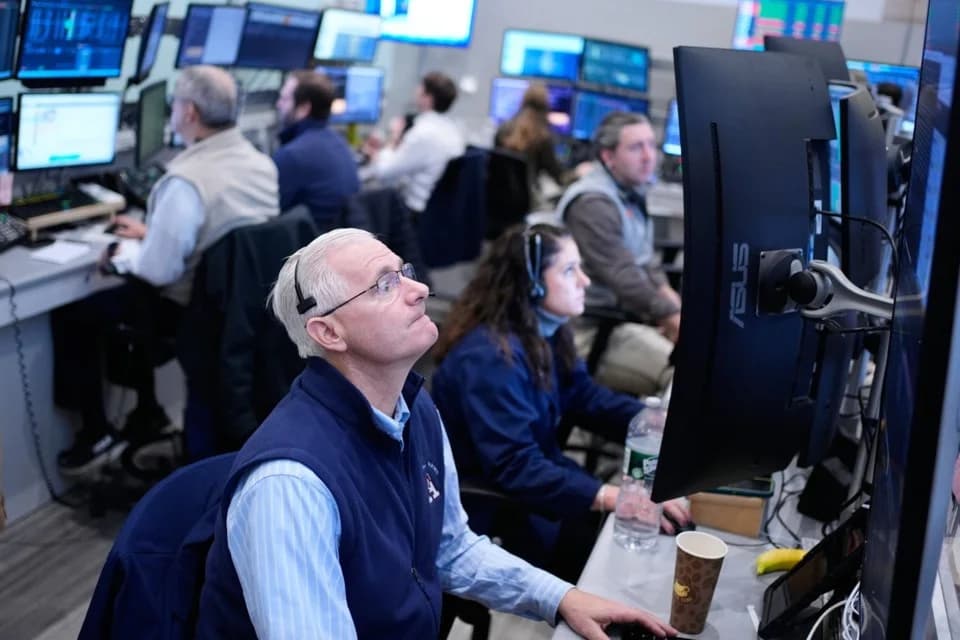
The US stock market momentum February 17 2026 reads like a study in contrasts: a northern tilt toward resilience in a market that is still digesting AI-driven narratives, macro data, and sector rotation. On February 17, 2026, major U.S. indices nudged higher in a cautious trading session, but intraday volatility underscored a larger, data-driven balancing act among growth, value, and defensives. The official price action shows a modest gain across the board, yet the intraday drama—led by swings in tech names and AI-related equities—made the day a reminder that momentum is not a straight line. For traders and firms alike, this is a moment to recalibrate expectations around AI-driven leadership, small-cap participation, and the sensitivity of indices to macro signals. The latest numbers anchor the narrative: the S&P 500 ended the day up about 0.1%, the Dow also marginally higher, and the Nasdaq showing a similar micro-advance, while year-to-date performance remains uneven across market segments. These readings come amid ongoing investor attention to AI infrastructure spending, earnings from marquee tech players, and evolving policy signals that could sustain or pause the rotation. (apnews.com)
Viewed through a neutral, data-driven lens, the February 17 update highlights a core question: is the market experiencing a durable shift in leadership, or a temporary pause within a broader, AI-fueled volatility regime? The evidence points to a nuanced trend. Small-caps have been showing strength in early 2026, a development that signals broader participation beyond the megacap tech rally of prior years. January’s rotation into domestic, more cyclically oriented stocks has persisted into early 2026, with small-cap exposure contributing to breadth in a market recovering from global headlines and policy uncertainty. Yet the AI complex—led by semiconductors, cloud infrastructure, and software tools—continues to influence sentiment, with sizable daily swings and sector rotations illustrating the fragility of even modest gains. The net effect is a market that looks momentum-rich in some pockets but remains highly sensitive to new data and developments surrounding AI investment, rate expectations, and corporate earnings. (pas.guardianlife.com)
Section 1 — What’s happening now
Rotation into small caps
Small-cap leadership returns
Early 2026 has featured a notable rotation toward domestic, small-cap equities as investors hunt for growth without the valuation burdens seen in mega-cap tech. Market commentary and asset-class data point to a prominent small-cap tilt, with the Russell 2000 delivering meaningful outperformance versus large caps in the months surrounding the start of the year. This rotation aligns with a broader narrative of “value and domestically focused” leadership taking the baton from high-mlying tech. Guardian Life’s February 2026 market commentary underscores this dynamic, noting that small caps led asset-class returns as investors navigated rate expectations and growth sensitivities. The January performance backdrop showed the Russell 2000 posting strong gains relative to the S&P 500, an environment that can persist into 2026 if domestic demand remains resilient and inflation stays contained. (pas.guardianlife.com)
AI-driven volatility and rebound
The AI narrative remained a dominant force behind momentum swings. After a tough January for several AI-related names, the market observed a partial rebound as investors rebalanced risk and rotated into names believed to offer AI-enabled productivity and longer-term growth. A data-driven AI rotation narrative is echoed in Investor’s Business Daily’s February 2026 coverage, which highlights a broader AI-driven pullback in software and chip names, followed by selective recoveries in data-center and networking plays. The market’s memory of AI-driven dislocations—tied to chipmakers and hyperscalers—continues to shape recent performance, with Nvidia and peers exhibiting pronounced intraday volatility as earnings cycles approach. While the AI rally has cooled in places, the underlying demand for AI infrastructure remains a focal point for momentum and sector leadership. (investors.com)
Market breadth and participation
Breadth indicators have shifted in 2026 as traders seek participation beyond a handful of megacap beneficiaries. Market commentary from Park Avenue Securities notes that January’s strength in small caps was a sign of breadth reasserting itself after 2025’s mega-cap leadership, suggesting that a broader swath of stocks could contribute to momentum in 2026. This breadth is crucial for sustaining a multi-month up-leg and reducing concentration risk in a market increasingly sensitive to macro and micro signals. While the precise breadth metrics vary by provider, the consensus across multiple data points is that 2026’s momentum benefits from more evenly distributed participation than a narrow tech-led rally. (pas.guardianlife.com)
Notable movers and daily drivers
On February 17, 2026, the market’s move was anchored by a mix of stock-specific catalysts and macro context. Paramount Skydance’s bid activity, Warner Bros. Discovery developments, and General Mills’ consumer-confidence concerns created pockets of headline-driven moves that helped keep the session buoyant in a cautious market. Major indices showed modest gains, even as individual names—particularly in technology and entertainment content ecosystems—delivered outsized intraday swings. This pattern—markets moving on both macro signals and stock-specific news—illustrates the current momentum regime’s reliance on both big-picture data and the company-specific performance that drives short-term volatility. (apnews.com)
Case study: Nvidia’s role in AI-driven rotation
Nvidia’s stock performance has consistently exemplified the tension between AI exuberance and the risk of rapid, sentiment-driven reversals. After a challenging January for many AI-centric names, Nvidia’s price action in February demonstrated the market’s sensitivity to AI fundamentals and guidance, as well as broader risk sentiment. This case study of Nvidia’s volatility and its impact on tech leadership illustrates how AI data points, capex plans, and earnings expectations can swing momentum within a single sector. Investors watch Nvidia closely as a proxy for AI-driven demand, cloud infrastructure growth, and the broader AI hardware cycle, which continues to shape market conviction around technology leadership. (investors.com)
What it means for market structure
Leadership shifts in index leadership

A shift in leadership toward smaller domestically oriented stocks has implications for indexing, factor strategies, and portfolio construction. As small caps participate more aggressively in 2026, factor-based investors may tilt toward value tilts, earnings growth, and cyclicals that align with domestic demand. The January-to-February momentum arc suggests a market environment that rewards breadth and cyclicality, potentially muting the dominance of high-multiple tech names if AI concerns persist. (pas.guardianlife.com)
Defensive quirks amid AI uncertainty
While the AI rotation adds a risk-on flavor to momentum, it has also introduced defensive underpinnings in areas such as energy and consumer staples at various points in early 2026. The same data that underline AI enthusiasm can also create risk-off episodes if inflation or policy signals surprise. Market commentary and risk-tracking updates show this duality: rallies can occur on hope for AI-capable growth, but volatility can spike when AI advisories and earnings headlines flip sentiment. This tension is evident in the mixed intra-week moves and the occasional retreat in tech leadership as investors await clearer earnings and policy signals. (hzcapital.com)
Section 2 — Why this momentum pattern is unfolding
Macro backdrop and policy signals
Growth, inflation, and rate expectations
The macro environment continues to shape US stock market momentum. January’s jobs data and inflation readings colored investors’ views on the likelihood of a Fed stance pivot or continued restraint. Weekly market updates emphasize that inflation dynamics and labor market resilience are central to how quickly rates might trend lower or stay elevated, which in turn modulates risk appetite for AI-heavy equities and cyclicals. The February 17 window captures the tension between growth strength and the risk of policy missteps, as markets parse the latest data on employment and consumer prices. (ajg.com)
AI capital expenditure and financing dynamics
AI-focused infrastructure investment remains a major factor behind market momentum, with hyperscalers and AI-related vendors pushing debt and capex toward data centers, GPUs, and accelerators. The bond-issuance environment for AI infrastructure—spurred by Alphabet, Amazon, Meta, Microsoft, and Oracle—continues to influence equity valuation and sector rotations, even as investors weigh the risk of overbuilding. This theme is echoed in multiple market updates that discuss AI capex financing and its implications for corporate leverage, growth trajectories, and stock performance. (ajg.com)
Industry-specific drivers
Technology leadership still matters, but the story has broadened. Memory stocks, data-center infrastructure, and networking plays have exhibited resilience in some periods of AI investment, while software and cloud tools have faced earnings and margin questions. This complex mix of tech-driven demand, supply constraints, and capex cycles helps explain the broader momentum pattern—the market is not simply pricing AI; it is evaluating the profitability and durability of AI-driven business models across software, hardware, and services. (investors.com)
Sector and industry factors
Semiconductors and AI hardware cycle
AI-related demand for semiconductors and accelerators has influenced sector leadership and price action. Semiconductors can drive broad market momentum due to their position in AI compute supply chains, cloud platforms, and data centers. Yet the rapid pace of AI capex means stock performance can swing as orders, CapEx plans, and delivery timelines move in and out of investor expectations. This dynamic was visible in AI-focused updates during February 2026, with some days delivering sharp moves in chipmakers and AI infrastructure suppliers. (investors.com)
Software and cloud services recalibration
Software and cloud services have faced a revaluation in 2026 as AI-enabled disruption raises questions about monetization models and long-term margins. The market’s rotation and the performance of the iShares Tech-Software ETF illustrate the tension between AI-driven demand and the risk of margin compression in software businesses. Investors are weighing AI’s displacement risk against the productivity gains and platform-scale advantages that AI tools can yield. (investors.com)
Domestic demand and cyclicals
Domestic demand and cyclical sectors—especially energy and industrials—have a pivotal role in momentum as investors seek hedges against AI volatility and look for leverage to economic growth. Park Avenue Securities’ February 2026 commentary highlights energy and other cyclical leaders as contributors to positive breadth in a market still dominated by mixed signals about inflation and policy. This cyclical tilt is essential for momentum sustainability if macro data remains supportive. (pas.guardianlife.com)
Why these forces matter to market participants
Investor behavior and risk management
The February 2026 momentum environment implies a more complex risk management approach. Investors are calibrating exposure to AI-related growth while seeking to diversify risk through small caps, cyclicals, and defensives. The daily swings in AI stocks and the broader rotation imply that momentum strategies must be dynamic, with risk controls that respond to abrupt sentiment shifts. This is evident in the daily market chatter surrounding AI headlines and in the strategic shifts described by market commentators. (investors.com)
Corporate strategy and capital allocation
For businesses, momentum shifts influence capital allocation decisions, M&A activity, and innovation cycles. The ongoing AI buildout and data-center expansion require capital, which in turn can affect stock valuations and investor confidence. As Alphabet, Microsoft, and other AI heavyweights continue to raise debt for AI initiatives, investors and corporate leaders must assess whether AI investment translates into durable earnings growth or creates balance-sheet risk if growth fails to materialize. (ajg.com)
Section 3 — What it means for the broader economy and business
Business impact
Transformation of operating models

AI-enabled efficiency gains and automation drive a wave of business model changes across industries. Companies invest in AI-powered processes, data architectures, and cloud-native platforms to improve productivity. While this can support earnings growth, it also raises questions about cost structures, pricing power, and competitive dynamics. Market observers emphasize the need to separate near-term volatility from long-run productivity improvements when assessing momentum. (ajg.com)
Capital allocation and risk
The AI infrastructure surge has implications for corporate debt issuance and investment strategies. Firms are issuing bonds to fund AI deployments, a trend that could influence market liquidity and credit spreads if growth expectations shift. Investors should monitor debt maturities, vendor concentration risk, and the pace of AI adoption as these factors can affect both equity price trajectories and financing conditions. (ajg.com)
Consumer effects and price dynamics
Consumers may feel the impact through products and services that leverage AI. Efficiency gains can translate into pricing strategies, service improvements, and changes in product offerings. As AI tools become more integrated into consumer experiences, market momentum can reflect consumer adoption rates and price sensitivity, which in turn influence earnings for consumer-focused and tech-enabled businesses. (zacks.com)
Industry changes
Shifts in leadership and investment focus
A movement away from single-name tech leadership toward broader participation across market caps and sectors signals a potential shift in how index funds and active managers approach positioning. The rotation into small caps and cyclicals points to a broader reallocation narrative that could continue if domestic demand holds up and inflation remains restrained. Market commentary from various wealth-management and market-analysis sources supports this view, suggesting a longer horizon for leadership changes beyond the AI-fueled headline rallies. (pas.guardianlife.com)
Data centers, software, and services
As AI infrastructure expansions accelerate, demand for data-center capacity, server hardware, and software-as-a-service tools evolves. The market’s momentum reflects the ongoing integration of AI into enterprise software and cloud ecosystems, with investors weighing the durability of these platforms against near-term earnings volatility. Analysts highlight the need to monitor capex cycles, profit margins, and competitive dynamics as AI adoption scales. (investors.com)
Section 4 — Looking ahead: 6–12 month predictions and opportunities
6–12 month outlook
Scenarios for momentum sustainability
- Base case: AI-driven demand stays robust, and the small-cap rotation broadens to more cyclicals, supported by steady inflation and a neutral-to-dovish rate path. This could yield a broader market rally driven by breadth across sectors, with technology playing a more balanced role alongside energy, financials, and consumer staples. Analysts who emphasize breadth expect momentum to persist if earnings growth broadens beyond a handful of AI-adjacent names. (pas.guardianlife.com)
- Alternative scenario: AI disillusionment or deceleration in capex leads to renewed volatility and a reversion to more conservative leadership, with defensives and value-oriented names regaining prominence. The AI-related selloffs observed earlier in 2026 and noted by market commentators underscore the sensitivity of momentum to earnings surprises and policy shifts. (hzcapital.com)
Opportunities for investors
- AI infrastructure and data-center exposure remains a focal point for capex-driven growth, with potential upside if demand from hyperscalers and enterprise customers sustains higher utilization and pricing power. Watch for earnings updates and capital expenditure trajectories from major AI infrastructure players. (ajg.com)
- Small-cap and domestic-led opportunities could benefit from continued breadth in leadership, provided inflation remains contained and rate expectations stay stable. Sector rotation toward cyclical leaders and domestic-oriented earnings growth can create channels for alpha through diversified exposure. (pas.guardianlife.com)
- Defensive complements to AI growth, including energy and industrials, may offer balance in times of AI-driven volatility, helping to stabilize portfolios and improve risk-adjusted returns. Market commentary across multiple sources highlights this potential dynamic. (hzcapital.com)
Preparation: how to position portfolios
- Maintain a balanced core: combine exposure to AI-enabled growth with a measured allocation to small caps and cyclicals to capture breadth while managing risk. Regularly rebalance to align with evolving rates and inflation signals.
- Monitor earnings cadence and guidance: pay special attention to AI hardware suppliers, software platforms, and cloud providers for signs of durable profitability versus narrative-driven demand.
- Use risk controls and hedges: given intraday volatility in AI stocks, implement appropriate hedging strategies (e.g., options-based hedges or defined risk products) to manage drawdowns during sharp sentiment shifts.
- Diversify across regions and sectors: while the US market remains a primary focus, global developments in AI adoption, supply chains, and policy considerations can influence momentum through cross-border exposure and trade dynamics. (ajg.com)
Closing thoughts The US stock market momentum February 17 2026 continues to reveal a data-driven, increasingly diverse leadership structure. While AI remains a powerful narrative driver, the market’s momentum is now more dependent on breadth, domestic demand, and the ability of corporate earnings to translate AI-related investments into durable growth. The balance between AI optimism and macro caution will shape momentum in the months ahead, guiding investors toward opportunities in small caps, infrastructure—where capital is still flowing—and consumer-facing sectors that benefit from resilient demand. For Wall Street Economicists, the takeaway is clear: momentum is not merely about the next breakout name; it’s about the nuanced interplay of AI, macro data, sector rotation, and the evolving cost of capital. The most resilient portfolios will blend data-driven insight with disciplined risk management to navigate a market where technology and fundamentals are increasingly entwined. (apnews.com)
Comparison table: key indices and momentum snapshots (as of February 17, 2026)
| Index | 2/17 close/level | Daily change on 2/17 | Year-to-date performance |
|---|---|---|---|
| S&P 500 | 6,843.22 | +0.10% | approximately -0.1% |
| Dow Jones Industrial Average | 49,533.19 | +0.07% | +3.1% |
| Nasdaq Composite | 22,578.38 | +0.10% | -2.9% |
| Russell 2000 | (close not specified in the cited data) | — | +6.6% |
Notes:
- All data cited are from February 17, 2026 press coverage and market commentary. The daily index levels and percentage moves are drawn from AP News and related market updates; year-to-date figures reflect the sources cited in the text. Where a closing level for the Russell 2000 was not provided in a single source, the year-to-date figure is reported as stated by the source. (apnews.com)
Key takeaways and actionable insights
- The momentum narrative on February 17 2026 reinforces a multi-faceted market where AI-driven themes coexist with a broader rotation into small caps and domestically oriented sectors. Investors should watch for continued breadth expansion to sustain momentum beyond a few high-flyers. The key data point remains that the day closed modestly higher, but intraday moves and sector rotations signal that sentiment can shift quickly on fresh AI and macro headlines. (apnews.com)
- For practitioners, anchoring strategies in data-rich analysis—combining macro signals, earnings trajectories, and AI infrastructure trends—will be essential to navigating the next 6–12 months. The current setup favors a balanced approach that embraces AI-driven growth while hedging against volatility with diversified exposure to small caps, cyclicals, and defensives. (ajg.com)
- The technology and market-trend focus remains timely for Wall Street, but success will hinge on translating AI investments into sustainable earnings power, not just headline-driven sentiment. Case studies from Nvidia and other AI infrastructure players illustrate both the upside and the risk of momentum in a fast-changing landscape. (investors.com)