Aschenbrenner's $35bn Loss Tops FT's All-Time Leaderboard
FT Alphaville's leaderboard of the 25 biggest trading losses ever puts Situational Awareness first at about $35bn, ahead of Morgan Stanley, Archegos and LTCM.
 By Gregory Haas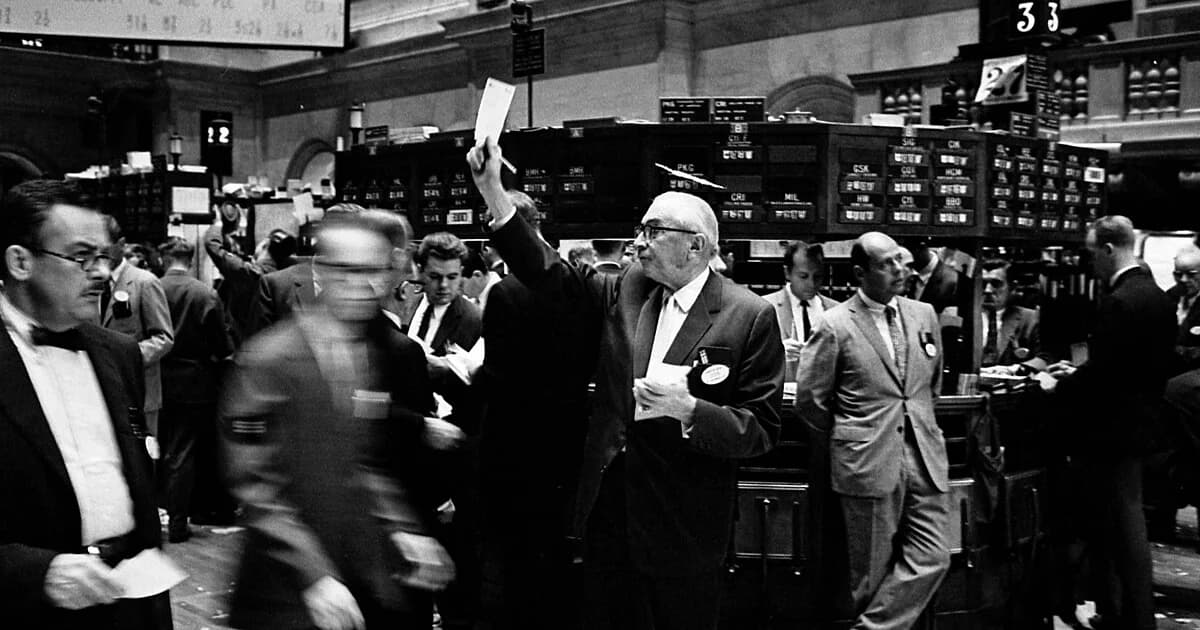
A chart published by FT Alphaville has given the July blow-up at Situational Awareness a distinction its founder presumably never wanted. Ranked in 2026 dollars against the 25 largest trading losses ever recorded, Leopold Aschenbrenner's AI-focused hedge fund does not merely make the list. It sits at the top of it, ahead of Morgan Stanley, JPMorgan Chase, Archegos and Long-Term Capital Management.
The leaderboard spread quickly after the parody tracking account Leopold Stock Tracker posted it, where it drew close to 70,000 views inside a day.
Breaking: Leopold Aschenbrenner holds the record for biggest trading loss of all time, per FT
— Leopold Stock Tracker (@LeopoldTracker_) August 17, 2026
What the chart actually shows
The FT's ranking puts Situational Awareness at roughly $35bn, followed by Morgan Stanley at about $14bn and JPMorgan Chase at about $13bn. Archegos Capital Management lands fourth at around $12.5bn, then Société Générale at $11.3bn, Amaranth Advisors at $10.7bn and Long-Term Capital Management at $9.5bn. Melvin Capital, the fund most retail investors associate with a catastrophic year, comes in tenth at under $6bn.
The gap at the top is the striking part. Situational Awareness lost roughly two and a half times the second-place entry, and more than Archegos, Long-Term Capital Management and Melvin Capital lost combined. Only seven of the 25 entries are funds at all. Most of the historical leaderboard is banks and corporates, where a single desk, a rogue trader or a commodity hedge gone wrong produced the damage.
How a 400% leveraged book unwound in weeks
The fund lost 67% in July as the chip selloff turned against a portfolio built almost entirely around the AI capital expenditure thesis. Reported leverage ran as high as 400%. As positions fell, the collateral behind the borrowing fell with them, and the fund was forced to sell most of its public holdings to Citadel and strip out leverage altogether. Assets went from about $45bn to roughly $10bn. Aschenbrenner told investors, in four words that will follow him for a while, "We let you down this month."
Two facts sit awkwardly beside the record. The first is that Situational Awareness is still up roughly 80% for the year, because the drawdown followed a run that had the fund up almost 450% through late June. The second is that the thesis itself did not visibly break. Data centre construction, power deals and record capital spending plans all continued. What broke was the financing. An investment horizon measured in years met margin terms measured in days, and Aschenbrenner himself compared the dynamic to a bank run, in which every sign of vulnerability manufactures more of it.
The leaderboard is a measure of size, not of skill
The FT attached its own warning to the chart, and it deserves more attention than the ranking. Dollar losses scale with assets under management, so a very large manager can post a headline-grabbing number after a move that barely registers as a bad quarter. Millennium Management runs around $89bn. A decline of a little over 2% would produce a roughly $2bn loss and a place on lists like this one.
The omissions cut the same way. Tiger Global's 2022 losses have been estimated at around $40bn, which would displace Situational Awareness from the top spot outright. Jane Street's reported $15bn hit on AI-linked exposure would rank second, if you accept that a market maker belongs on a leaderboard of trading losses at all, which is precisely the sort of definitional argument these charts bury. The honest reading is that this is a ranking of who was biggest when they were wrong, not of who was most wrong.
What the replies made of it
The reaction under the post was leaderboard sport rather than analysis, and that is itself informative about how the AI trade is being consumed. The best-performing reply came from the Michael Burry tracking account, which noted that "holding the record at his age is pretty baller," a line that captures the strange admiration attaching to a 20-something who lost more money in one month than Long-Term Capital Management lost in its entire collapse.
Two replies did land on real gaps. One asked, of the $15bn Jane Street loss, "where they at?" That is the same objection the FT raised in its own footnotes, arriving from the crowd within hours: the leaderboard excludes a comparable number because the entity behind it is classified as a market maker rather than a fund. Another questioned whether the Melvin Capital entry reflects the GameStop squeeze, a reasonable read of a fund whose short book was destroyed in early 2021 and which never recovered before winding down. Neither reply was answered on the thread, and neither is trivial. A ranking whose membership depends on how you classify a firm is a ranking with a soft edge.
What almost nobody in the replies raised was the 80% year-to-date gain, or the fact that the fund is still solvent, deleveraged and operating. In a market that has spent two years pricing AI infrastructure on conviction, the failure of the most concentrated expression of that conviction was read as a scoreboard update rather than a signal.
The lesson is old and keeps arriving new
The uncomfortable conclusion for anyone still long the trade is that Situational Awareness was right about the thing it said it was right about, and that this was not enough. Being early, correct and levered is a combination that has topped this leaderboard before, and the reason it keeps producing record entries is that each generation's version of the trade is larger than the last. The chart is less a hall of shame than a chart of how much capital the industry is willing to concentrate behind a single idea, and that number is still going up.
The company he is now keeping
It is worth spelling out what the entries below Situational Awareness actually were, because the comparison flatters and damns in roughly equal measure.
Morgan Stanley's entry dates to 2007, when a single proprietary desk's subprime hedge went wrong in a way that cost the bank close to $9bn at the time. JPMorgan's is the London Whale, a synthetic credit position in the chief investment office that was supposed to hedge the balance sheet and instead became the thing being hedged against. Société Générale's is Jérôme Kerviel, the rogue trader whose unauthorised directional bets were unwound into a falling market in January 2008, converting a hidden position into a realised loss. Barings Bank, at the bottom of the top 25, is the Nick Leeson case that ended a 233-year-old institution.
The fund entries have a different character. Long-Term Capital Management was a convergence trade with Nobel laureates attached, undone when Russia defaulted and correlations that were supposed to be independent all moved at once. Amaranth Advisors was a natural gas spread position so large that it moved the market it was trying to trade. Archegos was a family office running total return swaps across multiple prime brokers, none of whom could see the full position until it was too late to exit.
The through line is not stupidity. Every one of these was a defensible thesis executed at a size that removed the option of being patient. That is the category Situational Awareness has now joined, and it joined at the top.
What it means for the AI trade
The immediate market question is whether this was an idiosyncratic failure or a preview. The case for idiosyncratic is strong. A 400% levered book concentrated in semiconductors and short the software names AI was expected to disrupt is not a position many institutions hold, and the unwind was absorbed by Citadel rather than transmitted through the system. Nobody needed a Federal Reserve conference room, which is the actual distinction between this and 1998.
The case for preview is subtler. The fund was not forced out because the market decided AI capital spending was a mistake. It was forced out because liquidity thinned faster than its risk limits could accommodate, in names that most AI-exposed portfolios also hold. Concentration and leverage are the two variables that turn an ordinary drawdown into a forced sale, and neither is unique to one manager. The lesson available here is about position construction rather than about the thesis, which is precisely why it will be ignored by anyone whose thesis is currently working.
For the funds still running the trade, the practical read is that financing terms are now the binding constraint rather than conviction. Prime brokers repriced risk on AI-linked collateral through the selloff, and the cost of maintaining a levered position in the sector went up for everyone, not just the one manager who blew through his limits. That repricing outlasts the news cycle around a single chart.
Cover image: trading floor of the New York Stock Exchange, Library of Congress, public domain.